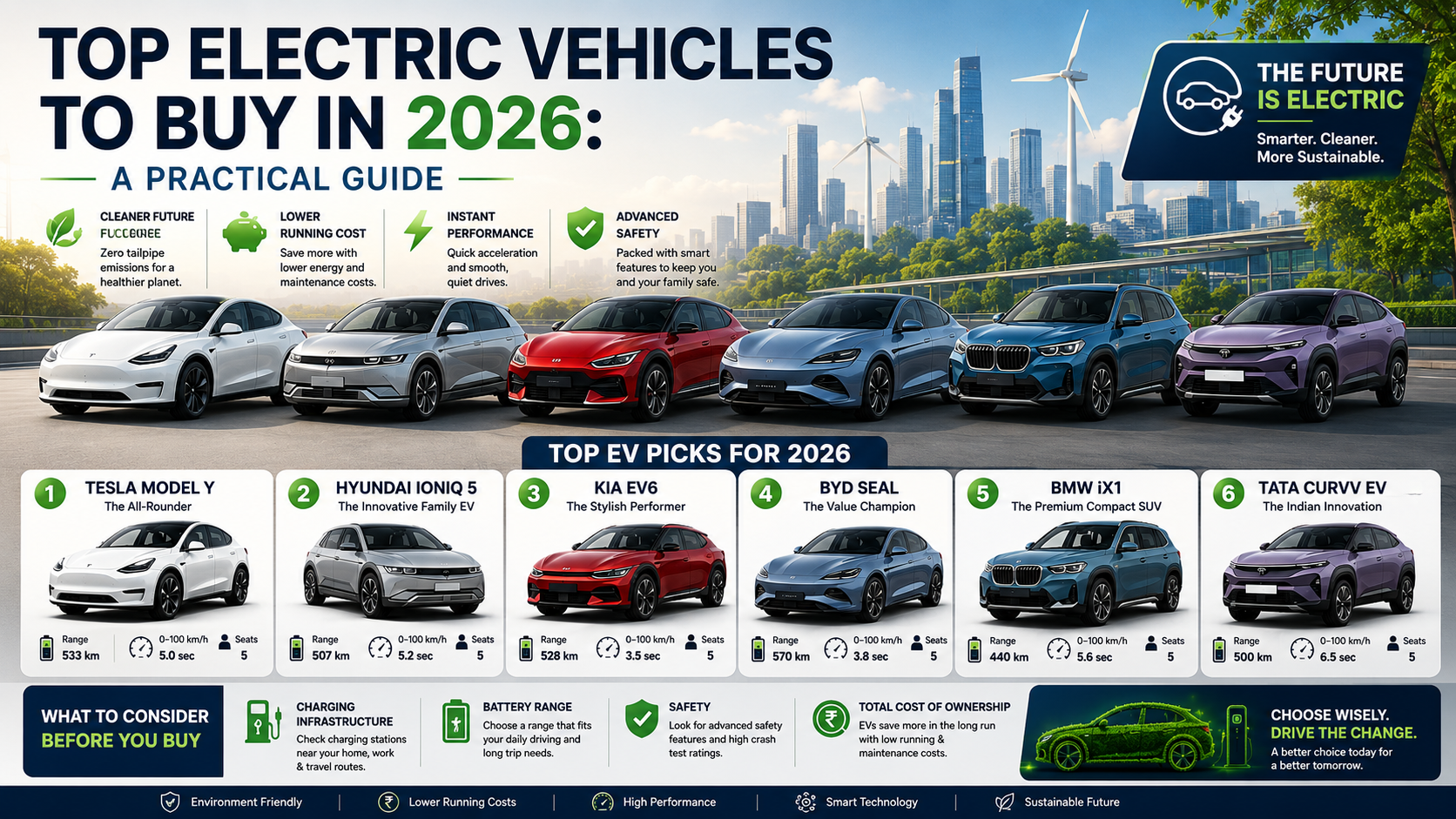
The 2026 EV market feels like a busy charging plaza at dusk: more choices, more promises, and more ways to make an expensive mistake. The phrase “did the groundhog” isn’t a recognized electric vehicle term. It’s likely a voice-to-text error or a mistaken version of “did the groundwork.”
The top electric vehicles to buy in 2026 depend less on a badge and more on your driveway, weekly mileage, budget, and travel habits. Model availability, EPA range, MSRP, and incentive rules can change quickly, so confirm every final detail before you buy.
Top Electric Vehicles to Buy in 2026, From Affordable Commuters to Luxury Models
A useful EV shortlist starts with how you drive, not which brand has the loudest marketing. Tesla’s Model 3 and Model Y remain broad-appeal choices, while the Chevrolet Equinox EV, Hyundai IONIQ 5, and Kia EV6 give shoppers several practical alternatives.
For family space, look at the Hyundai IONIQ 9, Kia EV9, Rivian R1S, and Ford Mustang Mach-E. Buyers who need a pickup can compare the Ford F-150 Lightning and Rivian R1T. At the premium end, the Lucid Air, BMW i4, BMW i5, BMW iX, and Porsche Taycan bring more power, comfort, and price.
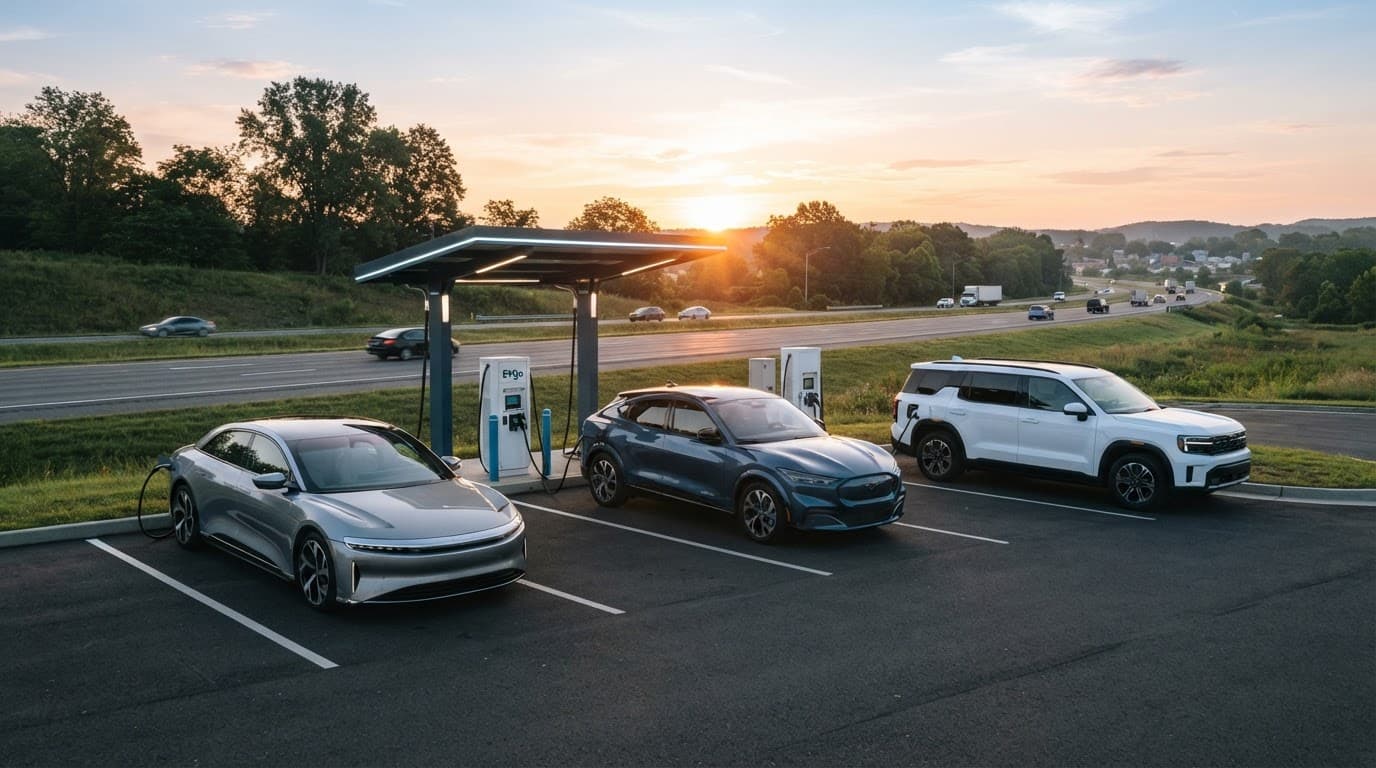
Some vehicles are already on lots, while others may arrive later in the model year or in limited trims. Before placing a deposit, confirm the exact MSRP, battery size, EPA estimate, and delivery date with the manufacturer or dealer.
Best 2026 EVs for Daily Commuting and Value
For a commuter, the best EV is usually the one that fits your routine without stretching your payment. The Tesla Model 3, Tesla Model Y, Chevrolet Equinox EV, Hyundai IONIQ 5, and Kia EV6 deserve a close look because they balance everyday range with usable cabins.
Current figures reported for the 2026 Tesla Model 3 RWD list a $36,990 starting price and 321 miles of EPA range. The 2026 Model Y RWD is reported at $39,990 with the same 321-mile estimate. Those figures can shift with wheel choices, updates, and regional pricing.
A lower-priced EV with less range can still cost less over five years. Insurance, tire replacement, financing, and electricity use matter as much as the battery’s headline number. Compare warranty coverage and get insurance quotes before choosing a winner.
Best Electric SUVs, Trucks, and Road-Trip Vehicles for Families
Families should inspect the back seat before falling for a range figure. The IONIQ 9 and EV9 offer three-row utility, while the Mach-E is a more compact crossover. The R1S adds adventure-focused space, and the F-150 Lightning and R1T suit drivers who need an open bed or towing capability.
Road-trip confidence comes from charging speed and charger coverage, not range alone. A vehicle that holds a strong charging rate can make a shorter stop than one with a larger battery and a slow curve.
A 300-mile estimate does not guarantee an easy vacation drive if fast chargers are scarce or unreliable along your route.
Check whether a model has direct access to Tesla Superchargers, uses the North American Charging Standard, or needs an adapter. Then map one of your common long trips before signing anything.
Premium EVs for Comfort, Range, and Performance
Luxury EVs can make a normal commute feel calm and hushed. They also turn a minor wheel scrape or tire replacement into a painful bill. Buy this class with open eyes.
Long-Range Luxury Choices
The Lucid Air is a standout for drivers who place long-distance range and a spacious cabin near the top of the list. BMW’s i4 is a familiar-feeling sport sedan, while the i5 and iX add more room and a more upscale experience.
Battery progress matters, but it doesn’t erase basic physics. Cold weather, speed, wheel size, cargo, and cabin heat still affect driving range. Reviewing EV battery types and charging speeds helps explain why two luxury models with similar battery capacities can behave differently on a road trip.
Performance Has Ongoing Costs
The Porsche Taycan brings sharp handling and rapid acceleration, while high-spec Tesla, Lucid, BMW, and Rivian trims can also deliver startling speed. Yet powerful EVs often wear through tires faster because they are heavy and produce immediate torque.
Budget for higher insurance premiums, expensive repair parts, and depreciation. A premium badge doesn’t guarantee better service access in every ZIP code. Call local service centers and ask about appointment lead times before choosing a luxury model.
How to Compare 2026 Electric Vehicles Before You Buy
The top electric vehicles to buy are the ones that fit your actual week. Start with the miles you drive, where the vehicle sleeps at night, your winter weather, passenger needs, and how often you travel beyond your home region.
Marketing numbers are useful, but your own math is better. Build a short list of three or four vehicles, then compare the same trims and battery sizes.
Range, Battery Size, and Real-World Driving Needs
EPA range is a standardized estimate, not a promise carved in stone. Highway speed, freezing temperatures, rain, elevation changes, and climate control can lower it. Battery degradation also happens gradually over time.
Choose enough range for a normal day plus a sensible buffer. Paying thousands more for the largest pack may not make sense if you drive 35 miles a day and charge at home.
Tesla’s efficiency offers a practical reference point. A Tesla energy consumption by model comparison shows why energy use per mile matters alongside total battery capacity. An efficient sedan may go far with a smaller pack, while a large truck needs more electricity to move its extra weight.
Home Charging, Public Fast Charging, and Road-Trip Time
Level 1 charging uses a regular household outlet. It adds range slowly and works best for low-mileage drivers. Level 2 charging requires a 240-volt circuit and often restores a typical daily commute overnight.
DC fast charging is built for travel. It can add substantial range in a short stop, but the result depends on charger power, battery temperature, and the vehicle’s charging curve. The highest displayed kilowatt figure may last only a few minutes.
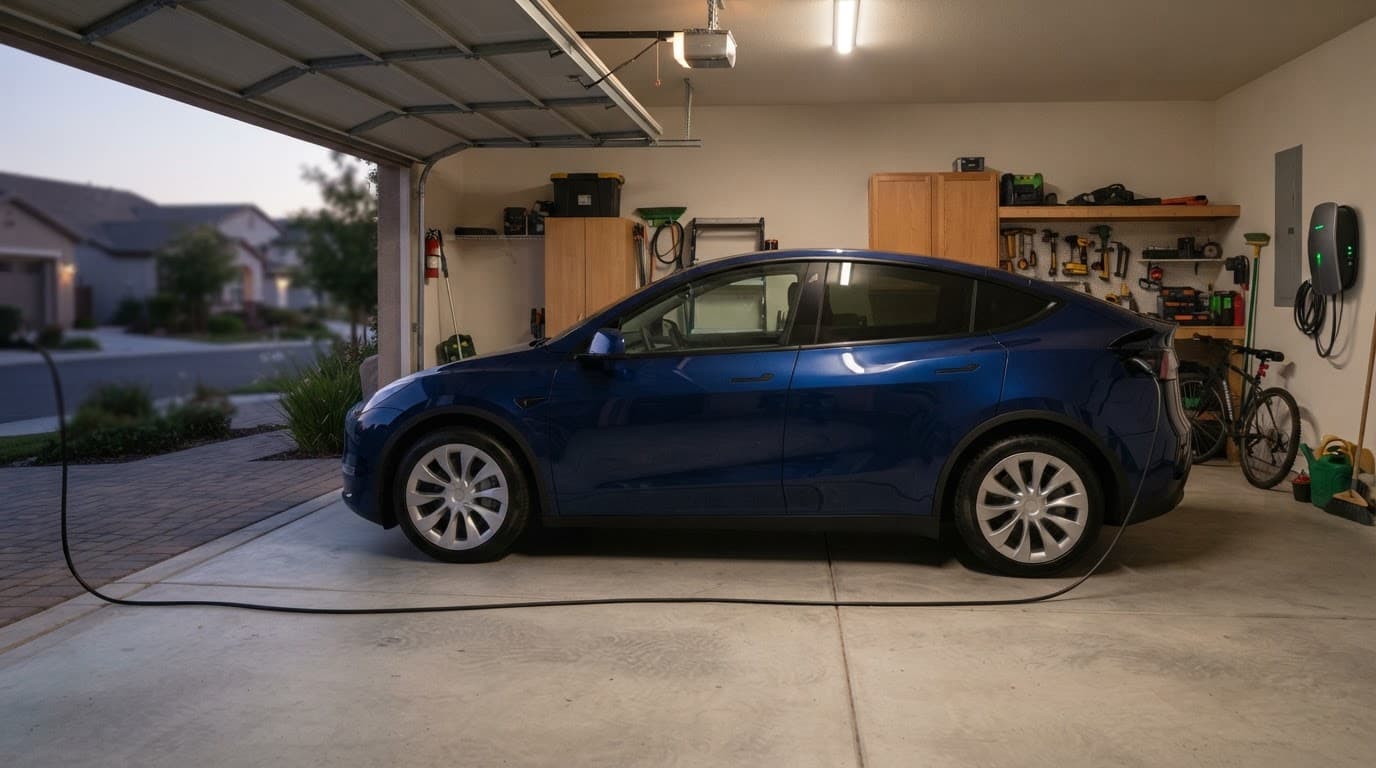
Home charging is usually the most convenient and lowest-cost option. For a broader look at connector types and public charging behavior, see this EV fast-charging guide. Charging-time concepts also apply across electric transport, although car battery sizes and charging times differ greatly from e-bikes.
Reliability, Safety, Warranty, and Ownership Costs
Compare battery and powertrain warranty terms line by line. Eight years is common for battery coverage, but mileage caps and capacity guarantees vary. Also review recall history and check current crash-test results from NHTSA and IIHS.
Service access can shape ownership more than a glossy interior. Ask where routine service happens, whether mobile service is offered, and how long body repairs take locally. Check current Consumer Reports, J.D. Power, Edmunds, and Kelley Blue Book information before treating any reliability ranking as final.
What 2026 EV Incentives and Financing Rules Mean for Buyers
Federal purchase-credit rules changed the math. According to the Alternative Fuels Data Center’s EV tax-credit summary, federal clean-vehicle purchase credits applied to vehicles acquired before September 30, 2025. They generally do not apply to a 2026 purchase.
Older articles may still show eligibility charts for a $7,500 new-EV credit or a used-EV credit. Don’t build your budget around them. Instead, check state programs, local rebates, utility offers, manufacturer promotions, and the full out-the-door price.
A home charging installation may still qualify for a federal credit. The Section 30C charging-infrastructure rules describe a residential credit of 30% of qualifying costs, up to $1,000, for equipment placed in service by June 30, 2026. Location and property rules apply, so confirm eligibility with IRS guidance or a tax professional.
Purchase Versus Lease After the Credit Change
Leasing may suit drivers who want new battery technology every few years and prefer warranty coverage throughout the term. It also limits depreciation risk, which matters when resale values are uncertain.
Buying can work better if you keep vehicles for many years and want no mileage limit. Compare total payments, acquisition fees, disposition fees, lease mileage limits, residual value, and money factor. An attractive monthly payment can hide a costly overall deal.
How to Calculate the Real Cost of Owning an EV
Begin with the vehicle price, then add financing interest, sales tax, registration, charger installation, insurance, tires, maintenance, repairs, and expected depreciation. Public fast charging can cost more than charging at home.
Estimate electricity cost by multiplying the energy used by your local electricity rate. For example, an EV that uses 30 kWh for a trip and electricity priced at $0.16 per kWh costs about $4.80 to charge for that energy.
Fuel savings are strongest for people who drive often and charge at home. They shrink when a driver relies heavily on high-priced public charging.
The Smartest Way to Choose and Buy an EV in 2026
A disciplined shopping process prevents a beautiful spec sheet from taking over the decision. First, write down weekly mileage, regular destinations, towing needs, passenger count, and home-charging access.
Next, narrow choices by body style and budget. Compare real-world range, fast-charging performance, warranty terms, insurance quotes, and nearby service access. Test-drive the finalists on roads you use often, not only around a dealership block.
Request written out-the-door prices. Verify incentives, production status, delivery timing, and dealer fees before you hand over a deposit.
Which 2026 EV Fits Your Driving Life?
A compact sedan often delivers low energy use and lower ownership costs. A crossover works well for everyday flexibility, while a three-row SUV fits growing families and frequent carpools.
Choose a truck when towing, work equipment, or bed space is a real need, not an occasional wish. Luxury EVs suit drivers who value cabin refinement, design, and performance enough to accept higher running costs.
Shoppers curious about future smaller Hyundai options should confirm Hyundai IONIQ 3 US availability before treating overseas specifications as a U.S. buying guide.
Final Checks Before You Sign the Paperwork
Confirm the exact trim, battery size, EPA range, included charging equipment, software features, destination fee, dealer add-ons, and cancellation terms. Inspect the warranty and delivery condition as carefully as the paint.
If a financing program or incentive depends on vehicle details, verify the VIN and build location. A low advertised price can disappear under mandatory packages, accessories, and paperwork fees.
Choose the EV That Fits Your Real Life
No single model wins every driveway. A Model 3 or Equinox EV may make sense for a cost-conscious commuter, while an EV9, IONIQ 9, R1S, or F-150 Lightning may better fit family space, travel, or work needs.
The strongest purchase balances range, charging access, price, safety, warranty, and total ownership cost. A long feature list can’t compensate for inconvenient charging or a payment that strains your budget.
“Did the groundhog” has no known EV meaning, so treat it as a wording error rather than a vehicle category. Verify 2026 pricing, availability, incentives, charging compatibility, and final paperwork details before buying.