An EV’s silent startup and low day-to-day energy cost can feel hard to resist. Then come the practical questions: Where will you charge, how far will it go in winter, and what happens when the battery ages?
The pros and cons of electric vehicles depend less on hype than on your routine. Home charging access, local electricity prices, climate, budget, and long trips all shape the right answer for U.S. drivers in 2026.
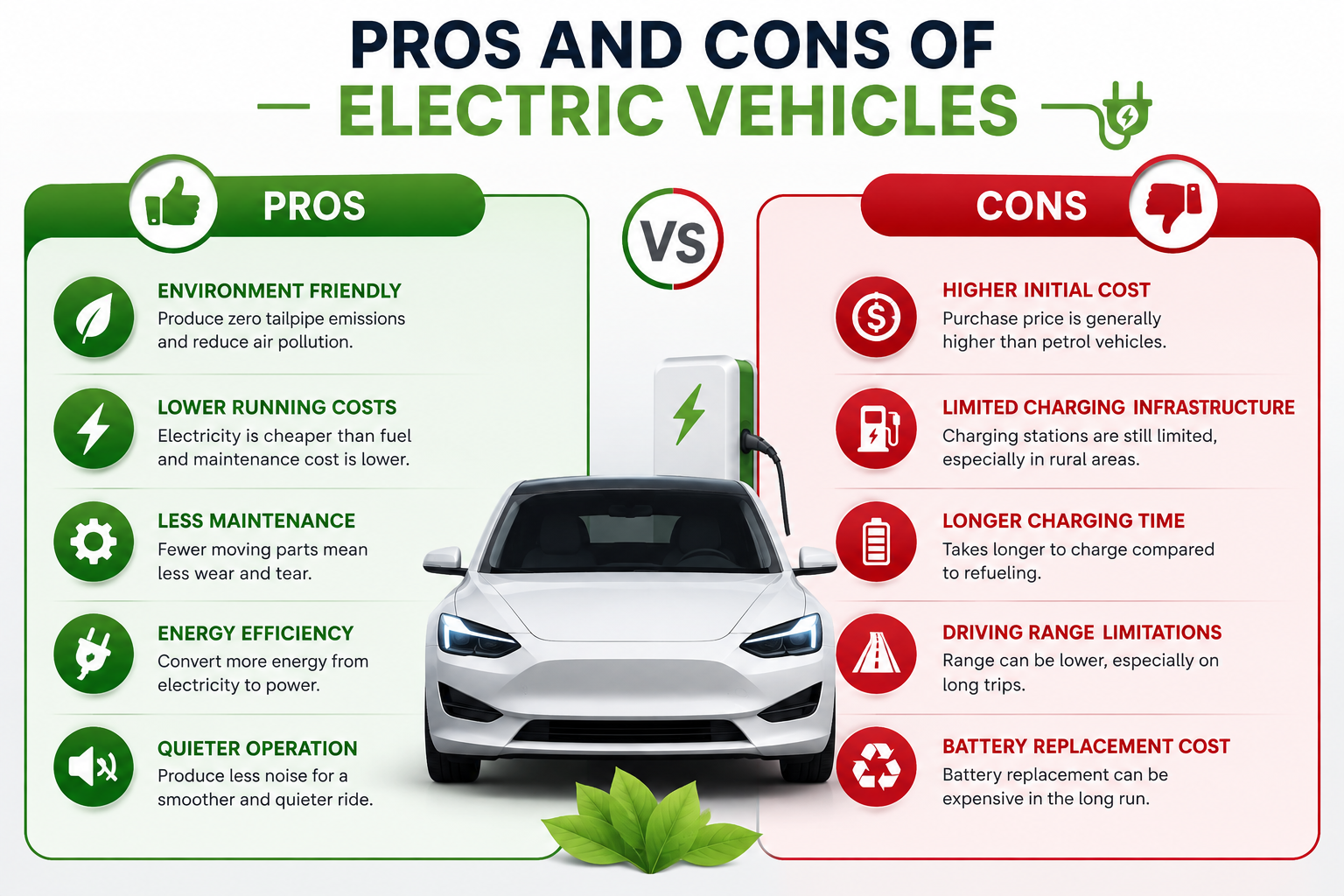
The Main Pros and Cons of Electric Vehicles at a Glance
Electric vehicles can cut routine maintenance and make a daily commute feel easier. They also bring instant torque, a calm cabin, and no tailpipe emissions. Yet an EV asks you to plan differently than a gasoline car, especially if you cannot charge where you live.
| Potential advantage | Potential drawback |
|---|---|
| Electricity can cost less per mile than gasoline | Some models still carry higher sticker prices |
| No oil changes, spark plugs, or exhaust repairs | Charging takes longer than filling a gas tank |
| Quiet driving and immediate acceleration | Public chargers can be busy or out of service |
| Home charging can cover daily driving | Cold weather and towing reduce range |
| Zero tailpipe emissions | Battery repairs can be costly after warranty |
The strongest fit is often a driver with predictable miles and a reliable place to plug in overnight. For everyone else, the tradeoffs deserve a closer look.
Why EVs Can Cost Less to Run Every Day
Home electricity often costs less per mile than gasoline, especially when a utility offers off-peak rates. You also skip oil changes, spark plugs, mufflers, catalytic converters, and many transmission services.
That does not make an EV maintenance-free. Tires may wear quickly because batteries add weight and electric motors deliver torque without delay. You will still pay for rotations, cabin filters, brake fluid, wiper blades, suspension work, and occasional brake service.
Regenerative braking can reduce brake-pad wear, particularly in city traffic. However, it cannot erase repair bills caused by potholes, curbs, or aging components.
Why the Purchase Price and Repair Bills Can Be Higher
Battery packs, newer platforms, and limited supply in certain body styles can raise an EV’s upfront cost. Insurance premiums can also surprise buyers because collision repairs may require specialized parts and trained technicians.
Compare the full ownership picture, not only the window sticker. Include financing, insurance, registration, electricity, a home charger, maintenance, tires, depreciation, and expected repair costs.
High-voltage work is expensive when it falls outside warranty coverage. Still, early battery failure is not common across modern EVs. A battery warranty, often lasting eight years or 100,000 miles, is a key part of the purchase decision.
Charging, Range, and Battery Life: What Ownership Really Feels Like
Charging is easy when it happens while the car is parked at home. It gets more complicated when it must fit between errands, apartment parking rules, and a crowded public station.
A Level 1 outlet adds range slowly. Level 2 charging at 240 volts usually restores enough range overnight for normal driving. DC fast charging is useful on road trips, though speed changes with the vehicle, charger output, battery temperature, and state of charge.
Home Charging Is Convenient, but Public Charging Still Matters
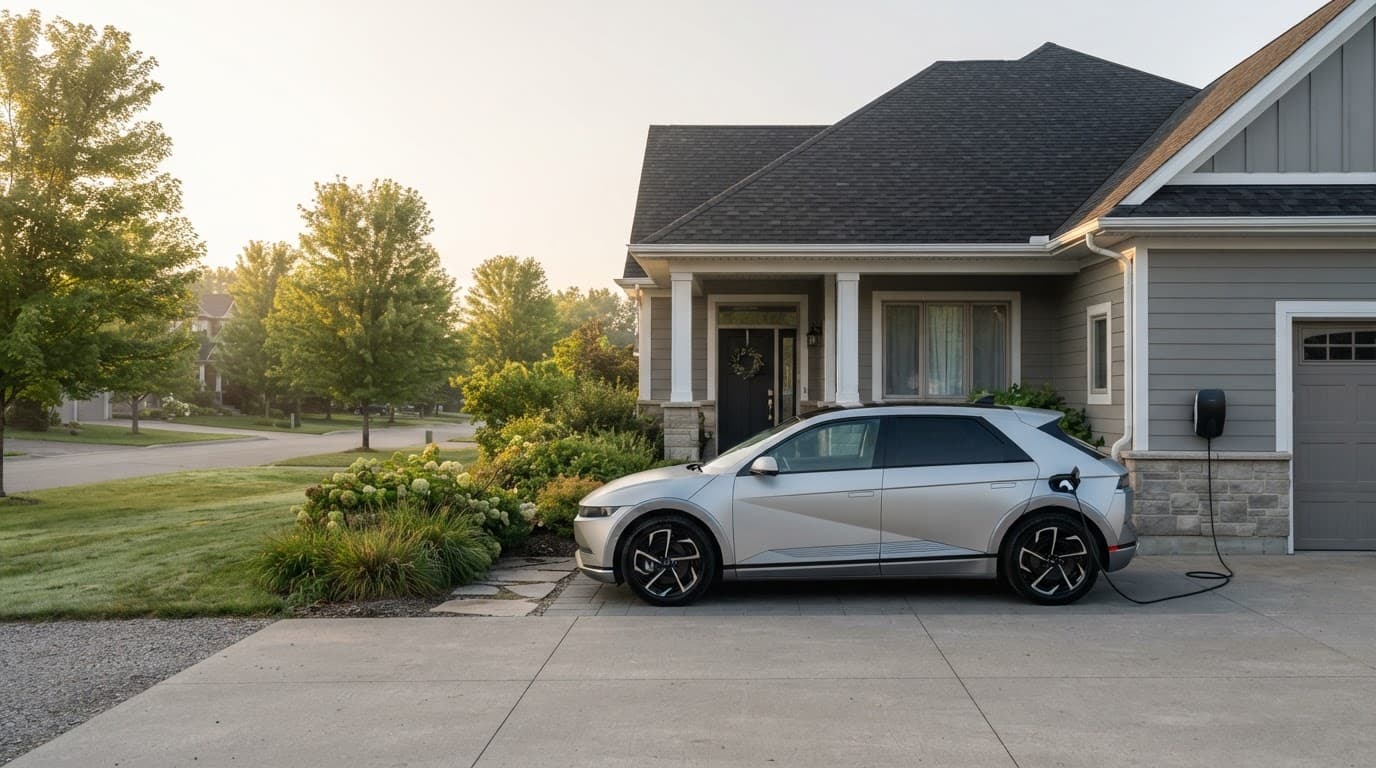
For homeowners, charging at night can feel like waking up with a full tank every morning. A professionally installed Level 2 unit makes that routine much easier, although panel upgrades and trenching can raise the price. Review the practical details of a home EV charging setup before choosing a vehicle.
Public charging still matters for long-distance drives. Drivers must account for payment apps, connector compatibility, station uptime, queues, and rural gaps. Tesla’s North American Charging Standard has gained broad support, but access and adapters vary by model year.
Fast charging is usually quickest below 80 percent battery level. The final 20 percent often takes far longer than drivers expect.
EPA Range Is a Starting Point, Not a Promise
EPA range is useful for comparing vehicles, but it is not a promise for every trip. High interstate speeds, steep grades, cold temperatures, cabin heat, roof cargo, passengers, and towing can reduce usable range.
No single independently verified average exists for every 2026 model-year battery EV. Instead, compare the EPA estimate for the exact trim with owner reports in your climate. A 250-mile-rated crossover may suit a 40-mile daily commute perfectly, while a frequent road-tripper may value faster charging more than extra rated range.

Battery Degradation Is Real, but Often Slower Than Expected
Every lithium-ion battery loses some capacity over time. Heat, repeated full charges, long periods at very low charge, and frequent fast charging can add stress. Vehicles with effective thermal management tend to protect their packs better.
For used EVs, ask for a battery state-of-health report, service history, charging records, and the remaining warranty terms. A used EV buying guide can help you separate a low price from a genuine value.
Are Electric Vehicles Better for the Environment and Safety?
The environmental case for EVs is strong, but it is not as simple as “zero emissions.” An electric car creates no exhaust while driving, yet its battery materials and manufacturing still carry environmental costs.
The EPA’s overview of electric and plug-in hybrid vehicles explains why driving emissions depend on the electricity source. An EV charged on a cleaner grid generally creates lower lifetime emissions than one charged in an area that relies heavily on coal.
Life-Cycle Emissions Depend on the Electricity Grid
Building an EV can produce more emissions upfront than building a comparable gasoline car because battery production uses energy and raw materials. Over years of driving, lower operational emissions can offset much of that difference.
Solar generation, renewable utility plans, and off-peak charging can improve the result. Still, the answer changes by state, electricity source, vehicle size, and annual mileage. A compact EV driven frequently can have a different footprint than a large electric pickup used mainly for short trips.
Battery Materials, Recycling, and Resource Concerns
Lithium, nickel, cobalt, graphite, and other materials come with real supply-chain costs. Mining can affect water, land, and nearby communities. Those problems deserve scrutiny rather than a glossy sales pitch.
Recycling can recover valuable materials, and some older packs may find second-life use in stationary storage. However, collection systems, processing capacity, and economics are still developing in the United States.
Safety Depends on the Model, Not Just the Powertrain
Battery placement often gives EVs a low center of gravity, which can help resist rollovers. Many models also have strong crash structures and advanced driver-assistance features.
Battery fires draw attention because they require specialized response methods, but buyers should avoid broad assumptions. Check the exact vehicle’s NHTSA crash ratings, recall history, and owner complaints. The same rule applies to towing limits, water exposure guidance, and collision repair procedures.
How Incentives, Depreciation, and Ownership Costs Change the Math in 2026
Federal policy changed the purchase calculation. New, used, and commercial clean-vehicle credits ended for vehicles acquired after September 30, 2025, as shown in the federal EV policy timeline.
State, local, and utility programs may still reduce costs. They differ sharply by ZIP code, income, utility territory, and vehicle type. The federal Alternative Fuel Vehicle Refueling Property Credit applies to eligible charging equipment placed in service through June 30, 2026. Check current requirements through the Alternative Fuels Data Center tax-credit guidance before signing a contract.
Calculate Total Cost Instead of Comparing Sticker Prices
Put each model into the same simple cost worksheet:
- Purchase or lease price, loan interest, insurance, registration, and expected depreciation.
- Home charger equipment, electrical work, and electricity costs.
- Gasoline avoided, scheduled service, tires, repairs, and warranty coverage.
Annual mileage and low-cost home charging can move an EV ahead quickly. Conversely, a driver who relies on expensive public fast charging may save less than expected.
Resale Value Can Be Harder to Predict
EV resale values can swing as new models gain range, automakers change prices, and incentives shift. Battery concerns also affect used-car demand, even when a vehicle still has healthy capacity.
Used EVs may look especially appealing after a sharp depreciation drop. Yet the expired federal used-EV credit changes the math for vehicles acquired after September 30, 2025. Check local listings and trade-in estimates for the exact year, trim, mileage, and battery warranty.
Which Type of Electric Vehicle Fits Your Driving Needs?
The pros and cons of electric vehicles become clearer once you choose the powertrain that matches your real life. Most shoppers will choose between a battery electric vehicle and a plug-in hybrid.
Choose a Battery Electric Vehicle for Simple, Fully Electric Driving
A battery electric vehicle, or BEV, has no gasoline engine. The Tesla Model Y, Chevrolet Equinox EV, Hyundai Ioniq 5, Ford F-150 Lightning, and Rivian R1T are familiar examples.
A BEV works best when you can charge at home or work and your usual drives fit the available range. You get quiet operation, swift acceleration, lower routine maintenance, and zero tailpipe emissions. Long trips need charging stops, while towing and winter weather can shorten the distance between them.
Choose a Plug-In Hybrid for Flexibility on Long Trips
A plug-in hybrid, or PHEV, drives on electricity for shorter trips and uses gasoline when the battery runs down. The Toyota Prius Prime and Hyundai Tucson Plug-in Hybrid give drivers electric commuting without depending on public charging for every long trip.
This arrangement suits renters or frequent travelers who cannot count on charging access. However, a PHEV carries both a battery system and a gasoline powertrain. That means more weight, more mechanical complexity, and more maintenance than a BEV.
Fuel Cell EVs Remain a Niche Option
Fuel cell EVs use hydrogen to create electricity and emit water vapor at the tailpipe. They refuel quickly and drive quietly.
For most U.S. buyers, limited hydrogen stations make them impractical. Availability remains concentrated in small regional markets, so BEVs and PHEVs offer far more choices.
Final Thoughts
An EV can be a practical money-saver when you have home charging, predictable daily miles, affordable electricity, and enough range for your regular trips. Its strongest advantages show up in ordinary routines, not showroom promises.
Renters without charging access, heavy towers, frequent long-distance travelers, and buyers focused on the lowest upfront price may prefer a hybrid or gasoline vehicle. Compare the pros and cons of electric vehicles against your own routes, charging options, battery warranty, safety record, and total ownership cost before choosing a model.
1 thought on “Pros and Cons of Electric Vehicles”