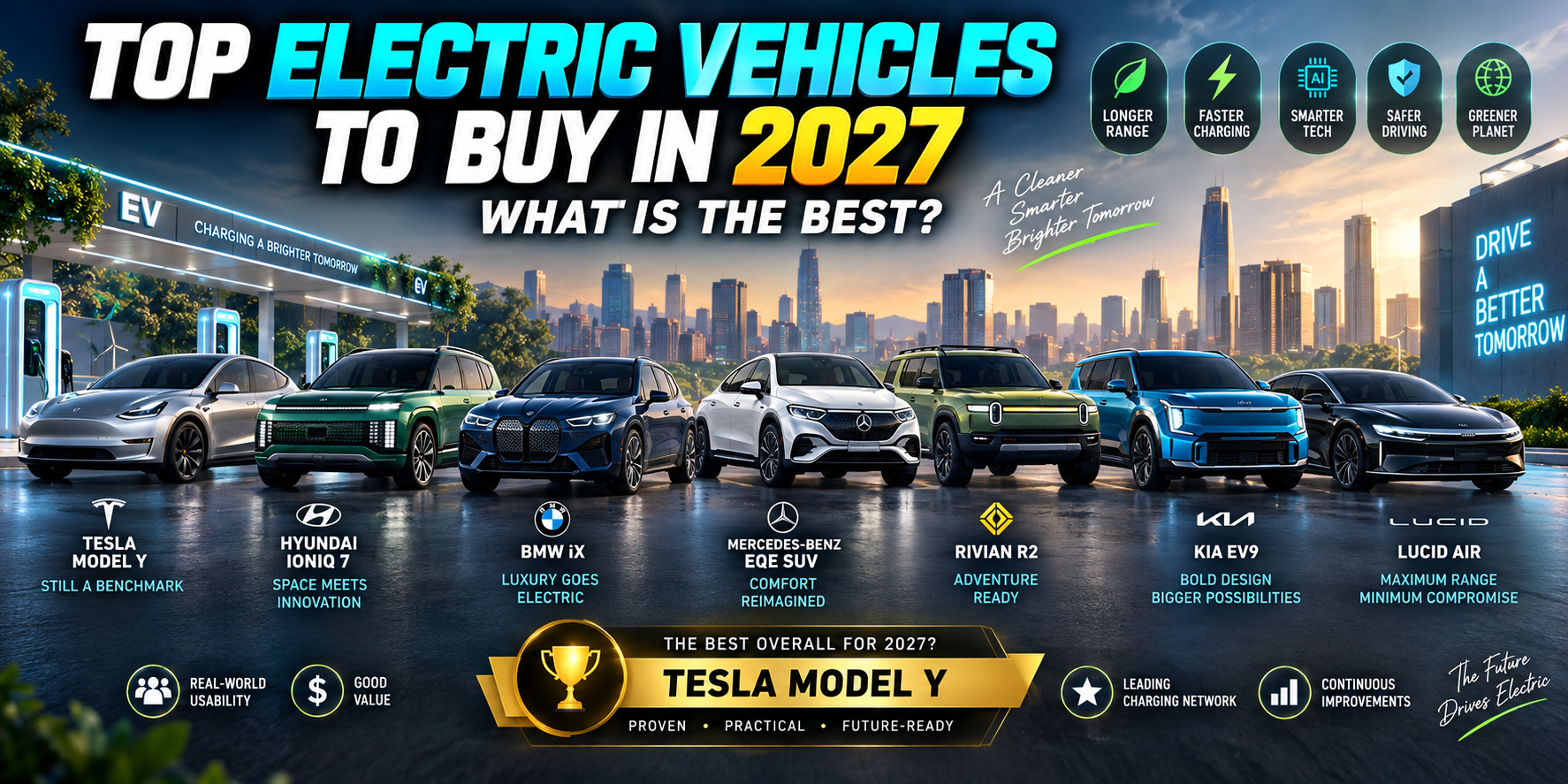
The real 2027 EV question is simple: which vehicle gives you the best mix of price, range, charging speed, comfort, and daily usefulness? The top electric vehicles to buy in 2027 won’t look the same for a commuter with home charging and a family driving interstate miles every month.
Several redesigned models and new launches are still reaching showrooms. Prices, EPA range ratings, delivery dates, trim features, and incentives can shift, so confirm every number before signing. The choices below sort the market by the needs that matter most.
Top Electric Vehicles to Buy in 2027: What Is the Best?
There isn’t one winner for every driver. Your best fit depends on your budget, commute, garage charging, passenger count, and access to dependable DC fast chargers.
Chevrolet Bolt: The Low-Cost EV to Watch
The redesigned 2027 Chevrolet Bolt is the value choice to watch. Chevrolet lists 262 miles of EPA-estimated range, a 10% to 80% DC fast-charge time of about 25 minutes, and an available 150-kW charging peak.
Pricing needs care. Chevrolet has published starting figures of $27,600, $28,995 for an LT trim, and about $29,990 with destination in separate materials. That makes the Bolt appealing to first-time EV buyers, but final trim pricing and dealer availability should guide the purchase.
Its compact hatchback shape suits city parking and ordinary commuting. The tradeoff is a smaller cabin and less long-haul comfort than midsize crossovers.
Nissan Leaf S+: Affordable Range for Everyday Drivers
The Nissan Leaf S+ offers a stronger range figure without a luxury badge. Nissan lists 303 EPA-estimated miles and a $29,990 MSRP before its $1,495 destination charge, or $31,485 delivered.
The S+ can charge at up to 150 kW and is listed at roughly 35 minutes from 10% to 80%. It uses J1772 for AC charging and NACS/J3400 for DC fast charging, which matters as U.S. charging hardware continues to change.
Its hatchback cargo area is practical for groceries and weekend gear. Still, buyers should compare the S+ with any lower-priced Leaf trim that arrives, because range, equipment, and connector details can differ.
Hyundai Ioniq 5 and Kia EV3: Strong Value With Useful Features
The Hyundai Ioniq 5 remains one of the most balanced EVs for families. Reported 2027 range runs from 245 miles for the standard-range version to 318 miles for longer-range models. Its 800-volt electrical architecture supports fast charging, with a reported 10% to 90% session in around 30 minutes.
Reported entry pricing differs by source, $35,250 before destination or $36,900 including it. The Ioniq 5’s airy rear seat, boxy cargo area, and road-trip comfort justify the step up from a small hatchback.
Kia’s 2027 EV3 targets a lower price point. Kia has announced U.S. pricing under $30,000, up to 321 miles of EPA range, and an estimated 10% to 80% charge in 29 to 31 minutes. It should suit city drivers and smaller households better than the larger Ioniq 5.
Tesla Model 3 Standard: Long Range and Broad Fast-Charging Access
The Tesla Model 3 Standard deserves a close look for efficient long-distance driving and broad Supercharger access through NACS. Tesla’s charging network can simplify route planning in places where other fast chargers remain sparse or unreliable.
However, Tesla changes pricing and equipment often. Confirm the exact range rating, purchase price, charging access, insurance quote, and delivery timing for the specific car you order. The sedan body also gives up the hatchback flexibility of an Ioniq 5, Bolt, or EV3.
The center-screen-first controls divide drivers. Take a proper test drive, including parking, climate controls, and highway driving, before deciding that its software-based interface suits your routine.
BMW iX3, Volvo EX60, and Lucid Air: Premium Choices for More Range
The 2027 BMW iX3 50 xDrive arrives as a premium SUV with a $61,500 starting MSRP plus $1,350 destination. BMW lists 383 to 434 miles of range depending on wheel and tire choice, along with a 21-minute 10% to 80% fast-charge time.
Volvo’s 2027 EX60 starts at $58,400. Volvo reports 307 miles for the P6, 322 miles for the P10 AWD, and up to 400 miles for the P12 AWD. Its reported 10% to 80% charging time is 16 to 19 minutes.
The Lucid Air Grand Touring remains the maximum-range luxury choice, but confirm its current configuration, pricing, and official rating directly with Lucid. Large wheels, cold weather, high speeds, and loaded cargo can pull real-world range well below any window-sticker figure.
Which 2027 EV Is Best for Your Driving Needs?
Range alone doesn’t settle the decision. A vehicle that fits your parking space, charging routine, and passengers will feel better than one bought for a headline number.
Best Budget EV Under $30,000
The Chevrolet Bolt is the clearest budget recommendation if its final launch pricing stays near Chevrolet’s published figures. It combines 262 miles of EPA range with NACS DC charging and a compact footprint that works well in dense neighborhoods.
The Kia EV3 could be an equally compelling alternative if its under-$30,000 pricing holds. Meanwhile, a lower Leaf trim may lower the entry cost, though it will likely give up range or equipment compared with the Leaf S+.
Slate Truck also belongs on a budget shopper’s watchlist, especially for buyers who want a small utility vehicle. Yet don’t assume the cheapest sticker price creates the lowest ownership cost. Destination fees, options, insurance, tires, charging access, and financing can move the total quickly.
Best EV for Road Trips and Long Daily Commutes
The Model 3 is a sensible choice for drivers who value efficiency and Supercharger access. It has less cargo flexibility than an SUV, but its sedan shape can reduce energy use at highway speed.
For luxury distance, the Lucid Air Grand Touring is the range-focused option. It carries a far higher purchase price, so it makes sense only if its comfort, performance, and distance between stops fit your priorities.
A BMW iX3 offers a more familiar SUV seating position with a strong official range rating. The Chevrolet Silverado EV and Rivian R1T are better choices for people who truly need a truck bed, towing ability, or outdoor cargo capacity. Their size, price, and tire costs make little sense for a solo commuter.
Best EV for Fast Charging and Family Use
The Hyundai Ioniq 5 is the best all-around family pick here because it pairs quick charging with useful rear-seat space and an easy-to-load cargo area. A quick peak charging number matters, but the whole stop matters more, including charger availability, battery preconditioning, payment, and the time needed to unplug.
The Volvo EX60 should appeal to families wanting a premium cabin and fast charging in an SUV shape. The Kia EV3 costs less and fits tighter spaces, although it won’t offer the same passenger room.
The Nissan Leaf S+ has ample range for many family schedules. However, inspect the rear seat, child-seat anchors, luggage space, and local fast-charger locations before treating it as a road-trip vehicle.
A fast-charging EV saves time only when the charger works, the connector fits, and the route has stations where you need them.
Best Luxury EV for Maximum Range
The Lucid Air Grand Touring is the luxury choice for shoppers who place maximum range at the top of the list. Still, a long range figure doesn’t cover every part of ownership.
The BMW iX3 and Volvo EX60 offer a more practical SUV profile for passengers and cargo. Compare their cabin comfort, service locations, driver-assistance features, insurance premiums, tire replacement costs, and expected resale value.
Luxury EV ownership has an ongoing cost. Low-profile tires and specialized body repairs can erase part of the fuel savings, especially after an accident.
How to Compare 2027 Electric Vehicles Before You Buy
A reliable comparison starts with the trim you can actually order. Use EPA figures when they are available, then separate them from manufacturer estimates, early media reports, and pre-production claims.
Look Beyond EPA Range and Battery Size
EPA range is useful, but it isn’t a promise for every trip. Highway speed, outside temperature, cabin heating, air conditioning, wheel size, heavy cargo, and battery age all affect the number you see.
Compare efficiency in kWh per 100 miles, usable driving range, battery-warranty terms, passenger room, cargo capacity, and towing limits. A larger battery can provide more distance, yet it may also add weight and cost.
Check Charging Speed, Connector Type, and Home Power
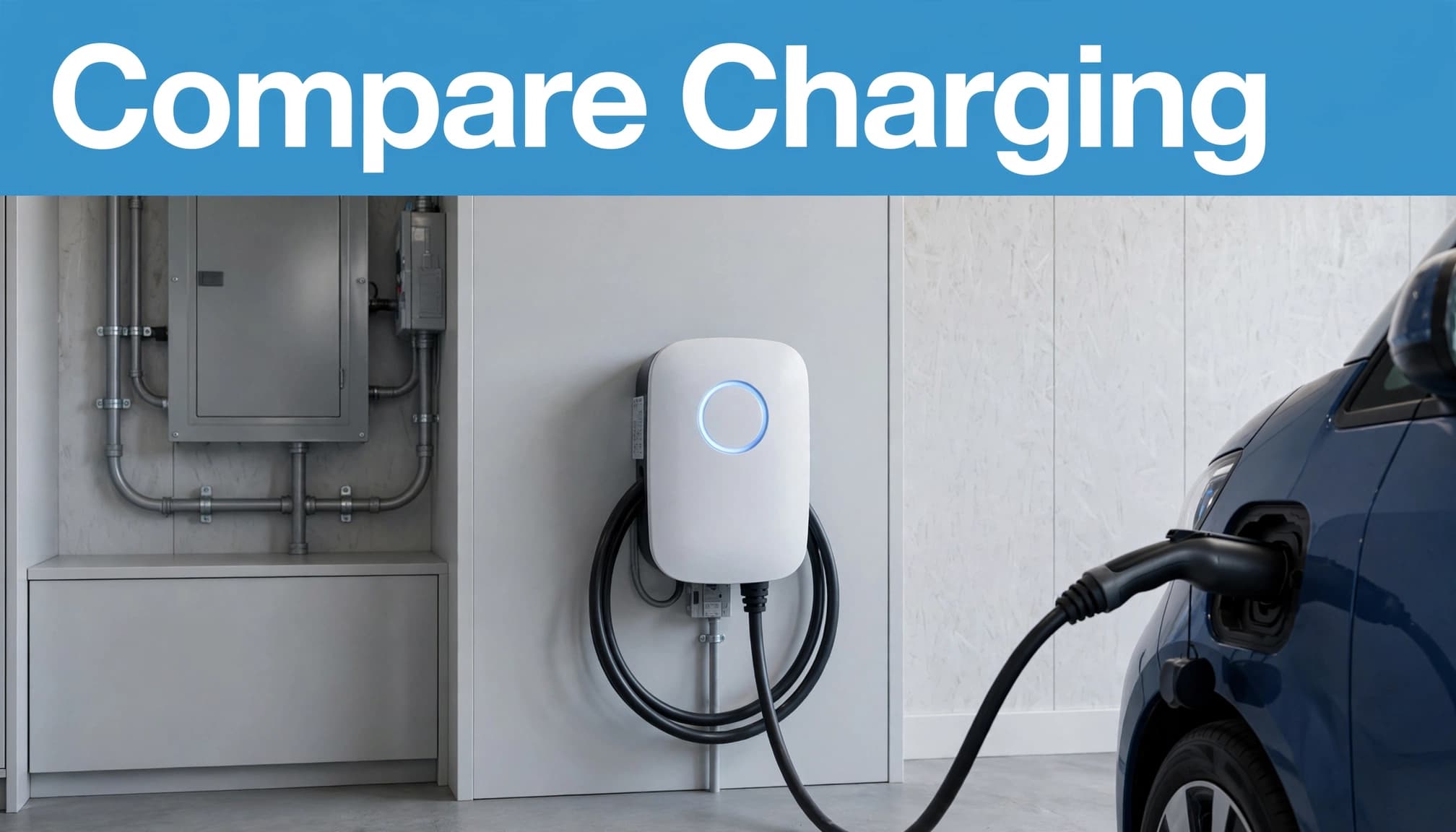
Level 1 charging uses a standard household outlet and works best for low daily mileage. Level 2 charging uses 240-volt power and is the practical home solution for most owners. DC fast charging is for trips and occasional rapid top-ups.
Before buying, ask an electrician whether your electrical panel can support a Level 2 circuit. Also check connector type, NACS adapter needs, and charger coverage around your work, home, and regular routes. The DOE’s charging infrastructure resources can help you understand public network development.
Calculate the Real Cost of Ownership
Add more than the monthly payment. Include destination fees, loan interest, insurance, home electricity, public DC charging, maintenance, tires, registration, and likely resale value.
For example, home charging at a lower overnight utility rate can cost far less per mile than public DC charging. That advantage narrows if you rely on premium fast chargers for most of your energy. Local electric rates and gasoline prices change the math, so use your own utility bill and driving mileage.
Verify Incentives Before Signing the Paperwork
Federal purchase credits, state rebates, utility offers, and dealer programs can change quickly. Eligibility may depend on buyer income, vehicle sourcing, MSRP, purchase date, or the exact trim.
Check current IRS rules, your state’s programs, utility requirements, and manufacturer offers before paying a deposit. The EV charging station tax credit guide can help with home-charger incentives, while Congress’s EV charging-credit policy information provides useful federal context.
What Can Change Before Your 2027 EV Arrives
Early model-year information often mixes confirmed specifications with projections. A manufacturer may announce a range estimate, then receive a different EPA rating after final testing. Likewise, dealer inventory can favor higher trims even when an affordable base model appears in marketing.
Ask for a buyer’s order that identifies the trim, battery, wheels, destination charge, options, and estimated delivery date. If an incentive is part of the deal, ask how it is applied and what happens if eligibility changes before delivery.
Take a Test Drive That Matches Your Normal Week
Drive the route you use most often. Include a rough road, a highway merge, a parking garage, and a stop where you load bags or child seats. Check rear visibility, seat comfort, screen controls, and how easily you can reach the charging port.
Bring the people and equipment that usually ride with you. An EV can look roomy on a showroom floor yet feel tight with a rear-facing child seat, a stroller, or work gear in the cargo area.
The Best 2027 EV Depends on Price, Charging, and Daily Life
For value, start with the Bolt or Leaf. Choose the Ioniq 5 for fast charging and family practicality, the Model 3 for efficient travel and Supercharger access, and the BMW iX3 or Volvo EX60 for a premium SUV. The Lucid Air remains the range-first luxury choice.
Test-drive your finalists, check local inventory, confirm EPA ratings and incentives, and plan charging before buying. The best EV fits your normal week, not the biggest number printed on its window sticker.