An EV that travels farther, charges quickly, and carries less flammable material sounds close to perfect. Solid battery technology could help make that picture real, but most of the work still happens in pilot plants, test rooms, and validation fleets.
Instead of a liquid or gel electrolyte, these batteries use a solid material to move lithium ions. As of August 2026, true all-solid-state packs remain early-stage products, while semi-solid and hybrid cells are reaching vehicles sooner. For a wider look at latest EV battery technology in 2026, compare solid-state claims with sodium-ion, LFP, NMC, and silicon-anode designs.
The promise is large. The factory challenge is even larger.
What Solid Battery Technology Is and How It Works
A battery has two electrodes, the anode and cathode, with an electrolyte between them. During discharge, lithium ions travel through the electrolyte while electrons take the external path through the motor and other electrical systems.
In a standard lithium-ion cell, the electrolyte is liquid. In solid battery technology, it is a solid ceramic, polymer, glass-like compound, or blend of materials. The electrolyte must carry lithium ions quickly while blocking electrons, because electrons crossing inside the cell would create a short circuit.
The major attraction is a lithium-metal anode. Lithium metal can store more energy by weight than graphite, which is the common anode material in today’s EV cells. However, it is also difficult to control over thousands of charging cycles.
The solid electrolytes behind the next battery generation
Sulfide electrolytes often offer strong ion conductivity, but moisture can damage them and create difficult handling conditions. Oxide electrolytes tend to be chemically stable, although their hard ceramic structure can be difficult to process into thin layers.
Polymer electrolytes are more flexible and familiar to manufacturers. Still, many perform less effectively at room temperature. Halide and composite electrolytes try to balance conductivity, stability, flexibility, and manufacturing cost.
No single material has won. The bond between the electrolyte and each electrode matters as much as the electrolyte itself.
Why interfaces, pressure, and dendrites matter
Battery materials expand and contract during charging. If solid layers lose contact, resistance rises and capacity falls. Brittle ceramic layers may crack, while other designs need steady pressure to keep the cell stack tightly joined.
Lithium dendrites create another risk. These needle-like lithium growths can push through weak points in an electrolyte and short the cell.
A solid electrolyte can reduce fire risk by removing much of the flammable liquid, but it cannot make a damaged or defective battery risk-free.
The Real Benefits of Solid-State Batteries for EVs
Automakers are chasing a more energy-dense battery because it can change the shape of an EV. More usable energy in a smaller cell could extend driving range without adding hundreds of pounds to the vehicle.
Cell-level targets around 400 to 500 Wh/kg appear in many development plans. However, cooling hardware, protective housings, wiring, and structural supports reduce that figure at the full-pack level.
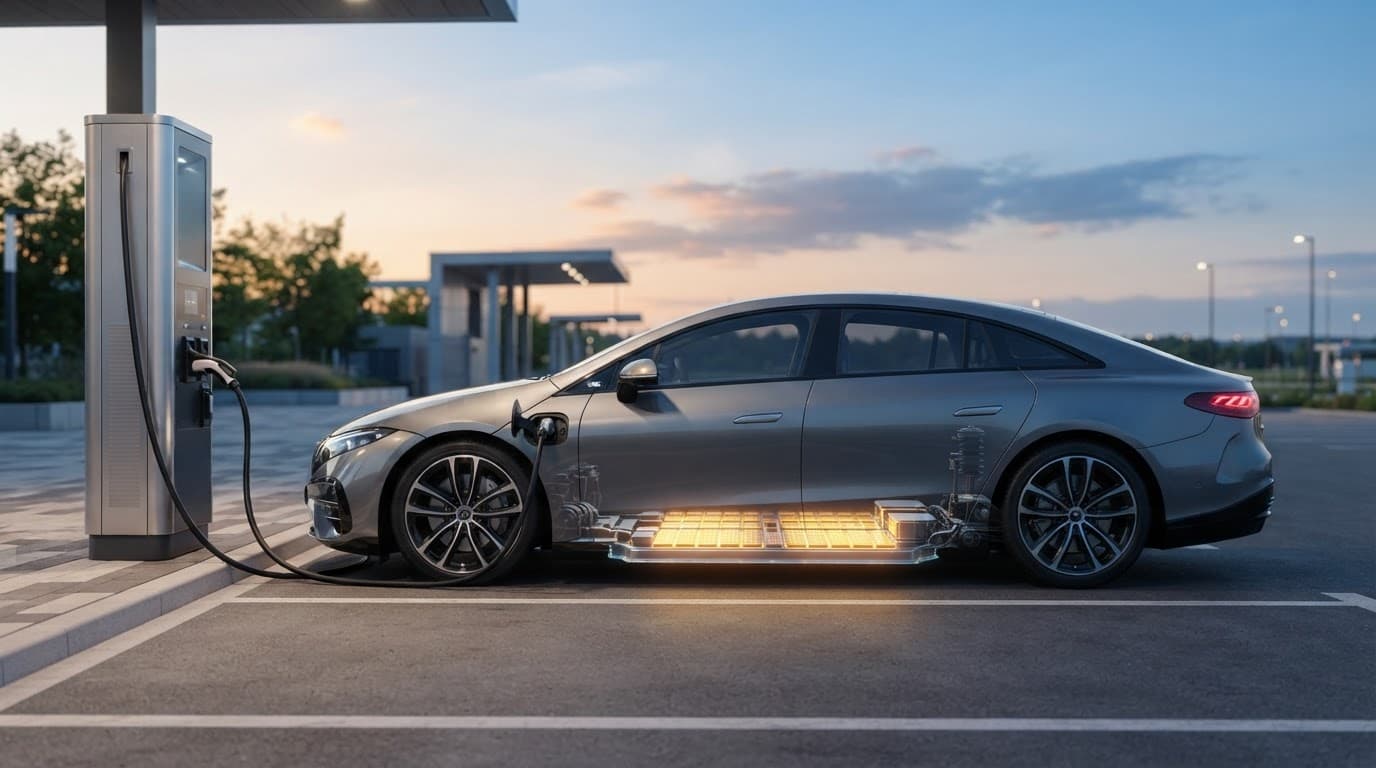
A smaller pack could free space for passengers or cargo. It could also reduce vehicle weight, although the gains depend on the chemistry and the pressure hardware needed inside the pack. Faster charging may follow if the cell tolerates high current without damaging its interfaces.
Advanced liquid-electrolyte packs still deserve credit. A comparison of BYD, Tesla, and CATL batteries shows why mature LFP and nickel-based cells remain central to the current EV market.
Solid-state batteries vs. conventional lithium-ion packs
The practical comparison looks less dramatic than a laboratory headline.
| Factor | Solid-state battery | Conventional lithium-ion |
|---|---|---|
| Energy density | Potentially higher | Mature, chemistry-dependent |
| Charge speed | Promising, still under validation | Proven in production vehicles |
| Fire resistance | Potentially improved | Depends on chemistry and pack design |
| Cold-weather behavior | Varies sharply by electrolyte | Well-characterized across many models |
| Cycle life | Still difficult to prove at scale | Established warranties and field data |
| Cost | High at pilot scale | Much lower at large scale |
Today’s lithium-ion cells have mature factories, proven reliability, supplier networks, and known repair processes. A solid-state prototype can lead on energy density yet still lose on cost, production yield, and repeated fast charging.
Why Manufacturing Remains the Hard Part
Making one impressive cell is not the same as making millions of identical cells. A solid electrolyte must be thin, defect-free, and bonded tightly to the electrodes. Small flaws can turn into heat, resistance, lost capacity, or a short circuit.
Pilot-scale solid-state cells in 2026 are often estimated at roughly $300 to $500 per kWh. Many mainstream lithium-ion cells cost about $70 to $110 per kWh. That gap explains why early products are more likely in premium EVs, aerospace, defense systems, motorcycles, and specialized storage.
The limits that keep solid cells out of most cars
Moisture-sensitive materials require controlled factory conditions. Manufacturers also need to manage cell pressure, formation time, dry-room handling, and strict quality checks.
Low yield is especially painful. If a production line rejects too many cells, the cost of every accepted cell rises fast. Thin layers are desirable because they save weight and volume, yet thin layers are harder to make without pinholes or cracks.
Samsung SDI has operated a pilot line in South Korea since 2023, producing prototypes for customer testing, according to this overview of the solid-state battery race to mass production. Pilot output is progress, but it is not proof of broad retail supply.
Why early buyers will pay more
Premium vehicles can absorb expensive batteries because their buyers pay for long range, high performance, or unusual packaging. A premium launch also gives manufacturers a smaller group of vehicles to monitor before larger volumes begin.
Mass-market EVs need more than impressive range. They need affordable replacement packs, long warranties, stable winter performance, and factories that can build cells every day without costly failures.
Who Is Building Solid-State Batteries in 2026?
Toyota remains one of the most closely watched programs. The company has described 2027 to 2028 as its commercialization window for all-solid-state EV batteries, with limited early production expected before broader expansion. Toyota has also discussed charging from 10% to 80% in 10 minutes or less, though real vehicle results will matter more than targets.
Samsung SDI says it plans mass production of its SolidStack all-solid-state cells in the second half of 2027. QuantumScape continues cell-development and qualification work with Volkswagen’s PowerCo. Solid Power, ProLogium, ION Storage Systems, and Factorial Energy also remain focused on samples, pilot processes, and automotive validation.
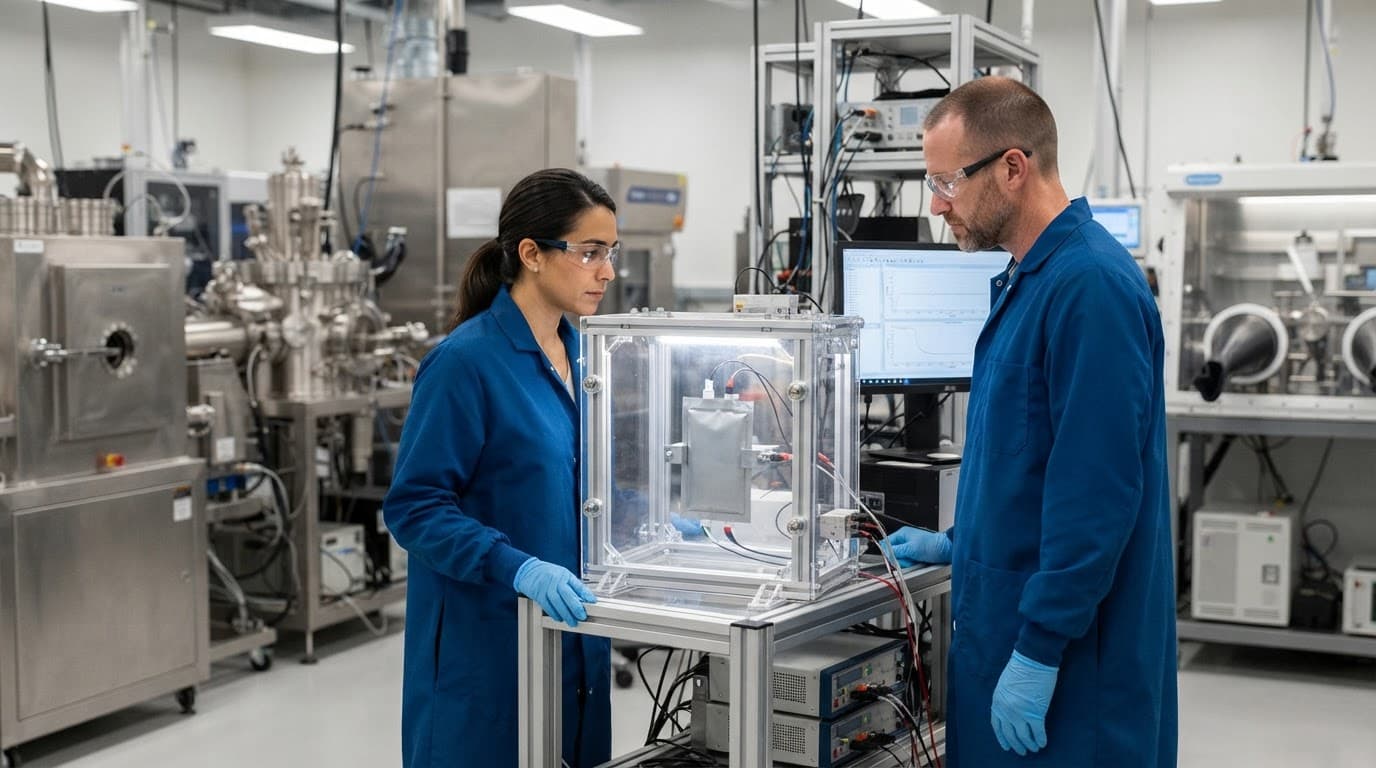
Chinese companies are active as well. CATL, BYD, GAC, Dongfeng, SAIC, and IM Motors have all discussed advanced batteries, but buyers should separate semi-solid products from true all-solid-state cells. For a broader company-by-company view, see these solid-state battery manufacturers.
The EVs and pilot programs worth watching
NIO’s 150 kWh pack is a concrete semi-solid example. It has appeared in NIO’s battery-swap network and supported long-range demonstration drives. It is not a broadly available all-solid-state battery.
SAIC, MG Motor, and IM Motors have also promoted semi-solid battery activity. These products show that hybrid approaches can reach roads before fully solid cells do.
Reports have linked Verge Motorcycles and Donut Lab to high-density solid-state motorcycle batteries. Still, buyers should treat those claims carefully until a retail vehicle, warranty, and independent pack data confirm the chemistry. No true all-solid-state EV is broadly available to everyday buyers in 2026.
When Will Solid-State Batteries Become Affordable?
The near-term calendar is clearer than the price curve. In 2026, most activity centers on pilot lines, validation cells, supplier partnerships, and demonstrations. Toyota and Samsung SDI point to 2027 or 2028 for limited production, while wider adoption is more likely in the early 2030s.
Some market forecasts still place Toyota’s broad solid-state ramp nearer 2030, as shown in this EV solid-state battery market outlook. That longer timeline makes sense if yields improve slowly or materials remain expensive.
Semi-solid and hybrid designs may bridge the gap. They retain some liquid or gel content, but can offer higher energy density sooner than a fully solid design. Their arrival doesn’t mean all-solid-state batteries have arrived.
What consumers should check before trusting a battery claim
A battery announcement should answer a few plain questions:
- Confirm whether the product is all-solid-state, semi-solid, quasi-solid, or a conventional lithium-ion cell with a new anode.
- Look for pack-level energy density, not only a single-cell figure.
- Review cycle-life results at realistic fast-charging speeds.
- Check hot-weather and cold-weather performance data.
- Read the warranty terms and confirm whether customer vehicles already use the battery.
Indian buyers may first encounter solid battery technology through imported premium EVs, supplier partnerships, and local manufacturing announcements. Mass-market solid-state cars will likely take longer. Until then, comparing electric vehicle battery chemistries is a better buying tool than chasing a single headline.
Final Thoughts
Solid battery technology could produce safer, lighter EVs with more range, but durable high-volume manufacturing remains the test that matters. The market now runs on two tracks: true all-solid-state programs targeting the late 2020s, and semi-solid products that can reach vehicles sooner.
Judge each claim by shipped vehicles, independent performance data, warranty coverage, and factory output. A working battery in a customer’s car carries more weight than a bold range figure on a presentation slide.