The U.S. automotive industry is rapidly embracing electrification, but one technology continues to attract millions of buyers—hybrid vehicles. While fully electric vehicles (EVs) continue to grow, hybrids remain the preferred choice for drivers who want exceptional fuel economy without worrying about charging infrastructure.
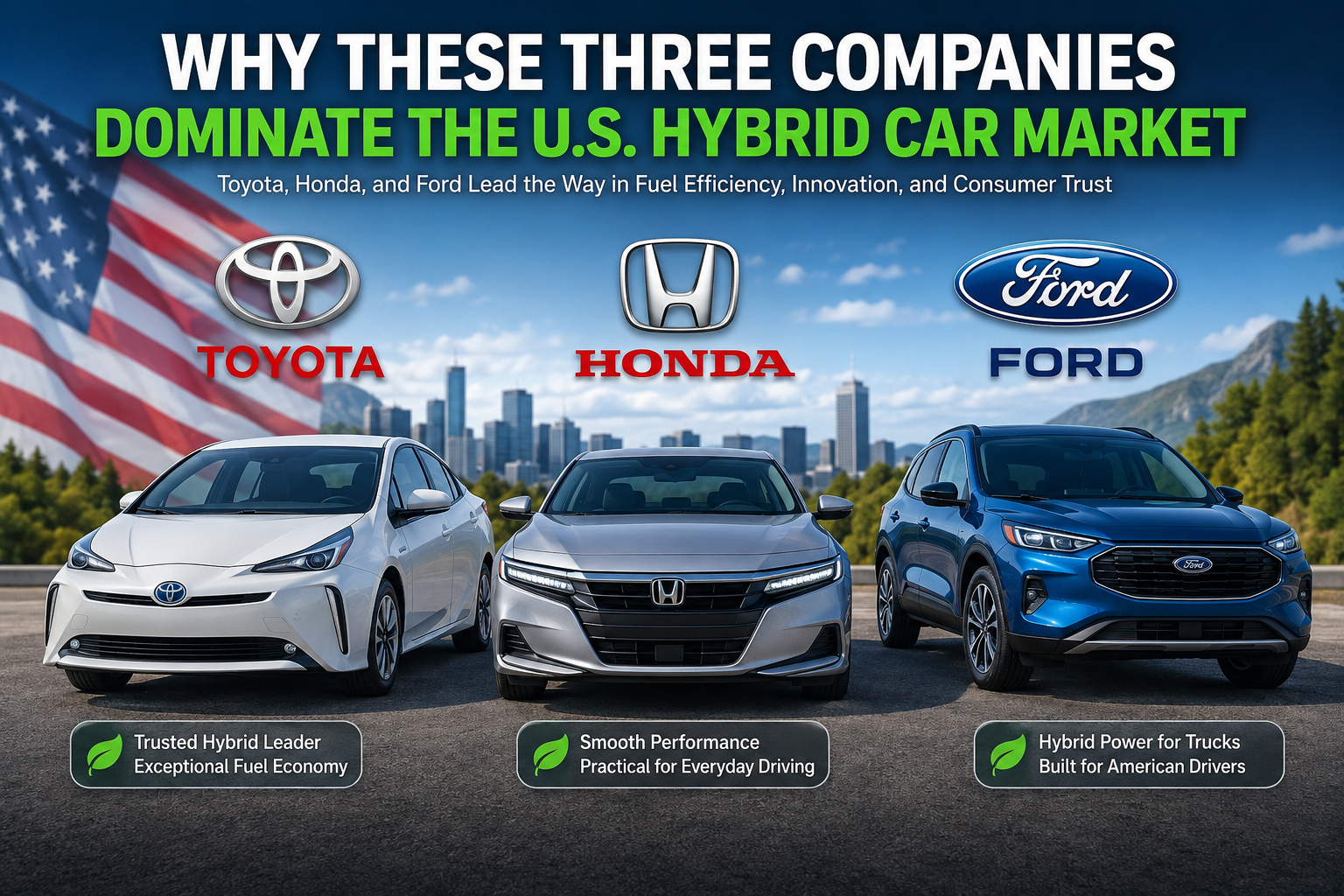
Among dozens of automakers competing in this segment, Toyota, Honda, and Ford have established themselves as the clear leaders in the U.S. hybrid market. Their decades of innovation, dependable vehicles, and expanding hybrid lineups have helped them capture the majority of hybrid sales across America.
Here’s why these three companies continue to dominate.
1. Toyota: The Undisputed Hybrid Leader
When people think about hybrid cars, Toyota is usually the first brand that comes to mind.
Toyota pioneered mainstream hybrid technology with the launch of the Prius more than two decades ago. Since then, the company has continuously refined its Hybrid Synergy Drive system, making it one of the most reliable and fuel-efficient hybrid technologies available today.
Best-Selling Toyota Hybrid Models
- Toyota Prius
- Toyota Camry Hybrid
- Toyota Corolla Hybrid
- Toyota RAV4 Hybrid
- Toyota Grand Highlander Hybrid
- Toyota Crown Hybrid
- Toyota Sequoia Hybrid
- Toyota Tacoma Hybrid
Why Toyota Leads
- Proven hybrid reliability
- Industry-leading fuel efficiency
- Wide selection of hybrid SUVs, sedans, and trucks
- Strong resale values
- Low maintenance costs
- Extensive nationwide dealership network
Many consumers choose Toyota because they know the hybrid system has already been tested by millions of drivers worldwide.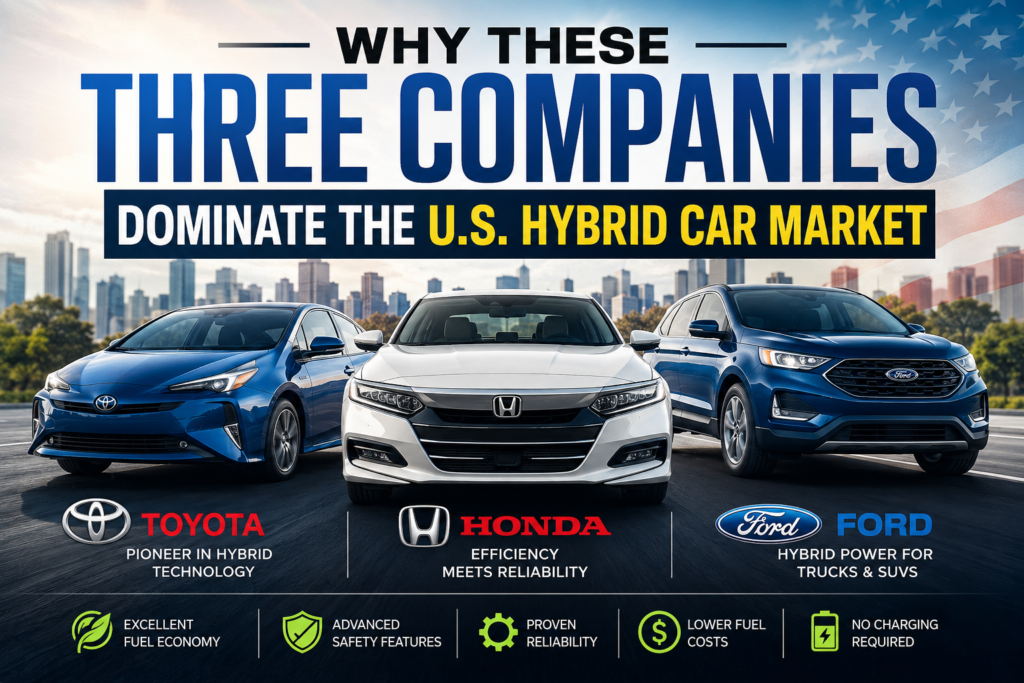
2. Honda: Efficiency Meets Everyday Practicality
Honda has built a reputation for producing practical, affordable, and dependable vehicles. Its latest two-motor hybrid system delivers smooth performance while maintaining impressive fuel economy.
Instead of focusing only on small hybrid cars, Honda has expanded its lineup to include family SUVs and midsize sedans.
Popular Honda Hybrid Models
- Honda Accord Hybrid
- Honda CR-V Hybrid
- Honda Civic Hybrid
Why Buyers Choose Honda
- Smooth driving experience
- Excellent fuel economy
- Competitive pricing
- Comfortable interiors
- Strong safety ratings
- Lower ownership costs
Honda’s hybrid powertrains are designed to operate quietly while providing responsive acceleration, making them ideal for both city commuting and highway driving.
3. Ford: America’s Hybrid Truck and SUV Champion
Ford has taken a different approach than many competitors.
Instead of concentrating only on compact cars, Ford successfully introduced hybrid technology into pickup trucks and larger SUVs—segments that remain extremely popular in the United States.
Best Ford Hybrid Models
- Ford Maverick Hybrid
- Ford Escape Hybrid
- Ford F-150 Hybrid
- Ford Explorer Hybrid
Why Ford Continues Growing
- Strong truck heritage
- Hybrid options for work vehicles
- Competitive towing capability
- Advanced driver-assistance technology
- Comfortable interiors
- Lower fuel costs than traditional gasoline trucks
The Ford Maverick Hybrid has become especially popular because it combines pickup versatility with fuel economy that rivals many compact sedans.
What Makes These Brands So Successful?
Proven Reliability
Hybrid buyers typically keep their vehicles for many years.
Toyota and Honda have earned exceptional reputations for long-lasting hybrid systems, while Ford has significantly improved reliability in its latest hybrid models.
Better Fuel Economy
One of the biggest reasons Americans buy hybrids is fuel savings.
Modern hybrids commonly deliver:
- 40–60 MPG for compact cars
- 35–45 MPG for midsize sedans
- 35–42 MPG for hybrid SUVs
- Around 40 MPG for compact hybrid trucks
These savings can significantly reduce annual fuel expenses.
No Charging Required
Unlike battery-electric vehicles, hybrids recharge themselves through regenerative braking and the gasoline engine.
Drivers never need to search for charging stations or install home chargers.
This convenience makes hybrids especially attractive in regions where EV charging infrastructure is still developing.
Expanding SUV Lineups
Consumer preferences continue shifting toward SUVs.
Toyota, Honda, and Ford have responded by offering hybrid versions of their most popular utility vehicles.
Examples include:
- Toyota RAV4 Hybrid
- Honda CR-V Hybrid
- Ford Escape Hybrid
These models combine spacious interiors with impressive fuel economy.
Advanced Safety Technology
Modern hybrid vehicles now include advanced driver-assistance systems such as:
- Adaptive Cruise Control
- Lane Keeping Assist
- Automatic Emergency Braking
- Blind Spot Monitoring
- Rear Cross Traffic Alert
These technologies improve both safety and driving confidence.
Hybrid vs Electric Cars
Many buyers still compare hybrids with fully electric vehicles.
| Feature | Hybrid | Electric Vehicle |
|---|---|---|
| Charging Required | No | Yes |
| Driving Range | Excellent | Depends on battery |
| Fuel Economy | Very High | No gasoline |
| Long Trips | Easy | Charging stops required |
| Infrastructure | Existing gas stations | Charging network needed |
For drivers who frequently travel long distances or live in areas with limited charging infrastructure, hybrids remain an attractive choice.
Why Americans Continue Choosing Hybrids
Several market trends explain why hybrid demand remains strong:
- Rising fuel prices
- Improved hybrid technology
- Better resale value
- Lower emissions
- No range anxiety
- Expanding SUV and truck options
- Lower maintenance compared with many conventional gasoline vehicles
These advantages make hybrids an ideal transition technology for many households.
What to Expect in the Future
The hybrid market is expected to remain highly competitive as automakers expand electrified offerings.
Toyota continues investing heavily in next-generation hybrid systems, Honda is introducing more efficient powertrains across its lineup, and Ford is broadening hybrid availability in trucks and SUVs.
As fuel-efficiency regulations become stricter and consumers seek lower operating costs, hybrid vehicles are likely to play an even larger role in the U.S. automotive market.
Final Thoughts
Toyota, Honda, and Ford have earned their leadership positions through decades of engineering innovation, dependable products, and a deep understanding of what American drivers want. Whether it’s Toyota’s unmatched hybrid experience, Honda’s balance of efficiency and comfort, or Ford’s leadership in hybrid trucks and SUVs, these three companies continue to shape the future of the U.S. Hybrid Car Market.
For buyers seeking lower fuel costs, dependable performance, and an easy transition toward electrified driving, these manufacturers remain the benchmark for hybrid vehicles in 2026.
Frequently Asked Questions (FAQ)
Which company sells the most hybrid cars in the U.S.?
Toyota remains the largest hybrid vehicle manufacturer in the U.S., led by models such as the Prius, RAV4 Hybrid, and Camry Hybrid.
Why are hybrid cars so popular?
Hybrids offer excellent fuel economy, reduced emissions, and do not require external charging, making them practical for everyday driving.
Are hybrid cars cheaper to maintain?
In many cases, hybrid maintenance costs are comparable to conventional vehicles, and regenerative braking can reduce brake wear over time.
Which hybrid SUV is best in 2026?
Popular options include the Toyota RAV4 Hybrid, Honda CR-V Hybrid, and Ford Escape Hybrid, each offering strong efficiency, safety, and practicality.
Is buying a hybrid worth it?
For drivers who want improved fuel economy without relying on charging stations, hybrids remain an excellent choice and often deliver long-term savings.