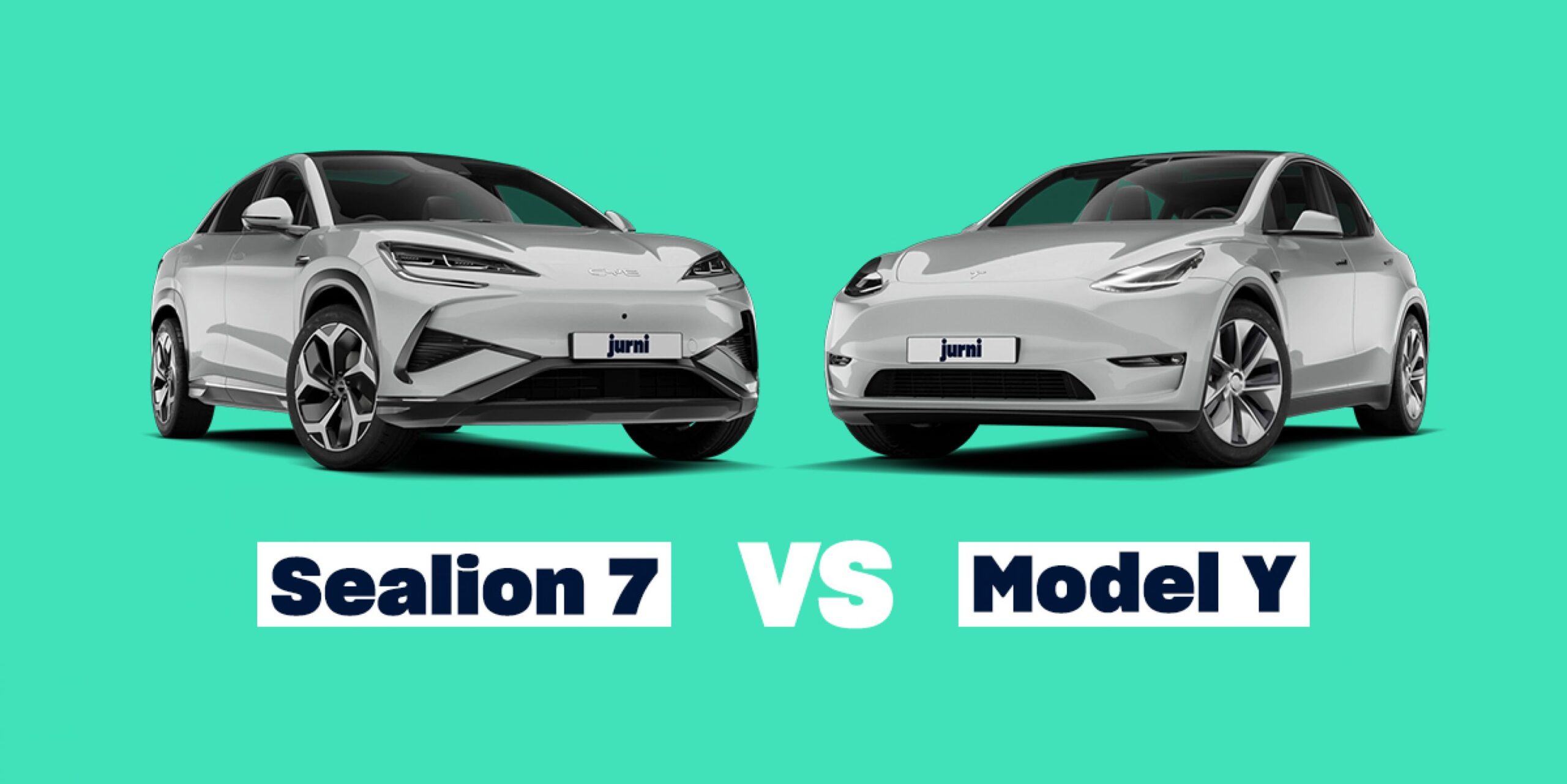
Two electric family SUVs entered this test almost tied on price, and they stayed close the whole way. The surprise was not that one car won, but how often the lead changed.
This comparison used New Zealand-spec, entry-level rear-wheel-drive versions of the 2025 BYD Sealion 7 and the refreshed Tesla Model Y, so some pricing and features may differ in the US. Still, the strengths on display here, space, software, charging, comfort, and family duty, translate well.
Price, range, and straight-line pace
The opening numbers set the tone. In this test, the Model Y started at NZ$67,900, while the Sealion 7 came in at NZ$67,990. Tesla clawed back that tiny edge on sticker price, but BYD made up ground with lower reported delivery costs.
Here is the core spec snapshot from the video:
| Model | Price | Range | Power | Torque | Battery | 0-100 km/h |
|---|---|---|---|---|---|---|
| Tesla Model Y RWD | NZ$67,900 | 466 km | 220 kW | 420 Nm | 60 kWh cited | 5.9 sec |
| BYD Sealion 7 RWD | NZ$67,990 | 480 km | 230 kW | 380 Nm | 84 kWh | not stated |
On paper, BYD’s bigger battery only buys 14 km more range, so the Tesla looks like the more efficient machine. That held up later in the drive, too. If you want a deeper battery-tech backdrop, this piece on the BYD Blade battery compared to Tesla and CATL helps explain why these brands take different paths.
When the road opened up, the Tesla felt quicker. The extra torque mattered more than BYD’s small power advantage, and the Model Y won the rolling acceleration test with less hesitation when the pedal went down.
The Sealion 7 had the bigger battery and longer range. The Model Y felt faster and used its energy better.
Cabin space, cargo, and comfort
The refreshed Model Y fixes one of the old car’s biggest weak spots. Outside, it looks cleaner and more settled. Inside, though, it still feels sparse. The BYD counters with a cabin that is warmer and more inviting, even if the dark trim choice in this test dulled some of its charm.
Front-seat space was a draw, even with a 6-foot-4 passenger. In the back seat, the BYD pulled ahead. Headroom stayed good in both, but the Sealion 7 offered much better knee room.
Cargo told a different story. The Tesla’s boot measured 854 liters, well ahead of the BYD’s 520 liters, and it also had the larger frunk, 117 liters versus 58. With the rear seats down, the Model Y was the better camping car too, thanks to a huge 2,158-liter load area and an easier power-folding seat setup.
Ride quality ended in a near dead heat. A tray-of-water test showed both cars spilling almost the same amount, although they did it for different reasons. The BYD’s soft ride was undercut by touchy pedals, while the Tesla lost water through side-to-side body movement. Cabin noise on coarse-chip roads was also almost identical.
Tech, screens, and family-friendly features
This round split the two cars more clearly. Tesla won on app quality, native security, in-car games, rear-seat heating, and the smoothness of its level 2 driver-assist system. The Model Y’s app remains one of the best in the business, and the car’s built-in Sentry Mode still feels a step ahead.
BYD answered with features Tesla buyers often wish they had. The Sealion 7 gets a proper heads-up display, a rotating 15.6-inch screen, a sunshade for the panoramic roof, leather seats, better camera views, and easier everyday controls. It also proved simpler in a basic usability test that included adjusting the wheel, setting climate control, and opening the glove box.
Both cars came with ventilated seats, panoramic roofs, child-presence detection, CN95 air filtration, heat pumps, and over-the-air updates. BYD also had the tighter turning circle and the stronger sound system, a 12-speaker Dynaudio setup with a subwoofer.
That split fits a broader pattern in Tesla robotaxi vision versus BYD strategy. Tesla still feels like a software company that builds cars. BYD feels like a car company that keeps adding more hardware.
Charging, warranty, and the final score
Charging favored Tesla. The Sealion 7 charged from 11 percent to 80 percent in 35 minutes on a 300 kW charger, with a 150 kW peak. The Model Y did the same jump in 25 minutes on a Tesla Supercharger, helped by a 175 kW max rate and automatic battery preheating.
Warranty went the other way. In this test, Tesla offered 4 years or 80,000 km for the vehicle and 8 years or 160,000 km for the battery. BYD matched the battery warranty and beat Tesla on vehicle coverage with 6 years or 150,000 km. BYD also had built-in vehicle-to-load, plus vehicle-to-grid readiness, which is a real draw for buyers who want home backup power.
Tesla won the video’s quirky “Spud Score” 74 to 70, helped by efficiency, charging speed, and cargo space. Yet the full scoreboard crowned the BYD Sealion 7 the overall winner by a slim margin. Another Carwow Sealion 7 vs Model Y review leaned Tesla instead, which says plenty about how tight this matchup is.
Final thoughts
The BYD Sealion 7 won this test because it packed in more range, better rear-seat space, a richer feature set, longer vehicle coverage, and useful power-out features. The Tesla Model Y stayed right on its bumper with better efficiency, stronger software, faster charging, and more usable cargo room.
That makes the result feel honest. The BYD edged the points tally, but the Tesla still looks like the sharper all-rounder for buyers who care most about app quality, charging speed, and space.