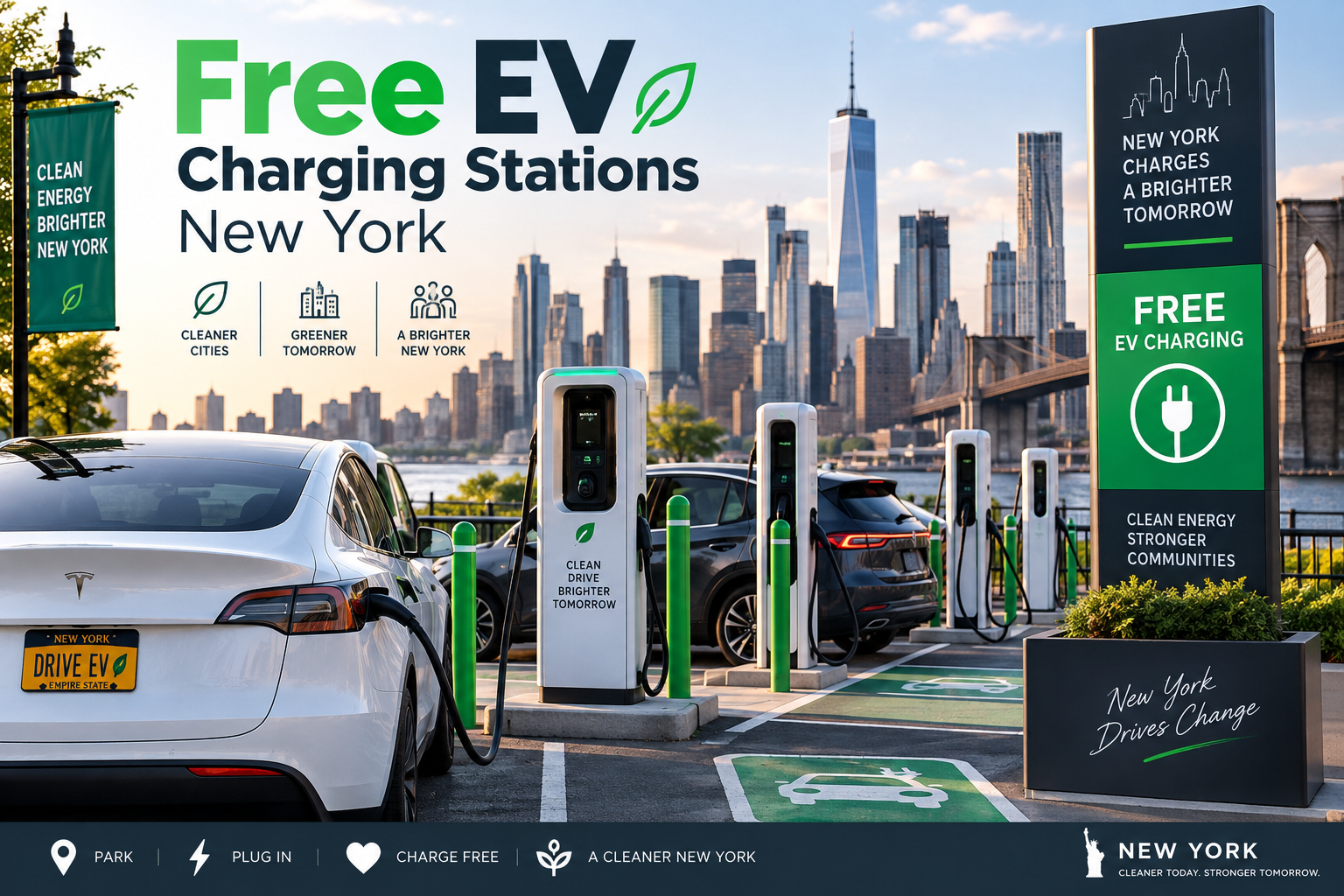
Free EV charging in New York usually comes from a location, host, promotion, or membership, not a single statewide program. Free EV charging stations New York drivers can use may appear at hotels, workplaces, libraries, parks, apartment buildings, and public facilities, but many public chargers still require payment.
Prices, access rules, and station status can change without much notice. Check the live listing before you drive over, especially when your battery is low.
This practical guide reflects information available in September 2026 and helps you separate a genuinely complimentary session from a discounted or paid charger.
Key Takeaways for Finding a Free Charge
- Free charging is most often a host-funded perk for guests, customers, employees, or residents. A publicly visible charger may still have restricted access.
- Level 2 stations at hotels, offices, libraries, parks, and multifamily buildings are the most likely places to find a complimentary session. They work best when you can stay for several hours.
- New York incentives can help property owners install chargers, but they do not require every funded station to provide free electricity.
- Check the live station listing for price, connector type, parking fees, operating hours, and recent driver reports before leaving home.
- Keep a paid backup nearby. A free charger can be occupied, offline, limited to certain users, or unavailable after business hours.
Where to Find Free EV Charging Stations New York Drivers Can Use
Complimentary charging is scattered across New York, often where you already plan to spend time. Hotels may offer it to overnight guests. Offices may include it with employee parking. Some libraries, municipal lots, state parks, apartment complexes, and retail centers also cover the session cost.
Still, public access and free access are different things. A charger in an open lot might require a parking payment, a hotel reservation, store purchase, or building credential. Confirm the connector, hours, parking rules, and eligibility before treating a pin on a map as part of your route.
Check host-funded charging at hotels, stores, workplaces, and apartments
Businesses and property owners sometimes pay the electricity bill because charging attracts customers or adds value for tenants. A hotel can make a Level 2 port available overnight, while a grocery store may offer a limited session during business hours.
Read the fine print. Some locations require guest registration, a minimum purchase, employee authorization, or resident access. Others set a two-hour limit to prevent one car from occupying the space all day. Parking can also cost more than the electricity saved.
A charger can be publicly visible while remaining limited to registered guests, employees, tenants, or paying customers.
Look beyond New York City for public facilities and community sites
Smaller cities, suburban towns, and rural destinations can be worth checking. Libraries, town halls, visitor centers, recreation sites, and state park facilities may host chargers funded through local programs or public projects. Availability is always location-specific.
Use a charging app to confirm that the unit is online and still free. Recent check-ins often reveal a broken connector, a gate that closes at night, or a newly added parking charge.
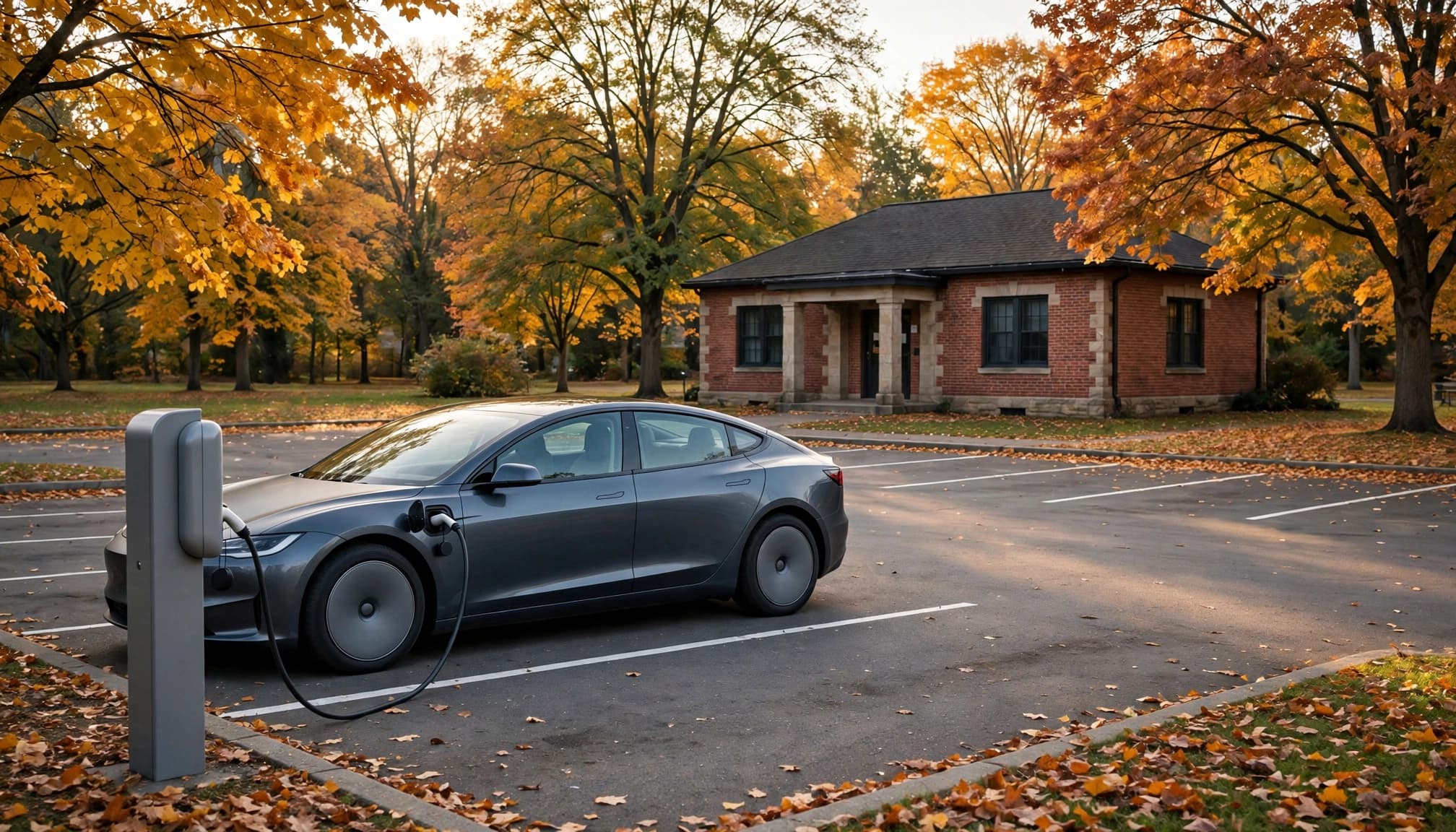
How New York Charging Incentives Can Lead to Free Public Access
New York helps pay for charging infrastructure, but an installation rebate is not a promise of free sessions. The site owner chooses pricing, access, and parking rules after the equipment goes in.
Under Charge Ready NY 2.0, workplaces, multifamily properties, and hotels can receive $3,000 per Level 2 charging port. Properties in Disadvantaged Communities can receive an additional $1,000 per port. The program also lists $4,000 per port for qualifying installations in Disadvantaged Communities.
Public funding can still support paid chargers
NYSERDA announced $35 million for Charge Ready NY Large Public Sector Project funding on August 14, 2026. The program supports publicly accessible Level 2 chargers on public property, with awards ranging from $1 million to $15 million and covering up to 80% of eligible documented costs.
That funding can increase the number of places to plug in. However, a municipality can still set a fee, limit charging hours, or charge separately for parking. Property owners also need to use eligible charging equipment and networks to qualify for program incentives.
Separate free charging from rebates and driver rewards
The Drive Clean Rebate helps reduce the cost of buying or leasing a new EV, with eligible vehicles receiving up to $2,000. It doesn’t pay for electricity at a public station.
SmartCharge New York works differently. In eligible Con Edison service areas across New York City and Westchester, drivers can earn $0.10 per kWh for off-peak home charging between midnight and 8 a.m. Participants can also earn $35 per month for avoiding summer peak charging, plus a possible $35 full-season bonus.
Summer peak rules apply weekdays from 2 p.m. to 6 p.m., June 1 through September 30. Some residential and small-business time-of-use customers aren’t eligible, so review Con Edison’s EV rewards terms before signing up.
How to Find and Confirm a Free Charger Before You Go
Start with station maps from ChargePoint, EV Connect, EVgo, Electrify America, Revel, Tesla, and other networks operating in New York. Filter for available ports when possible, then open each listing rather than relying on a map icon or an old search result.
For broader route planning, compare nearby options through this guide to EV charging stations in NYC and Upstate New York. It helps to know whether a free Level 2 stop fits your schedule better than a paid fast charger.
Read the station details, not just the word free
“Free” can mean several things. A hotel host may cover the charging session. A retailer might offer complimentary charging with a purchase. A membership could include a set number of sessions, or the first hour may be free while parking continues to accrue.
Look for the current price, access hours, payment screen, recent check-ins, and instructions for starting a session. If a listing has no recent activity, call the host when the stop matters. Also confirm whether an adapter is required before you arrive.
Choose the right charger for your trip
Level 2 charging is usually the better match for a long stop. It fits a hotel night, office day, apartment parking space, museum visit, or afternoon at a park. These stations are more likely to be host-funded because drivers remain parked for a while.
DC fast charging is built for shorter stops and highway travel. It costs more to install and operate, so free fast charging is uncommon. When timing matters, review New York’s fastest EV chargers and compare station power with what your vehicle can accept.
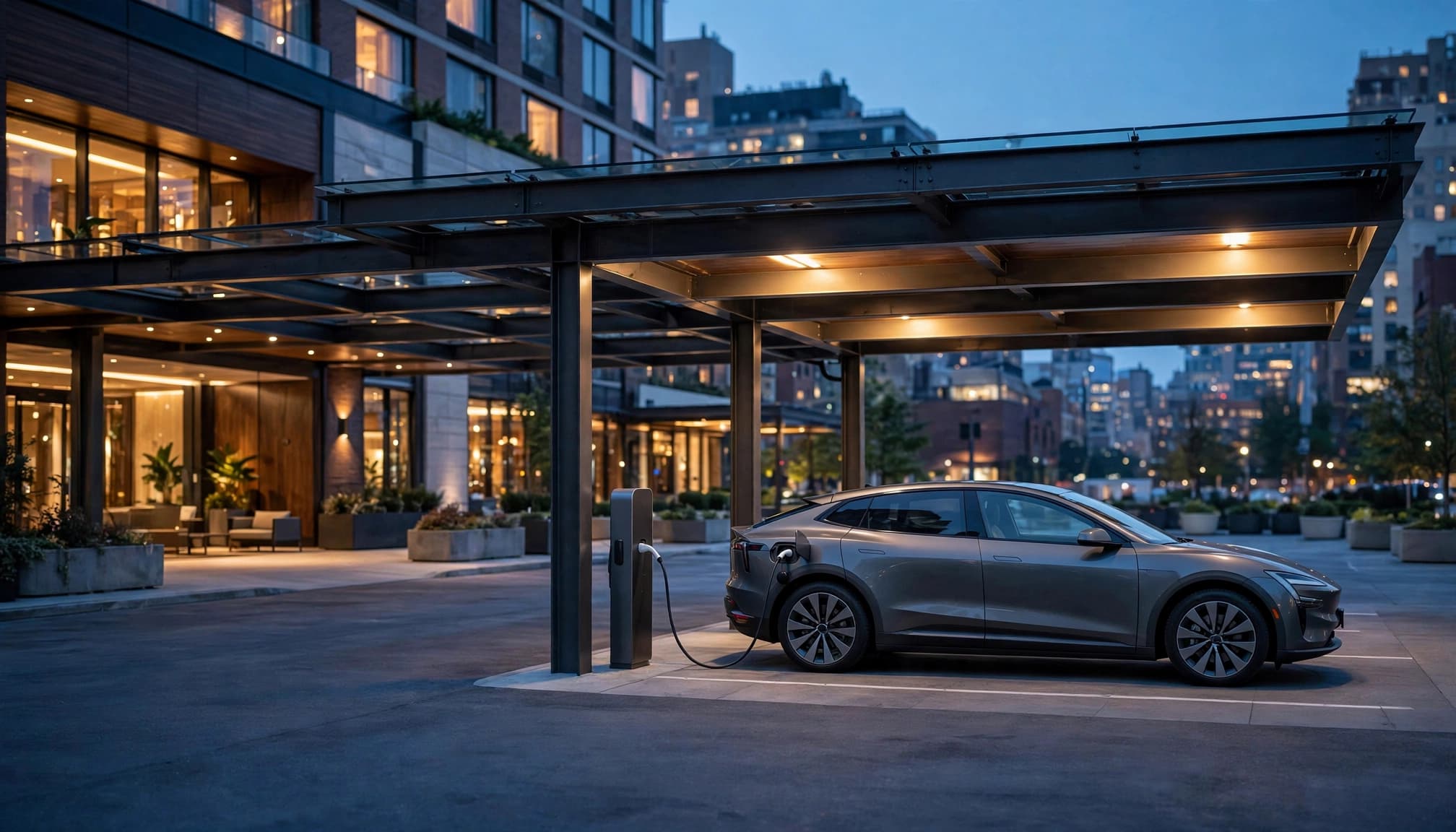
Which New York Chargers Are Usually Paid, and What They Cost
Many stations that appear in a search for free charging are paid. In New York City, NYC DOT curbside Level 2 chargers cost $2.50 per hour from 6 a.m. to 9 p.m. and $1 per hour overnight. Drivers pay with a smartphone or a credit-card tap, according to the NYC DOT curbside charging FAQ.
NYPA’s EVolve NY network lists rates of $0.47 per kWh upstate and $0.52 per kWh downstate, plus tax downstate, with no additional session fee. Check the current EVolve NY pricing because network terms can change.
Understand parking rules and charging time limits
At an NYC curbside charging space, an EV must be plugged in while occupying the designated spot. An unplugged vehicle can face enforcement, even if the driver believes the space is reserved for electric cars.
Free electricity never automatically means free parking. Municipal garages, hotel lots, and retail properties may bill by the hour or apply validation rules. Review posted signs, then move your vehicle once charging ends so another driver can use the port.
Plan a backup when the free charger is busy or unavailable
Identify a nearby paid Level 2 or DC fast charger before you leave, especially on a road trip or with a low battery. A backup avoids the scramble of arriving at an occupied stall or discovering a site is closed.
Carry the adapter your vehicle needs and keep a working payment method in each network app. Paid options such as Electrify America stations in New York can be the practical choice when a fast turnaround matters more than a complimentary session.
Free Charging Works Best With a Plan
Free EV charging in New York is real, but it is usually local, limited, or paid for by a host. Hotels, workplaces, parks, libraries, apartment buildings, and public facilities can all offer useful opportunities when their rules match your plans.
Check live pricing and access details, distinguish rewards from free sessions, and keep a paid backup nearby. With that preparation, complimentary charging can become a reliable part of everyday driving without creating false expectations.