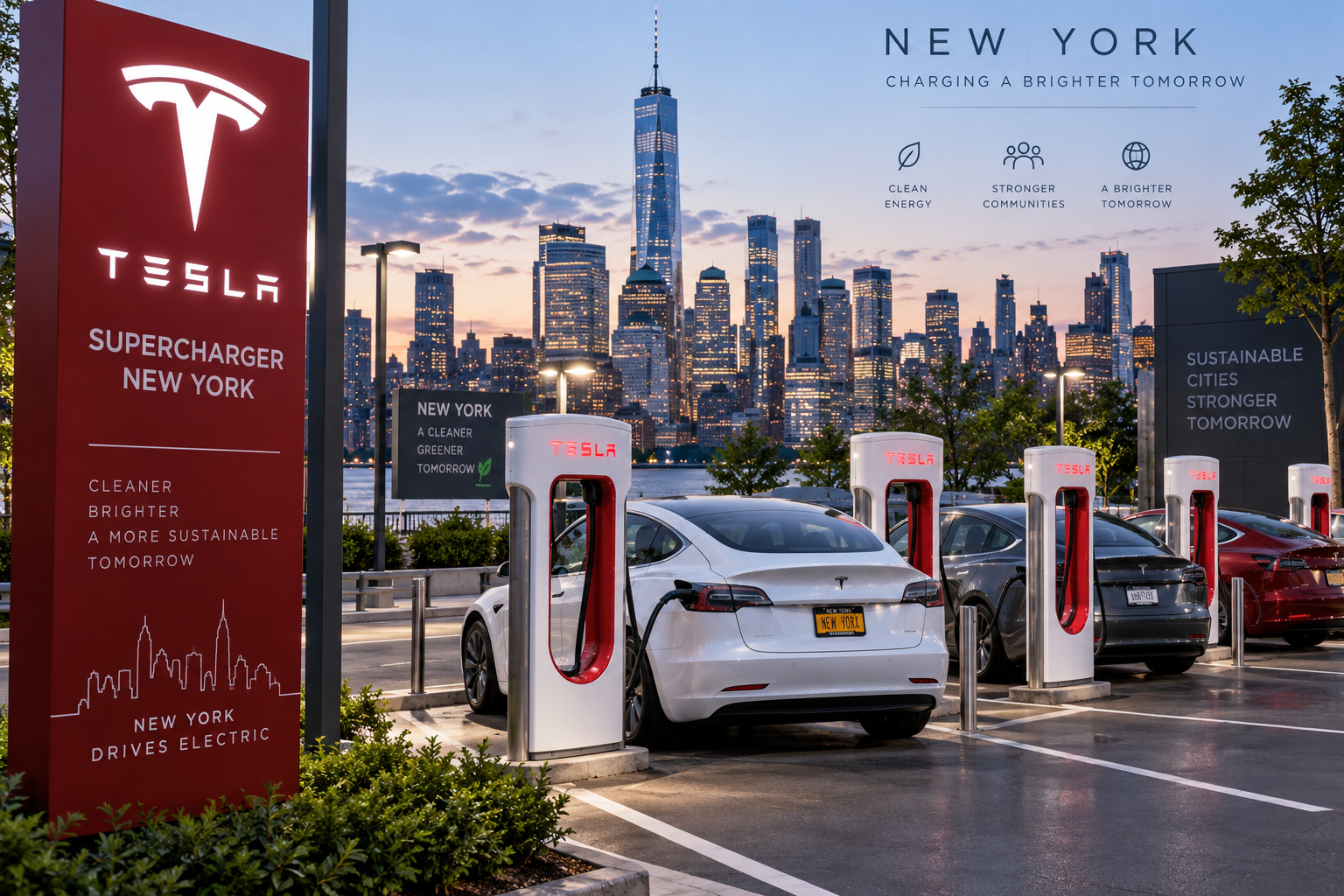
Charging an EV in New York can feel easy one day and oddly complicated the next. City traffic, parking garages, winter weather, long interstate stretches, and changing station access all shape where you can plug in.
Tesla charging stations New York drivers rely on include fast Superchargers and slower Destination Chargers. Some Supercharger locations also welcome eligible non-Tesla EVs, but access varies by site. A good trip plan starts with current station details, not an old map pin.
Tesla Charging Stations New York Drivers Can Use Across the State
Tesla operates two main kinds of public chargers. Superchargers are DC fast chargers intended for road trips and quicker stops. Destination Chargers are Level 2 units at hotels, restaurants, garages, and other places where your car may sit for several hours.
Current third-party listings put New York at roughly 126 Supercharger locations with more than 1,300 stalls. Those figures change as sites open, expand, or temporarily close, so check the Tesla app before relying on them. For a broader view of highway and city options, see this guide to New York EV charging coverage.
New York City has compact urban stations in Lower Manhattan, Allen Street, and East 47th Street. Queens also has the large Maspeth charging buildout. Upstate, stations near Grand Island, Buffalo, Albany, Syracuse, and Rochester help connect long routes.
Where to charge in New York City
City Superchargers can be convenient, yet they often demand more planning than a highway stop. Traffic may turn a two-mile approach into a slow crawl. Garage access hours, entrance height, parking fees, and valet rules can matter as much as the charger itself.
Several Manhattan sites, including Mott Street and 59 Allen Street, have been listed at up to 72 kW. That is useful for topping up during errands, but it can be slower than a newer highway location. East 47th Street has been listed at higher power, though live conditions still decide the result.
Before heading over, confirm the exact address, open stalls, access hours, and any garage instructions. A station can be nearby on a map while remaining impractical during a crowded evening.
Finding Superchargers on upstate routes
Outside the five boroughs, charging becomes more about interstate timing. Stations near Buffalo and Grand Island support western New York travel, while Albany, Syracuse, and Rochester can anchor routes across the Thruway and regional highways.
Tesla navigation can suggest stops, but your route still needs a fallback. Holiday traffic, a cold battery, a temporary outage, or a full station can change the plan fast.
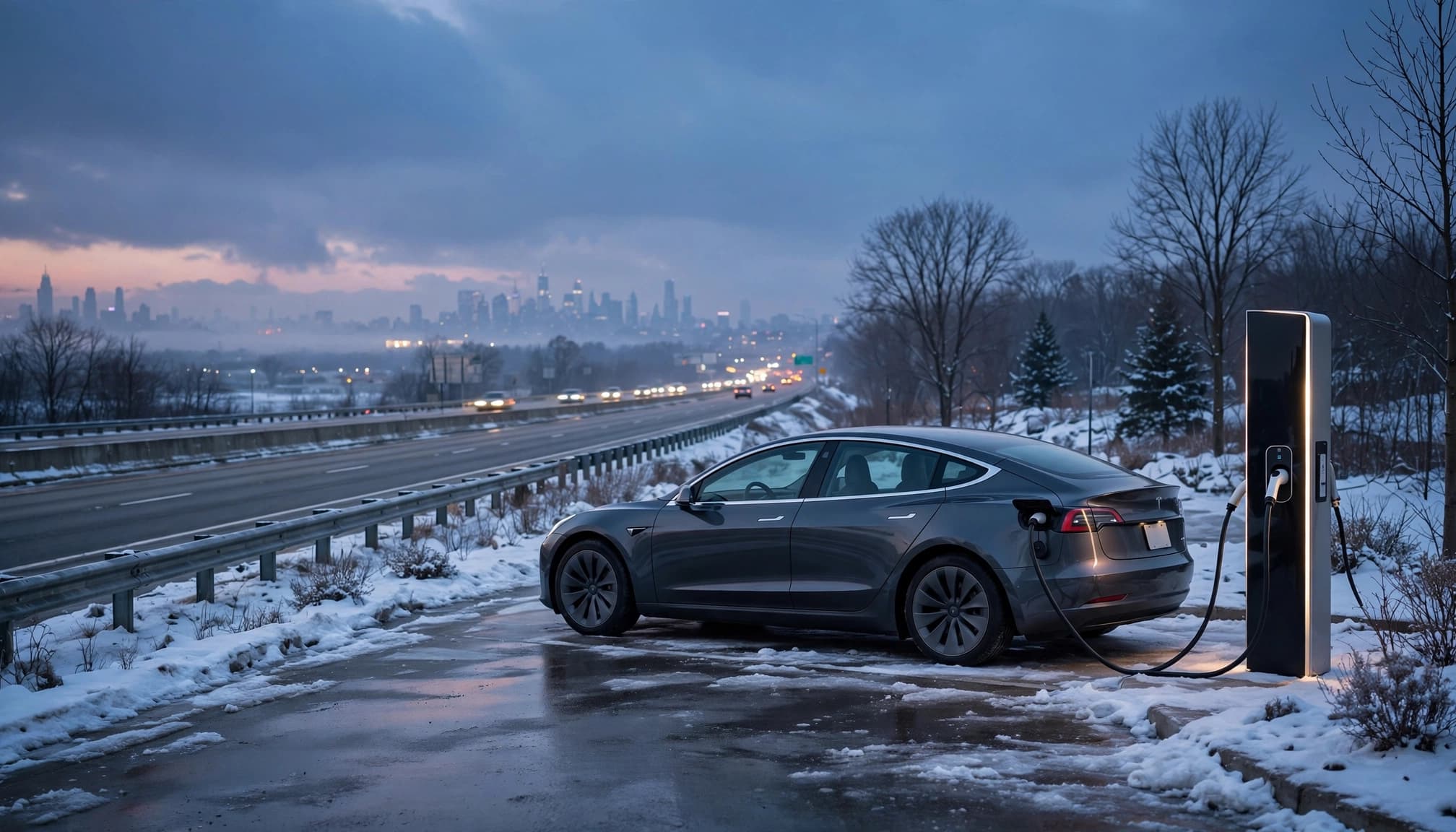
On winter drives, treat the next charger as a target, not the last possible place to arrive. A range buffer gives you options when a site is busy or inaccessible.
How Fast Tesla Charging Works, and What It Costs in New York
A Supercharger’s maximum rating is only one part of the story. Your vehicle model, battery temperature, current state of charge, charger hardware, and power sharing all affect the speed you see.
Urban stations may top out around 72 kW, while newer V4 equipment can reach roughly 325 kW under the right conditions. Tesla says its highest-powered Superchargers can add up to 200 miles in 15 minutes for compatible vehicles, though that figure isn’t a promise for every car or stop. See Tesla’s Supercharger charging guidance for current network information.
Pricing also varies by location, time, demand, and vehicle. Third-party New York listings have shown per-kWh examples around $0.35 to $0.45, but those numbers can change without notice. Check the app before you plug in.
How long a Supercharger stop usually takes
A quick stop may add enough range to reach the next city or highway exit. On many trips, 15 to 30 minutes is a practical window. However, a low battery, cold weather, or a longer next leg can keep you there longer.
Charging also slows as the battery fills. Tesla advises that charging above 80 percent is usually unnecessary because the rate drops as the pack approaches full. Leave at the charge level your route needs, rather than waiting for 100 percent out of habit.
Checking rates and availability before you arrive
Use the Tesla app shortly before departure, then check it again during a long drive. It can show available stalls, charging status, access details, and current prices for a location.
Tesla’s Find Us map is useful for confirming addresses and filtering locations. PlugShare can add recent driver comments, photos, and outage reports. Still, Tesla’s own app and station listing should be the final word on Tesla-specific access and availability.
Watch for idle fees after charging ends, especially at busy sites. Peak pricing may also apply at some locations, so don’t assume one station’s rate matches another nearby.
Can Non-Tesla EVs Use New York Superchargers?
Many New York Superchargers are open to eligible non-Tesla EVs, while others remain Tesla-only. Access is site-specific, so a pin on the map does not automatically mean your vehicle can charge there.
Non-Tesla drivers should confirm eligibility in the Tesla app before building a route around a Supercharger. They also need to verify their vehicle’s connector setup and whether a NACS adapter is required. An adapter alone doesn’t guarantee that every site will work.
Tesla owners should make the same checks for Destination Chargers at hotels and businesses. A charger may be reserved for guests, require a parking payment, or sit behind a gate.
What Tesla owners should check before a road trip
Start with the range estimate in the car’s navigation, then add a sensible buffer. Cold temperatures, rain, elevation, passenger load, cargo weight, and low tire pressure can all reduce range.
Tesla’s built-in navigation routes through Superchargers and can precondition the battery before arrival. That preparation warms or cools the battery for more effective fast charging. Enter the charger as your destination early enough for the car to prepare the pack.
Avoid planning to roll in near empty. A modest reserve can spare you a stressful detour if a station is full or a garage entrance is closed.
What other EV drivers need before using a Tesla site
First, check that your automaker has enabled Supercharger access for your model. Then confirm NACS compatibility, adapter requirements, Tesla app access, payment setup, and whether the exact location accepts non-Tesla EVs.
Parking layout matters too. Some stalls have cable lengths or positions that fit certain charge ports better than others. Review current site details through Tesla’s non-Tesla Supercharging support before departure.
Never make an eligible Tesla site your only option until you have confirmed the station’s status and your vehicle’s compatibility.
Tesla vs. Electrify America, EVgo, and ChargePoint in New York
Tesla often offers the simplest process for Tesla owners because vehicle navigation, payment, and charging status sit in one system. Yet the best station depends on the route, not the badge on the charger.
Electrify America, EVgo, ChargePoint, EV Connect, Revel, and public airport chargers add useful coverage across New York. They can be especially important for mixed-brand households and non-Tesla drivers. Use network apps to compare real locations, power ratings, access hours, and recent reports.
For example, a 150 kW charger beside food and restrooms may be more useful than a theoretically faster station inside a garage with limited hours. The actual stop matters more than the network’s reputation.
Choosing the best network for your trip
Tesla Superchargers are a natural first choice for a Tesla-centered route. Drivers of other EVs should compare compatible Tesla sites with Electrify America, EVgo, and ChargePoint options along the same corridor.
Favor stops with multiple chargers or nearby alternatives on remote routes and holiday weekends. Also consider restroom access, food, lighting, operating hours, and the most recent reliability comments.
A route across New York may use more than one network. That isn’t a failure of planning. It’s a practical way to protect your schedule when road conditions shift.
New York incentives that support EV charging
New York’s EV programs can help make charging more available at home, work, and public destinations. The Drive Clean Rebate offers up to $2,000 for qualifying new EV purchases at participating dealerships.
Charge Ready NY 2.0 has offered incentives of up to $3,000 per Level 2 port at workplaces and multifamily properties. Higher incentives, reported up to $4,000 per port, may apply in disadvantaged communities.
The New York Power Authority’s EVolve NY network has expanded fast-charging coverage along major corridors, including I-87, I-81, I-90, I-88, and I-86. Program funding, rules, and eligibility can change, so verify current terms through New York State sources before making a purchase or installation decision.
Build a More Reliable Charging Plan
A dependable plan uses live information and leaves room for ordinary travel problems. Add your primary stop and a backup before you leave, especially when heading into the Adirondacks, western New York, or a crowded city garage.
Keep the Tesla app, your vehicle’s navigation, and at least one alternative charging app ready. For wider route research, this overview of EV charging stations across New York can help identify nearby network options.
Plan around your battery, not the charger rating
A 250 kW or 325 kW label doesn’t mean every session will hit that peak. Your battery may accept less power due to its temperature, current charge level, or vehicle limits.
Instead, focus on arriving with enough charge to avoid anxiety and leaving with enough for the next planned stop. That approach works better than chasing a maximum rate that conditions may not support.
Treat city charging as a parking decision
In New York City, a charging session often begins with parking logistics. Read the station notes before leaving home. Check the garage’s closing time, vehicle restrictions, entry route, and fees.
Destination Chargers may be a better fit when you are already staying at a hotel, dining out, or attending an event. They charge more slowly, but the car has time to sit while you do something else.
The Practical New York Charging Routine
New York’s Tesla network is growing, but no static directory can replace current station information. The right stop depends on your vehicle, battery level, location, price, access rules, and live stall availability.
Use the Tesla app before each trip, keep a compatible backup network in mind, and leave a sensible range buffer. A few minutes of checking prices, hours, connector access, and non-Tesla eligibility can prevent a long detour.