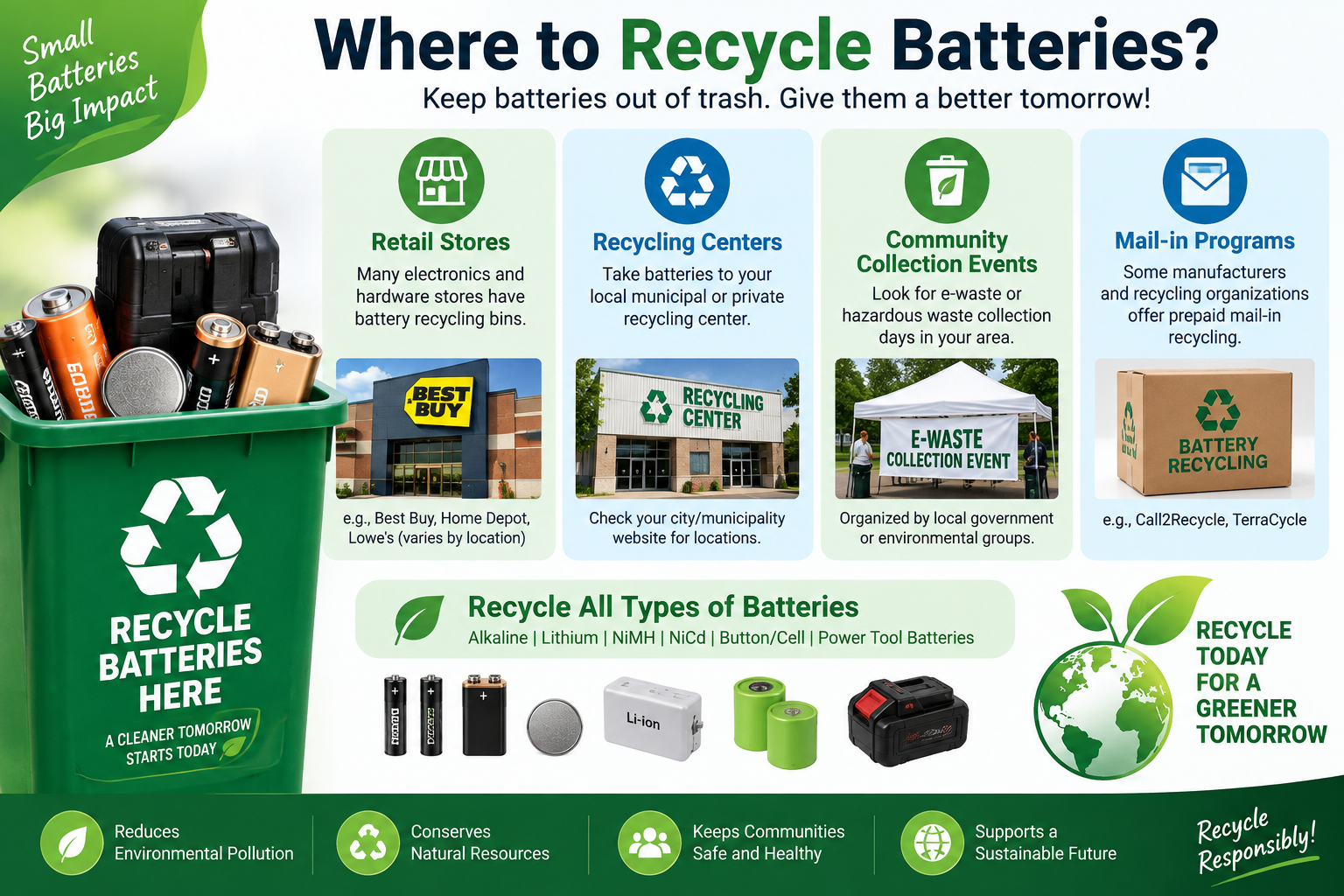
A dead battery can sit in a kitchen drawer for months because nobody knows where it belongs. The short answer is simple: rechargeable and lithium-ion batteries need a dedicated drop-off location or household hazardous waste site, never the trash or curbside recycling.
If you’re searching for where to recycle batteries, start by identifying the chemistry printed on the label. Then find a verified location, protect the terminals, and treat damaged batteries as a separate safety issue.
Where to recycle batteries near you
Start with The Battery Network drop-off locator, the program many people still know as Call2Recycle. Enter your ZIP code, then review each location’s address, hours, battery types, and quantity limits before you leave home.
Retail stores are often convenient, especially for rechargeable batteries. However, a bin at one location doesn’t mean every branch accepts the same items. Programs can change with local rules, storage capacity, and the retailer’s current collection agreement.
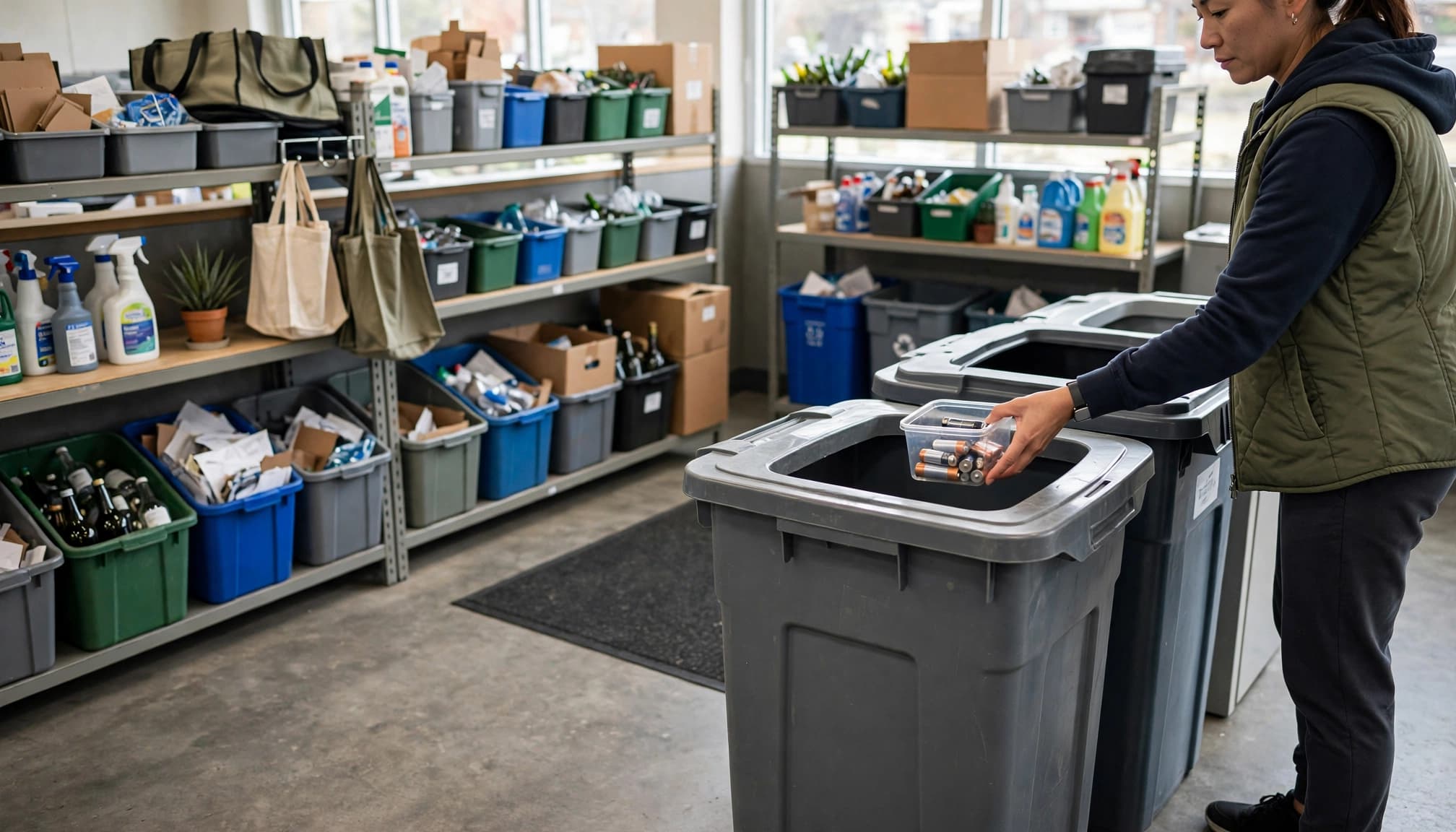
Retail stores that often accept household batteries
Home Depot commonly collects rechargeable batteries and cellphones through its long-running battery-recycling partnership. Its battery recycling program covers nickel-cadmium, nickel-metal hydride, lithium-ion, and small sealed lead-acid batteries up to 11 pounds at participating stores.
Best Buy, Staples, Lowe’s, REI, Batteries Plus, and Office Depot may also have battery drop-offs. Some sites accept rechargeable tool packs, laptop batteries, or old phones. Others only take small loose rechargeable batteries.
Before making a special trip, take four minutes to:
- Search your ZIP code in a verified locator.
- Read the battery label and note its chemistry.
- Check the store’s hours and drop-off limits.
- Call the location if the listing is unclear.
Most retail programs focus on rechargeables. Alkaline AA and AAA batteries are less consistently accepted.
When a household hazardous waste site is the better choice
Your city, county, or regional household hazardous waste program can handle batteries that a retail collection box may refuse. This often includes alkaline batteries, single-use lithium cells, larger household quantities, and batteries removed from unusual devices.
Some facilities run only on scheduled days. Others require proof that you live in the county, and many set limits on how much material each household can bring. Check the local government page before loading your car.
Match the battery type to the right recycling program
The label matters more than the device it came from. A cordless drill, a laptop, and a children’s toy may all contain rechargeable batteries, yet their shapes and chemistries can differ. Read the small print on the pack or battery case, then confirm that the drop-off accepts that exact type.
Accepted batteries also vary by location and state. The EPA’s household battery guidance lists common battery categories and explains why disposal rules differ.
Rechargeable batteries from phones, laptops, and power tools
Lithium-ion, nickel-metal hydride (NiMH), nickel-cadmium (NiCd), and many small sealed lead-acid batteries are common candidates for dedicated recycling. You may find them in phone batteries, laptop packs, cordless-tool batteries, cameras, rechargeable toys, and portable power banks.
Remove the battery only if the device allows safe removal. Otherwise, take the entire item to an electronics recycler or retailer that accepts battery-powered devices. Never place either loose rechargeable batteries or electronics in a curbside bin.
Alkaline, single-use lithium, and button batteries
AA, AAA, C, D, and 9V alkaline batteries often cause the most confusion. In most communities, the EPA says alkaline and zinc-carbon batteries can go in household trash, but recycling is the preferred option when a local program accepts them.
Single-use lithium batteries and button or coin cells need more care. These batteries appear in key fobs, watches, hearing aids, remotes, medical devices, and small electronics. Some collection sites take them, while others don’t. Use a locator or county instructions rather than assuming a nearby store will accept them.
A battery’s shape can be misleading. A coin cell, 9V battery, and loose lithium-ion cell can all short-circuit if terminals touch metal.
Large batteries and batteries in devices need special handling
A standard household battery bin isn’t built for every power source. Larger batteries carry more stored energy, and some contain lead or are built into equipment. Take them to a program designed for their size and chemistry.
Car and motorcycle batteries
Automotive lead-acid batteries belong at auto-parts stores, battery retailers, dealerships, or a household hazardous waste facility. Many auto-parts stores accept an old starter battery when you buy a replacement, and some accept them without a purchase.
Keep the battery upright during transport. A cracked case, leaking fluid, or corroded terminals call for instructions from the retailer or local hazardous waste program before you move it.
E-bike, scooter, and power-station batteries
E-bike, e-scooter, lawn-equipment, and portable power-station packs often use large lithium-ion cells. Take these to the manufacturer, a dealer, or a specialized recycler instead of a normal retail collection box.
For a closer look at why these packs require controlled handling, read about the lithium-ion battery recycling process, including the steps recyclers take before materials recovery. Never dismantle a large pack to make it fit a collection bin.
How to prepare batteries before you drop them off
Loose terminals can touch each other or metal objects in a car, purse, or storage drawer. That contact can create a short circuit, especially with lithium-ion batteries and 9V batteries. A few minutes of preparation lowers the risk.

Tape the terminals and keep batteries separated
For ordinary batteries that a verified site accepts, follow this simple routine:
- Read the label, then sort batteries by chemistry and size.
- Cover exposed terminals with electrical, duct, or packing tape.
- Put individual batteries in clear bags if the collection site requests it.
- Carry them in a sturdy nonmetal container and keep them dry.
- Leave labels visible when possible, since staff may need to identify the chemistry.
A site may give different packing instructions, so its rules always come first. Avoid crushing, bending, puncturing, or opening any battery casing.
What to do with swollen, leaking, or damaged lithium batteries
Do not place damaged batteries in trash, curbside recycling, or a standard store collection box. A swollen, leaking, recalled, or unusually warm battery needs separate handling.
If a battery is hot, smoking, or burning, move people away from immediate danger and call local emergency services. Don’t pick it up or try to transport it.
For a damaged battery that isn’t actively burning, contact the manufacturer, local household hazardous waste authority, or a qualified battery recycler before moving it. The EPA’s used lithium-ion battery guidance directs consumers to separate recycling and hazardous waste collection points. Don’t mail a damaged battery unless a qualified program provides approved packaging and shipping instructions.
Avoid these battery recycling mistakes
The wrong disposal route can turn a small household item into a fire risk. Garbage trucks and recycling facilities use compactors, conveyors, and sorting equipment that can crush batteries. Lithium-ion cells can ignite when damaged, while loose batteries can jam or contaminate recycling machinery.
Why batteries don’t belong in trash or curbside bins
Curbside recycling systems aren’t designed to sort loose batteries safely. A battery can hide inside paper, cans, or plastic containers until it reaches moving equipment.
Lithium-ion batteries never belong in household trash or curbside recycling. Dedicated collection points sort them through safety procedures that standard recycling carts don’t provide. Consumer collection networks are also expanding, including a partnership to broaden lithium-ion battery recycling in the United States.
A five-minute checklist before leaving home
Before heading out, read the label and identify the chemistry. Then confirm that a nearby site accepts the battery’s type, size, and quantity.
Check the location’s hours, tape or bag terminals as requested, and bring the batteries in a sturdy container. Rules can change by store, county, and state, so a quick verification prevents a wasted trip.
Household drop-off is often free. Still, commercial loads, damaged packs, large e-bike batteries, and specialty batteries may have separate instructions or fees.
A safer home for every dead battery
The best answer to where to recycle batteries is usually a verified Battery Network location or a local household hazardous waste program. Match the battery to the site, and confirm the rules before you go.
Never put lithium-ion batteries in trash or curbside recycling. Safe preparation takes only a few minutes, yet it helps prevent fires and keeps recoverable materials in the recycling stream. Check local rules before your next battery drop-off.