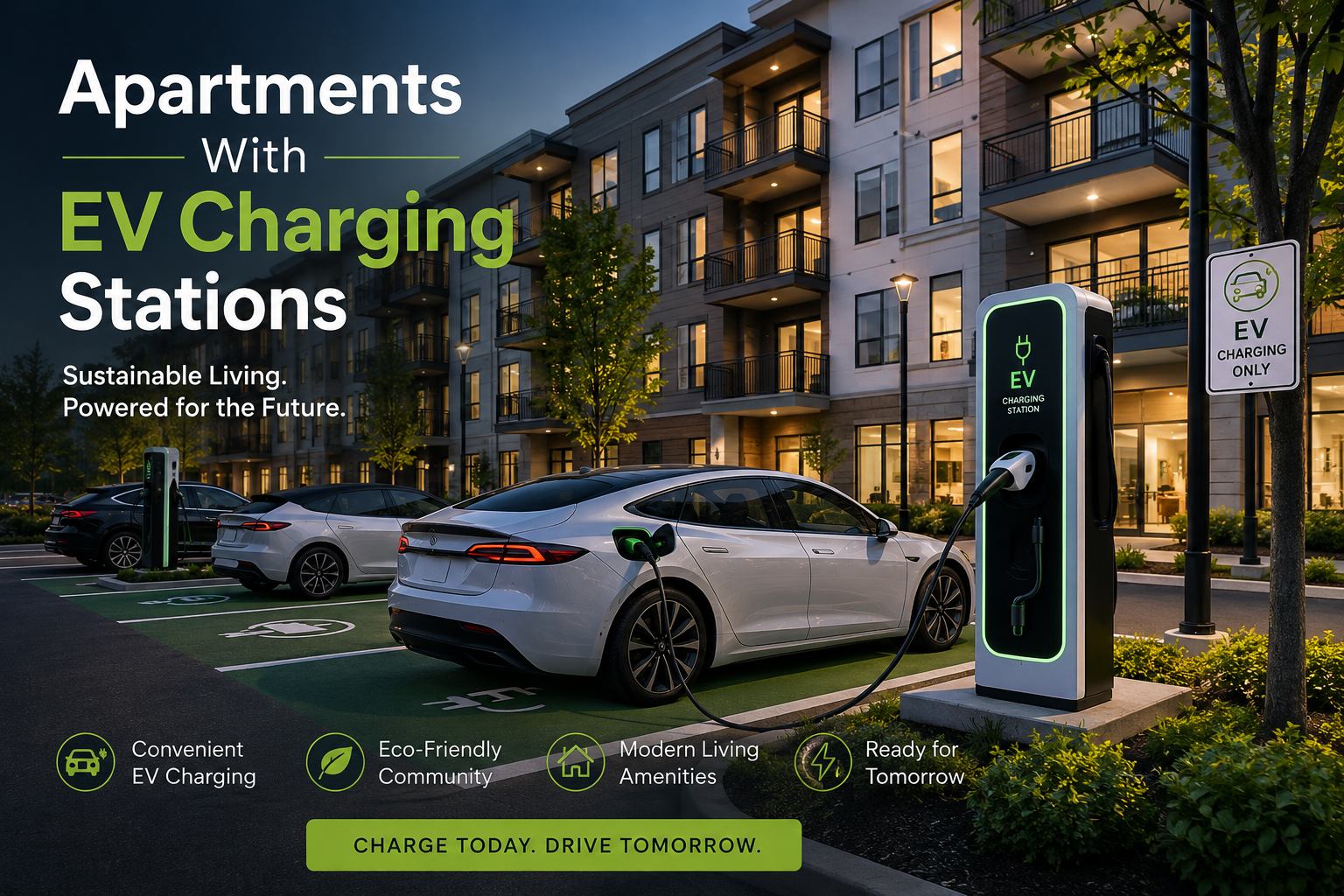
An EV is easy to live with when it charges where you sleep. For renters, apartments with EV charging stations can remove regular stops at public chargers and make daily driving feel far less complicated.
Still, a charging station on a listing doesn’t tell the full story. Access, price, parking rules, and the number of available plugs all affect whether the setup will work for you. Start by looking beyond the amenity label.
Why Apartments With EV Charging Stations Are Worth Considering
Home charging lets you plug in after work and return to a fuller battery the next morning. That routine can save time, especially if nearby public chargers are busy or out of your way.
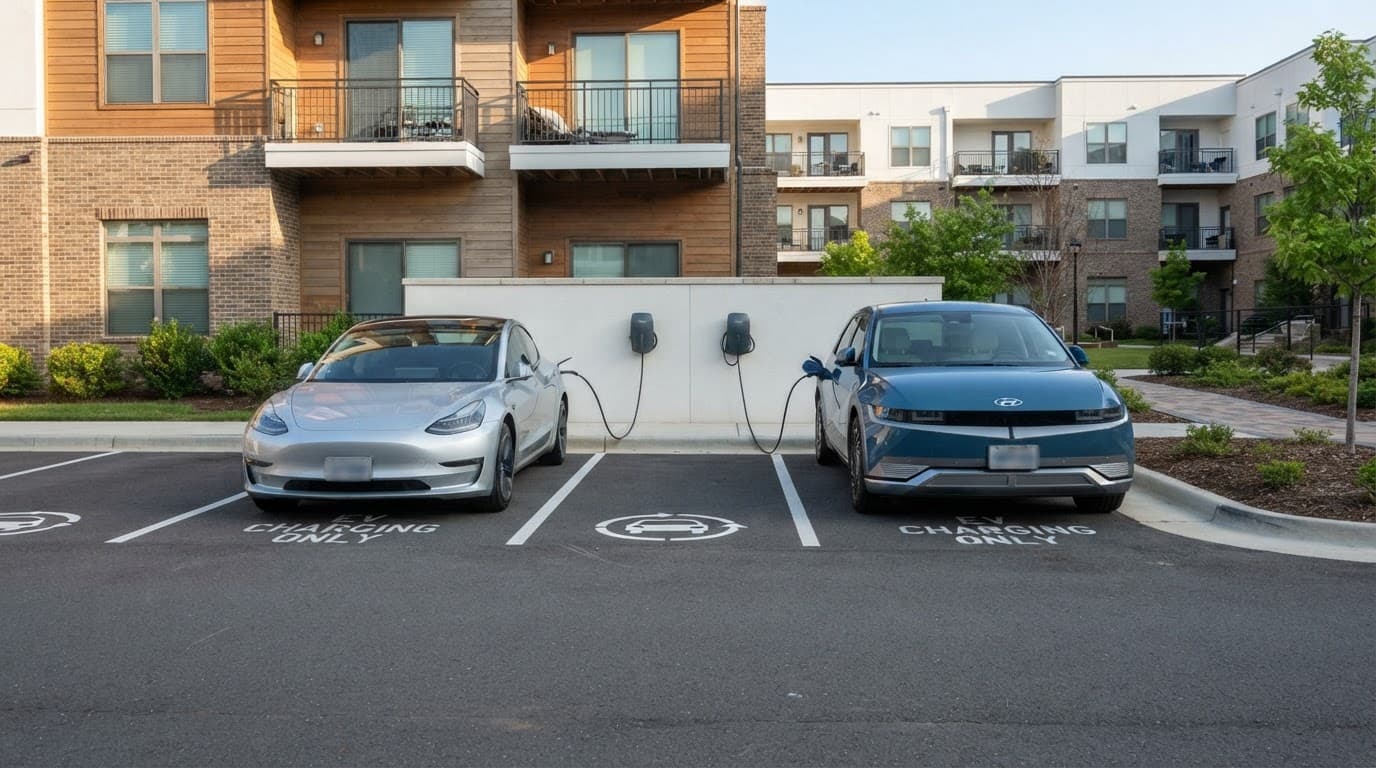
On-site equipment may also help residents charge during lower-demand utility periods. It can reduce dependence on gas stations and public fast chargers, although it isn’t always cheaper. The actual cost depends on the property’s rate structure and fees.
The main benefits for EV owners
Overnight charging works well because most cars sit parked for hours at a time. You don’t need the speed of a highway charging stop to recover your normal daily mileage.
A dependable plug also reduces the pressure to hunt for an open public station. For current EV drivers and renters considering their first electric car, charging availability can make a lease renewal or move more appealing.
What an apartment EV charger may not include
Some properties advertise EV charging but have only two shared stations for hundreds of units. Others place chargers in visitor spaces, require a waitlist, or bill separately through an app.
Before applying, ask whether your spot is reserved and how long a vehicle may remain connected after charging ends. Confirm whether access is part of rent, an added parking amenity, or pay-as-you-go service.
A charger is only convenient when you can use it during the hours your vehicle is parked.
How Apartment EV Charging Works
Charging speed depends on the station, the car’s onboard equipment, and the battery’s current state. A larger battery takes more energy to fill, while a vehicle’s charging limit can prevent it from drawing a station’s maximum output.
The EPA’s EV charging basics explain the three primary charging levels in plain terms.
Level 1, Level 2, and DC fast charging
Level 1 uses a standard 120-volt outlet. It adds range slowly, so it suits light daily driving or a car that stays parked for long periods.
Level 2 uses 208- or 240-volt power and is the practical choice for overnight apartment charging. DC fast charging can add energy much faster, but apartment communities rarely install it because the equipment and electrical upgrades cost more.
Most non-Tesla vehicles use J1772 for Level 1 and Level 2 charging, while many newer vehicles support the North American Charging Standard, or NACS. Check your vehicle’s port and any adapter needs before signing.
Shared chargers, assigned spaces, and private outlets
Shared stations may use a queue, reservation window, or first-come parking. They cost less for a property to provide, yet availability can become a problem at peak times.
An assigned charger tied to your parking space gives you more certainty. A private outlet or tenant-installed charger offers similar convenience, but the lease should state who pays for installation, electricity, and removal.
Charging apps, payment systems, and usage rules
Properties often use ChargePoint, Flo, Blink, or EV Connect to authorize sessions and collect payment. These platforms may also show whether a station is occupied or out of service.
Review idle fees, guest access, operating hours, and maintenance reporting rules. The Alternative Fuels Data Center station guide can also help you locate nearby public charging as a backup.
What Apartment EV Charging Can Cost
There is no universal price for charging at an apartment. Local electricity rates, parking arrangements, charger speed, and network service fees all change the total.
Common fees renters may pay
Your bill may include a monthly parking charge, per-kilowatt-hour pricing, a flat session fee, or a connection fee. Some properties add idle fees after a car reaches its charging limit.
Compare the complete monthly cost with public charging near your commute and, if relevant, the cost of charging at a single-family home. A lower per-kilowatt-hour rate can lose its appeal if a high parking fee comes with it.
Who pays for installation and maintenance
Landlords and property managers often cover the charger hardware and electrical work. However, they may recover those expenses through rent, reserved-space fees, or charging rates.
Ask who repairs damaged equipment and how quickly the property responds to outages. Also ask whether the building received utility incentives or state support that affects the installation terms.
How to Choose the Right EV-Friendly Apartment
The best apartments with EV charging stations offer dependable access, not merely a checkbox in an online listing. Get clear answers before you spend money on an application.
Questions to ask before touring or applying
Ask the leasing office for the details in writing:
- How many chargers are available, and where are they located?
- Are they Level 1, Level 2, or DC fast chargers?
- Which connectors do they support, including J1772 and NACS?
- Is parking assigned, shared, or subject to a waitlist?
- What are the charging, parking, reservation, and idle fees?
- Can guests use the chargers, and what happens when equipment fails?
- Does the property plan to add more charging spaces?
How to verify charging access during a tour
Walk through the parking area instead of accepting a verbal description. Look for active equipment, adequate lighting, and charging stalls that aren’t blocked by gas-powered cars.
If the community uses an app, ask to see the payment and reservation process. Recent resident reviews can reveal broken chargers or recurring access problems. For connector context, Car and Driver’s charging-level guide outlines common ports and fast-charging options.
Red flags that can make charging frustrating
One charger for many residents can create a nightly scramble. Unclear pricing, broken equipment, weak parking enforcement, distant stalls, and long waitlists are also warning signs.
Nearby public chargers give you a fallback, but they shouldn’t carry your entire routine. A lease works better when the apartment’s charging plan is reliable on its own.
A Better Lease Starts With Clear Charging Terms
A suitable EV apartment has a compatible charger, a workable parking space, fair pricing, and rules you can live with. The amenity matters most when it fits your driving pattern and stays available.
Before committing, confirm connector compatibility, estimate your monthly charging cost, inspect the equipment, and read every charging-related lease term. Reliable access matters more than a promising listing description.