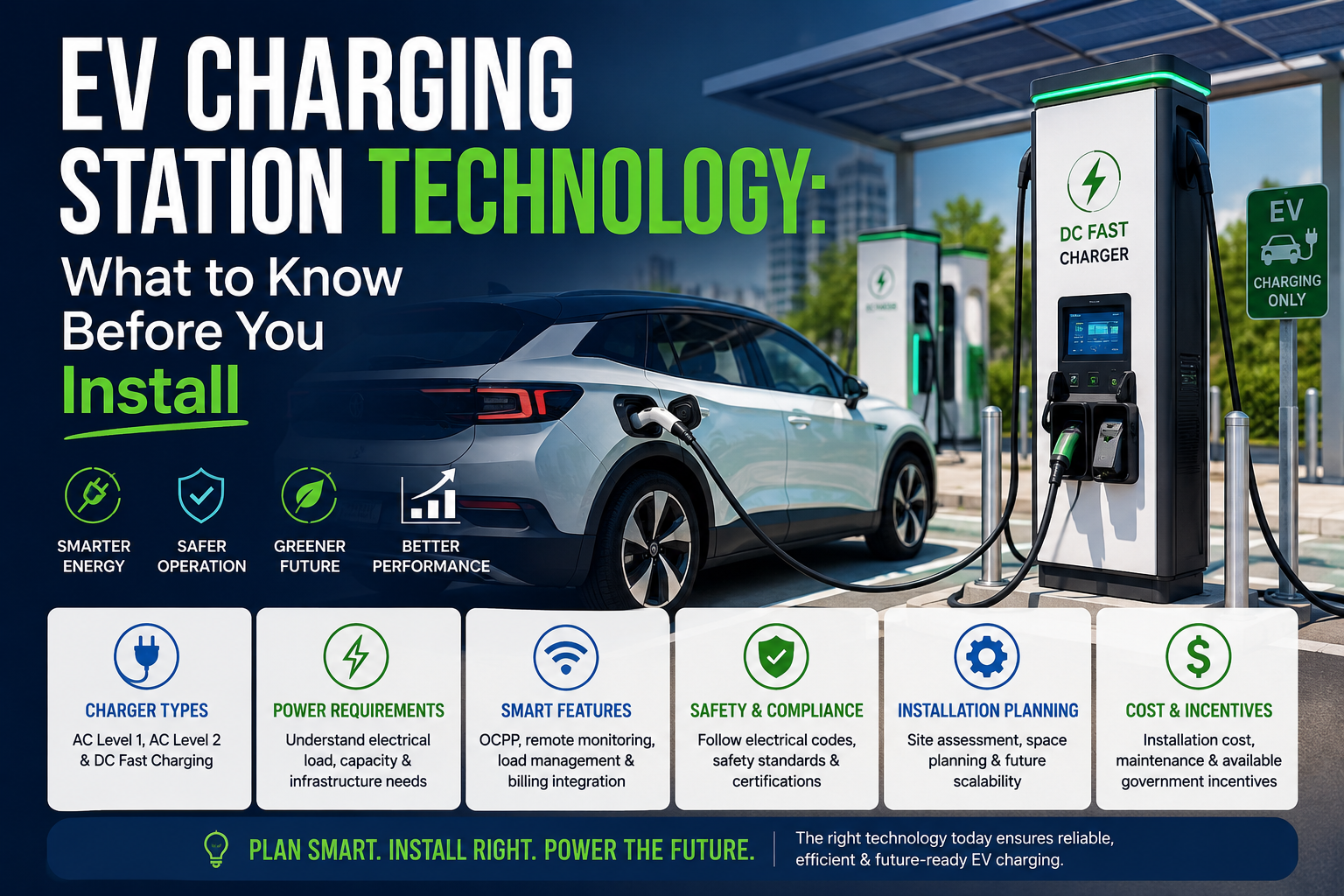
Electric vehicles are growing fast, but plugging in isn’t as simple as buying a wall box and finding an outlet. EV charging station technology affects daily driving, property value, operating costs, and even the electrical capacity of a building.
The right setup depends on where vehicles sit, how far they travel, and how much power the site can supply. Charging levels, connectors, software, installation work, and utility rates all shape the result.
A smart purchase begins with the system behind the cable.
What Is EV Charging Station Technology?
EV charging station technology includes the equipment, electrical circuits, safety controls, software, and communications that deliver electricity to a vehicle. At home, that may be a hardwired Level 2 unit. At a shopping center, it may include payment hardware, network software, and several chargers that share available power.
People often call every charging device a “charger,” but the terms have different meanings. An EVSE, short for electric vehicle supply equipment, manages the safe connection between the power source and vehicle. It checks the circuit, controls current, and stops power when needed.
The vehicle’s onboard charger converts alternating current, or AC, into direct current, or DC, for the battery. A DC fast charger contains that conversion equipment in the station itself, which lets it send DC power directly to the battery.
Charging time depends on more than the equipment label. Vehicle limits, battery size, battery temperature, state of charge, utility capacity, and other vehicles sharing power all matter. The U.S. Department of Energy offers a useful overview of electric vehicle charging stations, including the major charging types used in the United States.
How an EV Charging Station Delivers Power
Electricity travels from the grid to a building’s electrical panel, then through a dedicated circuit to the station. After you connect the cable, the EVSE and vehicle exchange signals before current flows.
With AC charging, the car’s onboard charger handles the AC-to-DC conversion. That is common for home, workplace, hotel, and destination charging. With DC fast charging, the station converts power before it reaches the car, so it can deliver far more energy when the vehicle supports it.
Grounding, fault detection, current limits, and connector locks help protect people and equipment. The station also adjusts or ends a session if it detects a problem.
The Main EV Charging Levels and Speeds
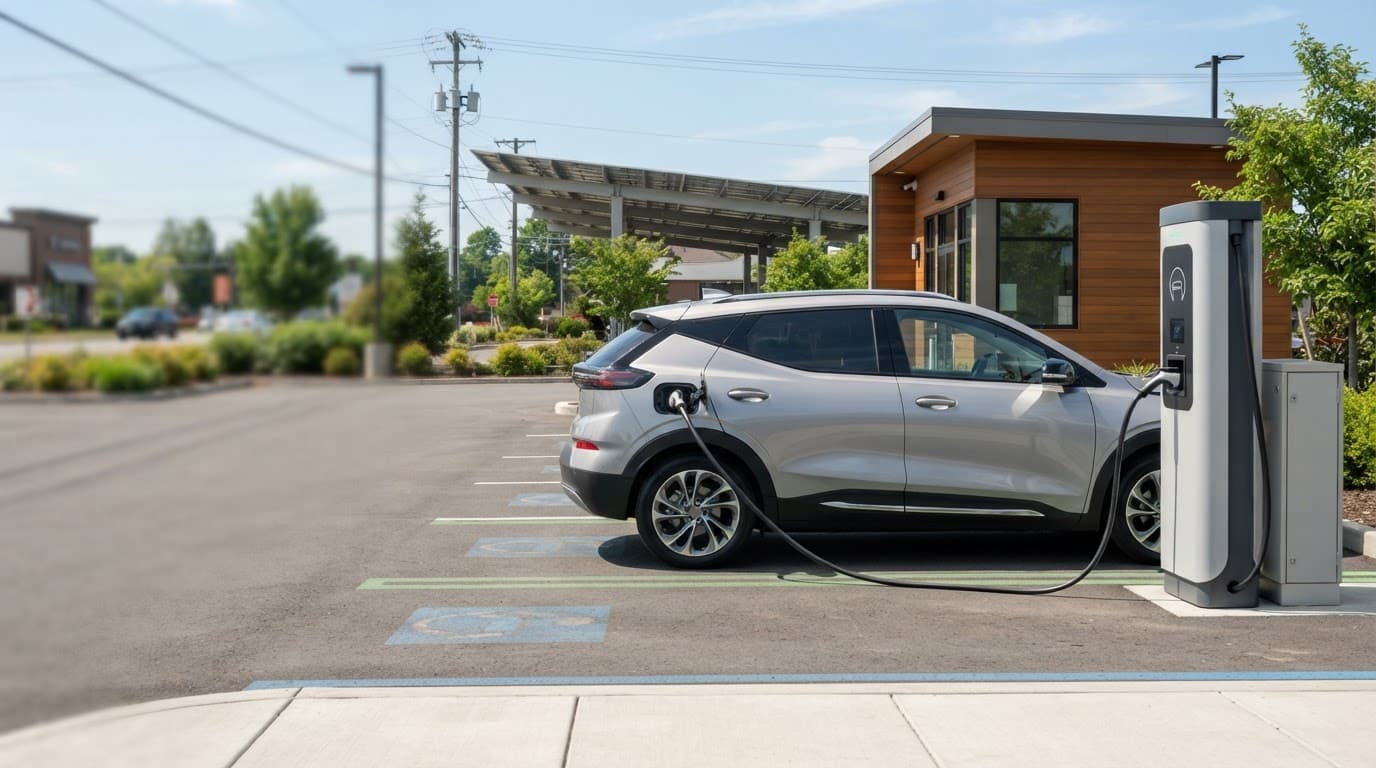
Level 1 charging usually uses a standard household outlet. It adds range slowly, which can still work for drivers with short commutes and long overnight parking.
Level 2 equipment typically runs on 208- or 240-volt service. It is the practical choice for many homes because it can refill a typical daily drive overnight. It also fits offices, apartments, hotels, and public destinations where cars stay parked for several hours.
DC fast charging delivers much higher power and can add substantial range during a shorter stop. However, the station’s peak rating is not a promise. A car that accepts 100 kilowatts cannot draw 250 kilowatts just because the dispenser offers it.
Charging speed is measured in kilowatts, but the miles added per hour depend on how efficiently a particular vehicle uses electricity.
EV Charging Station Technology: Connectors and Networks
A charging connector is the physical plug, while a charging network is the software and service layer around it. Both affect whether a driver can start a session, how they pay, and whether a site owner can monitor equipment.
The U.S. market is moving toward the North American Charging Standard, or NACS, which is also covered by SAE J3400. Still, many existing vehicles and public fast chargers use other connector types. Before installing equipment, match the station’s connector to the vehicles that will use it now and in the near future.
Common Charging Connectors in the United States
J1772 is widely used for AC Level 1 and Level 2 charging. Many non-Tesla vehicles have a J1772 inlet, while newer models may have NACS ports or support them with approved adapters.
NACS works for AC and DC charging on compatible vehicles. The federal SAE J3400 connector guide explains that NACS can connect to J1772 Level 1 and Level 2 equipment through an adapter.
CCS1 combines a J1772-style upper section with two larger DC pins. It remains common at DC fast-charging sites. CHAdeMO appears on some older EVs, though new installations rarely prioritize it.
Adapters can expand access, but they are not universal. Check the vehicle maker’s guidance, the station operator’s rules, adapter power rating, and whether a particular fast-charging network permits its use. Cable length also matters. A charger can be compatible yet still fail to reach a port on the wrong side of a parking space.
How Networks and Apps Improve the Experience
Networked stations can report status, accept payments, track energy use, and send maintenance alerts. Drivers may use an app, RFID card, payment terminal, or plug-and-charge feature, depending on the vehicle and location.
ChargePoint, Electrify America, EVgo, Tesla Supercharger, utility programs, and workplace networks all operate differently. Access, payment methods, membership pricing, and reliability vary by station.
For property owners, a network can set driver access rules, produce reimbursement reports, and flag a failed charger before a complaint arrives. For drivers, live station status is often more useful than a pin on a map.
Smart Charging, Load Management, and Bidirectional Power
A basic charger supplies power when a vehicle asks for it. Smart charging adds scheduling and control, which can lower costs and prevent a building from overloading its electrical service.
Many utilities charge lower rates at certain times. A scheduled session can begin after an off-peak rate starts, as long as the vehicle still reaches the desired battery level by morning. Some utility programs also request temporary reductions in charging demand during periods of grid stress.
Load Sharing Keeps Electrical Work Reasonable
Dynamic load management measures available power and divides it among chargers. For example, four workplace chargers may share one electrical feeder instead of each requiring enough capacity for maximum output at the same moment.
This approach can reduce upgrade costs while adding more ports. It works best when the system has clear rules for power sharing, priority vehicles, and peak-demand limits.
A site with eight managed Level 2 ports can meet more daily charging needs than two high-power ports that exceed the building’s available capacity.
Vehicle-to-Home and Vehicle-to-Grid Systems
Bidirectional charging allows a compatible EV battery to send power outward. Vehicle-to-home systems can support selected home circuits during an outage. Vehicle-to-building setups can help manage on-site energy use, while vehicle-to-grid programs can export power under utility rules.
The idea is promising, but it requires more than a capable vehicle. Owners may need a bidirectional charger, transfer equipment, approved interconnection hardware, and a utility program that accepts the setup. Review manufacturer requirements before treating an EV as backup power.
How Much Does an EV Charging Station Cost?
The purchase price is only one part of the budget. Total cost includes the charging equipment, electrical work, permits, electricity, software, repairs, and future expansion.
A home Level 2 installation may be straightforward when a panel has spare capacity and sits near the parking spot. Costs rise when an electrician must upgrade the panel, run wiring across a long distance, or add trenching and conduit. Commercial DC fast charging can require transformer work, switchgear, and utility upgrades.
Public charging prices may be based on kilowatt-hours, time connected, a flat session fee, or a membership rate. Read the rate display before starting, especially at stations that add idle fees after charging ends.
What Changes the Total Installation Price
Site conditions drive installation cost more than the charger enclosure. An electrical assessment should come before selecting a model or promising a project date.
Common cost drivers include:
- A panel upgrade or service upgrade when existing capacity is limited.
- Long cable runs, trenching, conduit, and pavement restoration.
- Parking layout, bollards, lighting, signs, and accessibility requirements.
- Permits, inspections, internet service, and payment hardware.
- The number of ports and whether the site needs room for later expansion.
A licensed electrician can calculate circuit load, confirm local code requirements, and identify where equipment can sit without creating a cable or traffic hazard.
Incentives, Rebates, and Operating Costs
Check federal, state, local, utility, employer, and property-owner programs before construction begins. Eligibility can depend on the equipment model, location, installation date, installer, income rules, or public access requirements.
Ongoing expenses can include electricity, demand charges, networking subscriptions, payment processing, cellular service, repairs, and preventive maintenance. DC fast-charging sites need close attention to demand charges because short periods of high power use can affect a commercial utility bill.
How to Choose the Right EV Charging Setup
Start with driving patterns and dwell time. A household vehicle parked overnight has different needs than a delivery van that must return to service in 45 minutes. After that, assess electrical capacity, connector compatibility, site layout, budget, and the number of expected users.
Compare the full ownership cost, not only the hardware price. A lower-priced unit with weak support or no load management can cost more once an electrical upgrade or repeated service visit enters the picture.
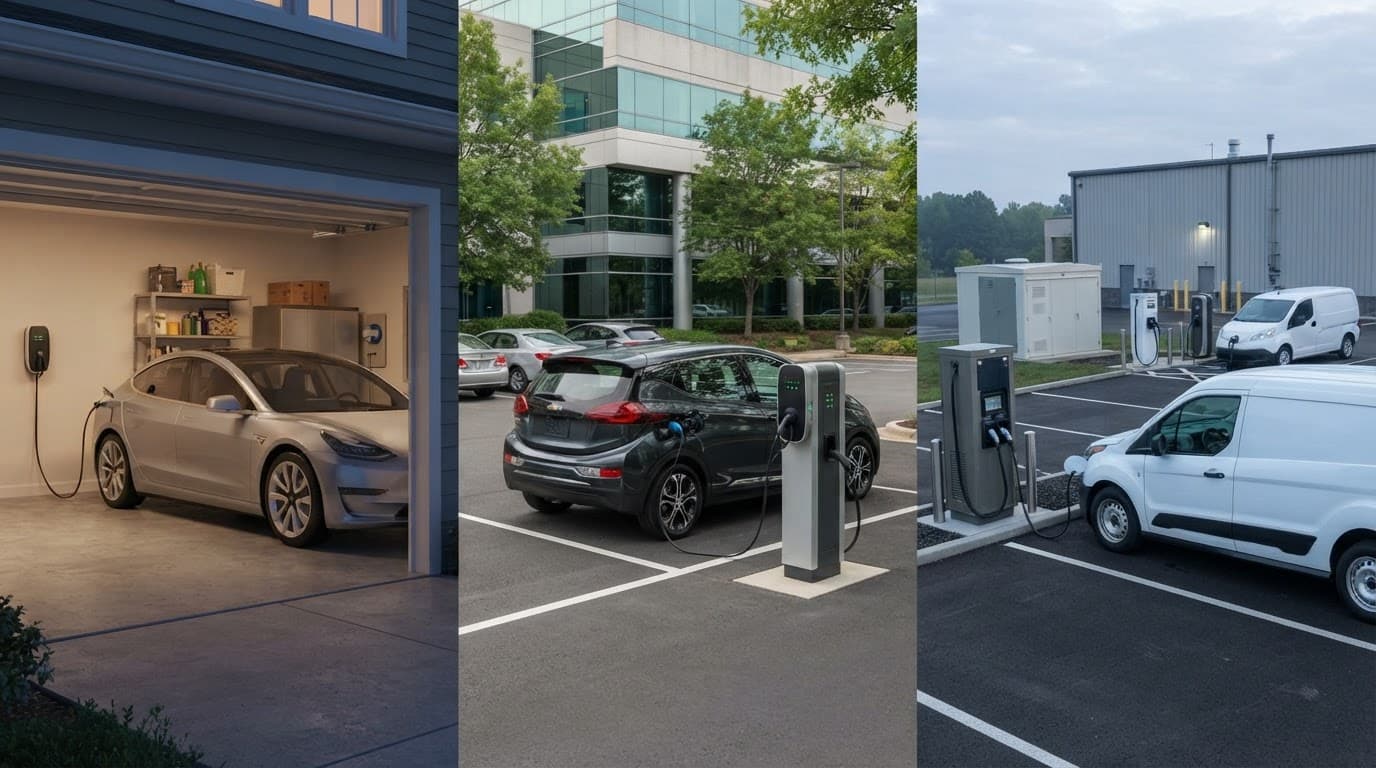
Choosing Between Home, Workplace, Public, and Fleet Charging
Homeowners often benefit most from a Level 2 station that restores their usual daily miles overnight. Level 1 can work when driving is limited and a dedicated outlet is safely available.
Workplaces may need multiple shared ports with load management and access controls. Employers can offer a useful amenity without giving every space a separate high-capacity circuit.
Public destinations such as restaurants, hotels, and recreation sites often suit Level 2 charging because visitors stay for hours. Fleets need a route-based plan. Depot charging may cover predictable overnight returns, while DC fast charging can support vehicles with short turnaround times.
Features Worth Comparing Before You Buy
Look beyond advertised power output. A high-power charger has little value if the vehicle’s onboard charger, local electrical service, or parking schedule cannot use it.
Compare these practical details:
- Connector type, cable length, weather rating, warranty, and recognized safety certification.
- App quality, guest access, payment options, usage reports, and remote software updates.
- Load sharing, solar integration, user controls, repair support, and documented uptime data.
- The availability of replacement cables, parts, and technicians in your area.
For connector background, Enphase’s NACS charging technology guide explains how J1772, CCS, and NACS relate to AC and DC charging.
Installation Mistakes That Create Cost and Reliability Problems
Don’t buy equipment before confirming vehicle compatibility and electrical capacity. An undersized circuit, a crowded panel, or an unsupported adapter can limit performance and create safety concerns.
Poor placement also causes trouble. Cables should reach the vehicle without crossing walkways, and stations need protection from vehicle strikes and harsh weather. Apartment and public sites need accessible parking design from the start, not as an afterthought.
Finally, test Wi-Fi or cellular signal where the charger will sit. A networked unit with unreliable connectivity can lose payment functions, remote monitoring, and software updates. Plan conduit and panel capacity for future ports while construction crews are already on site.
A Charging Setup That Fits Real Life
Good EV charging station technology matches charging power, connectors, software, electrical conditions, and the way people actually park. A simple overnight home setup and a high-traffic fast-charging site demand different equipment and budgets.
Confirm your vehicle’s charging limits, price the complete installation, and check current incentives before signing a contract. A qualified electrician or charging provider can turn those details into a system that works now and leaves room for smarter, bidirectional energy use later.