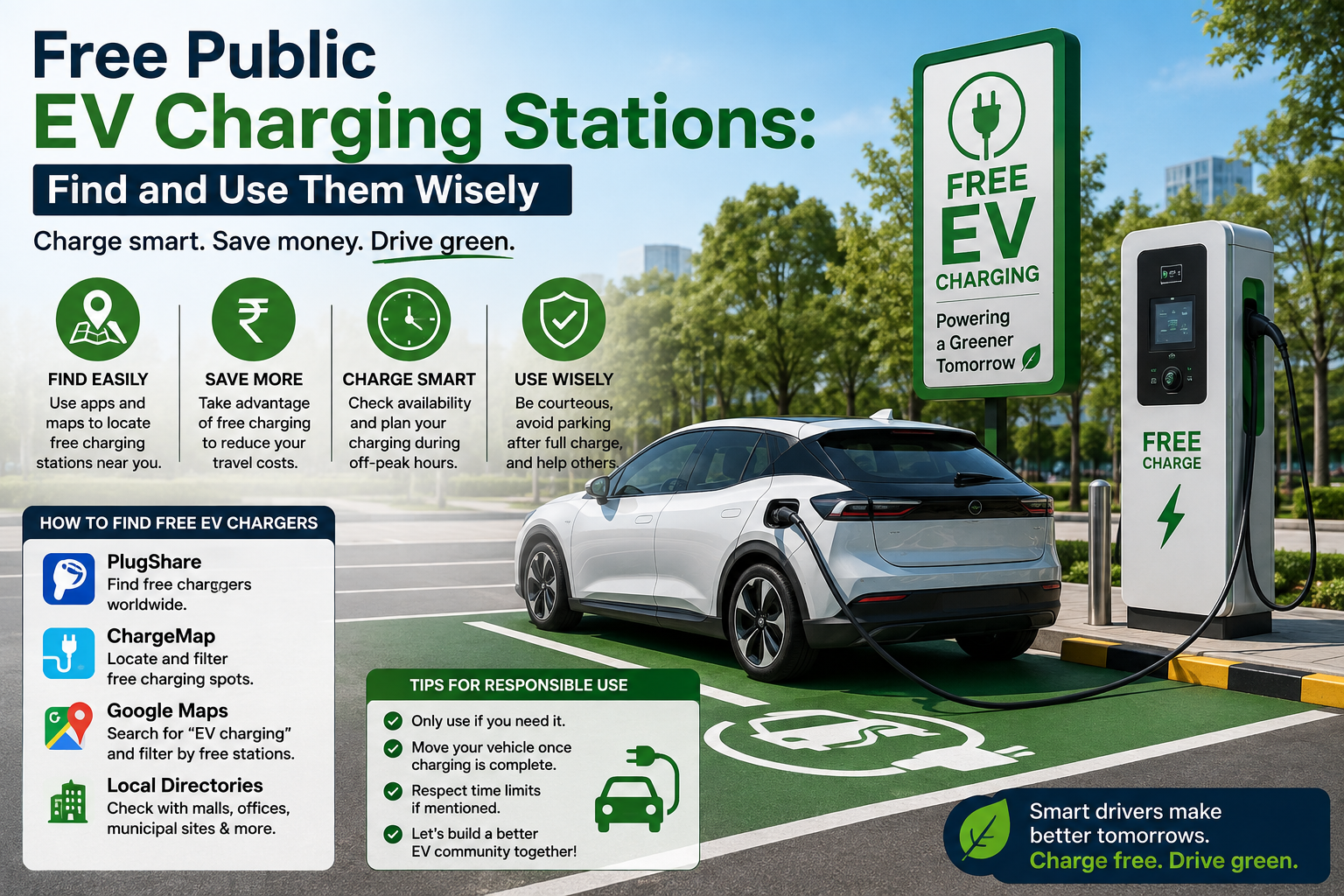
Free charging can feel like finding a gas pump with a broken price display, but free public EV charging stations do exist across the United States. You may find them at grocery stores, public libraries, hotels, shopping centers, universities, city parking lots, and workplaces.
Still, a charger marked free may come with parking fees, time limits, or a required app account. Knowing how to check those details keeps a convenient stop from becoming an expensive surprise.
Use free charging to add range while you already have somewhere to be, then keep a dependable backup for the days when the station is busy or unavailable.
What Are Free Public EV Charging Stations?
A free public EV charging station doesn’t bill an eligible driver for the electricity used during a charging session. The property owner, business, city, utility, or sponsor pays for the power instead.
Access rules vary widely. A retailer may offer charging only to customers. A hotel may limit chargers to overnight guests. A city garage may make electricity free while still charging for parking. Some stations require validation at a front desk or an access code provided by an employer.
Free access can still have conditions
Read the station description before you drive over. A listing that says “free” may still require you to:
- Pay a parking fee after a short grace period.
- Create an account or add a payment card to start the charger.
- Charge only during business hours.
- Move your car after a posted time limit.
- Be a customer, visitor, tenant, or employee.
Free electricity does not give a driver unlimited use of a parking space. Treat the spot as shared equipment, especially where several EV drivers depend on one or two plugs.
A station can cost $0 per kilowatt-hour and still cost money if its parking rules apply.
Most free chargers are Level 2
Most free public EV charging stations use Level 2 equipment. These chargers work well when your car will sit for a few hours, such as during a shift, movie, meal, or shopping trip.
Free DC fast chargers are much less common because the equipment and power demand cost more. A Level 2 session may add useful range, but it rarely fits a quick five-minute stop.
Home, apartment, dealership, and workplace chargers can also be free to you, yet they are different categories. Public stations are intended for broader visitor access, even when that access has conditions.
Where to Find Free Public EV Charging Stations Near You
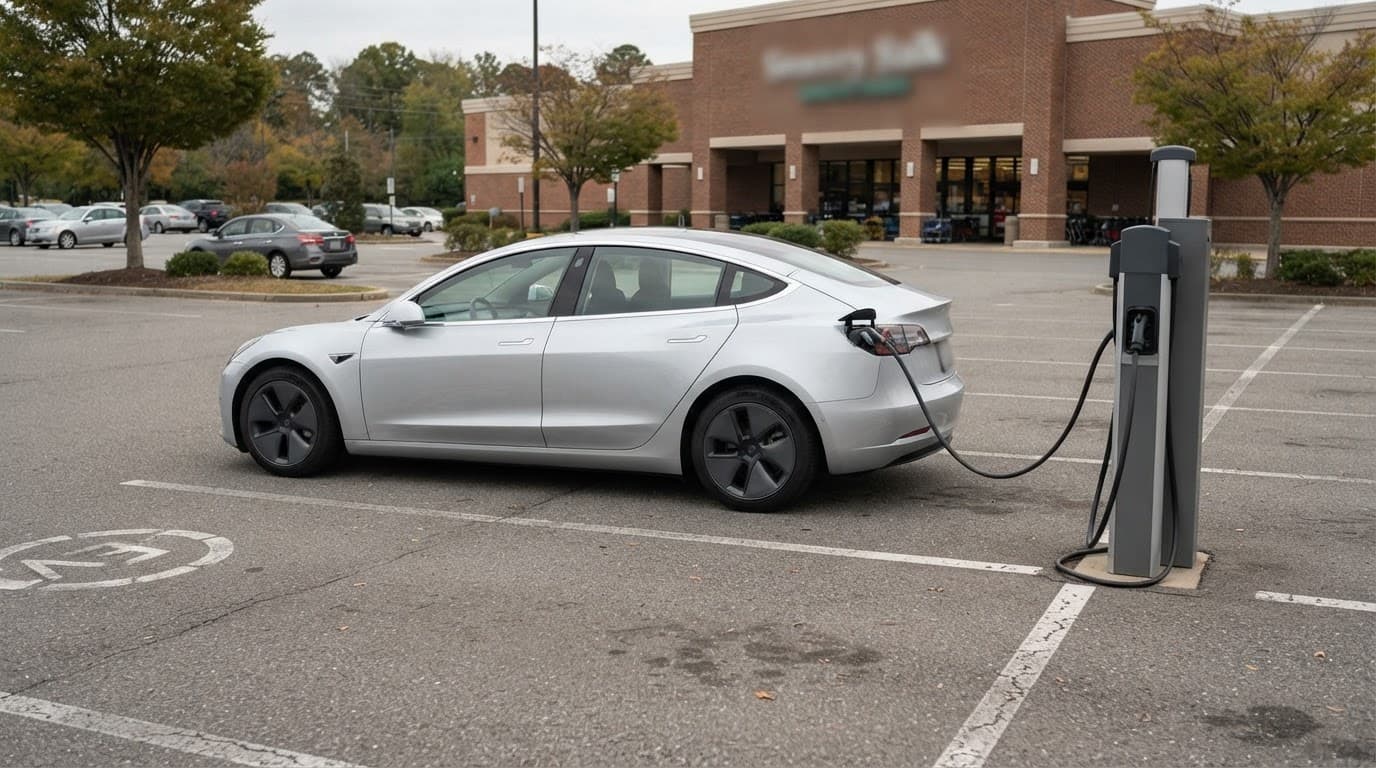
Start with a map that lets you filter for no-cost charging, then verify the details with recent check-ins. The PlugShare free charging map is useful because drivers often add photos, access notes, and reports about broken equipment.
For a wider view of public infrastructure, the U.S. Department of Energy maintains an EV charging station locator. Its filters can narrow results by connector, charging level, access type, and station status.
Search more than one map
No single app captures every charger or every policy change. Check PlugShare, ChargeHub, ChargePoint, Electrify America, EVgo, Tesla, Google Maps, and Apple Maps when planning a new route.
The ChargeHub station map can help cross-check a location before you leave. Network apps also show whether a charger needs a membership, an active account, or a session initiated through the provider’s app.
Local utility, city, county, university, and transit agency sites can uncover chargers that major apps miss. Some municipalities list public chargers on parking or sustainability pages rather than on a separate EV map.
Confirm the details that matter
Older listings can be misleading. A free station may become paid, close for repairs, or switch to restricted access without every map updating at once.
Before you count on a charger, check:
- The connector fits your vehicle, or works with your approved adapter.
- The station is open during the time you will arrive.
- Recent users report that it is operating.
- Parking, validation, and idle-fee rules are clear.
- The charger has enough power for the time you have available.
Recent reviews are often more useful than a star rating. A comment from last week about a blocked space or failed activation can save a detour.
How to Use a Free EV Charger Without Surprises
Arrive with a simple plan. First, confirm the parking spot is dedicated to EV charging and that any location rules allow you to use it. Then park so the cable reaches without stretching across a sidewalk or another space.
Open the network app if the unit has a QR code, screen prompt, or number on the pedestal. You may need to scan, tap an RFID card, enter a station ID, or request a code from staff.
Start the session and verify power
Select the correct connector, plug in firmly, and start the session through the required method. Your vehicle’s dash, phone app, or the charger itself should show that energy is flowing.
A connected cable is not proof of charging. Watch for a charging indicator and confirm the power rate after a minute or two. If the session fails, stop it and try again once before moving to another charger.
The federal Drive Electric station map lets users filter locations by charging level and access, which can help avoid a mismatch between your plan and the equipment onsite.
End cleanly and move promptly
Set a reminder before you walk away. When your car reaches the limit you planned, end the session in the app or at the charger, unplug, return the cable to its holder, and move the vehicle.
Many free sites have strict limits because they want turnover. Some networks also add idle fees after charging stops, even if the electricity itself is free. A payment card on file can matter for that reason.
Are Free Public EV Charging Stations Worth Using?
Free charging is worth using when it fits your schedule. Parking at a free Level 2 charger during a two-hour grocery run or an eight-hour workday can add range without taking extra time out of your day.
However, a free station has little value when it is occupied, unreliable, or far off your route. A paid fast charger may cost more, yet it can be the better choice before a long drive or when your battery is low.
Time has a cost, too
A Level 2 charger often adds energy gradually. If you need enough range for an unexpected 150-mile trip tonight, waiting at a free station may be frustrating. Paid DC fast charging is built for those tighter windows.
On the other hand, an EV sitting in a store parking lot is already parked. Free charging turns that idle time into useful energy, which makes it a sensible daily habit.
Avoid depending on one free location
Public equipment can be blocked by an internal-combustion vehicle, out of service, or reserved for guests. A dependable plan includes home charging when possible, a workplace plug, and at least one paid option nearby.
The Kelley Blue Book guide to EV charging apps is a helpful reminder that several apps may be necessary. Different networks own different stations, and access methods are not universal.
How Much Can You Save With Free EV Charging?
The basic calculation is simple: multiply the kilowatt-hours your vehicle receives by the price you would otherwise pay per kilowatt-hour.
For example, if a charging session adds 20 kWh and your home electricity rate is $0.16 per kWh, the electricity value is $3.20. If a paid public station charges $0.45 per kWh, that same 20 kWh would cost $9.00 before any extra fees.
This comparison shows why the answer depends on your local rates and charging habits.
| Charging option | What affects the cost | Best fit |
|---|---|---|
| Free public charger | Parking fees, session limits, access rules | Errands, workdays, destination stops |
| Home charging | Utility rate, time-of-use plan, charger efficiency | Regular overnight charging |
| Paid Level 2 charging | Network price, parking, idle fees | Longer stops away from home |
| Paid DC fast charging | Per-kWh or per-minute pricing, demand, idle fees | Road trips and urgent range needs |
Free charging may provide the largest savings when it replaces expensive public fast charging. Yet home charging is often more predictable, even when the electricity costs something.
Count the costs around the charger
Charging speed also affects your real-world savings. A $3 parking fee can erase the value of a short free session. Driving 20 minutes out of your way can use energy and time that outweigh the benefit.
Vehicle efficiency matters, too. A car that averages 3 miles per kWh gets about 60 miles from 20 kWh. Cold weather, highway speed, steep grades, and climate control can reduce that estimate.
Track a few sessions in your vehicle app. After a month, you’ll know which free locations save money without disrupting your day.
Smart Ways to Make Free Charging Part of Your EV Routine
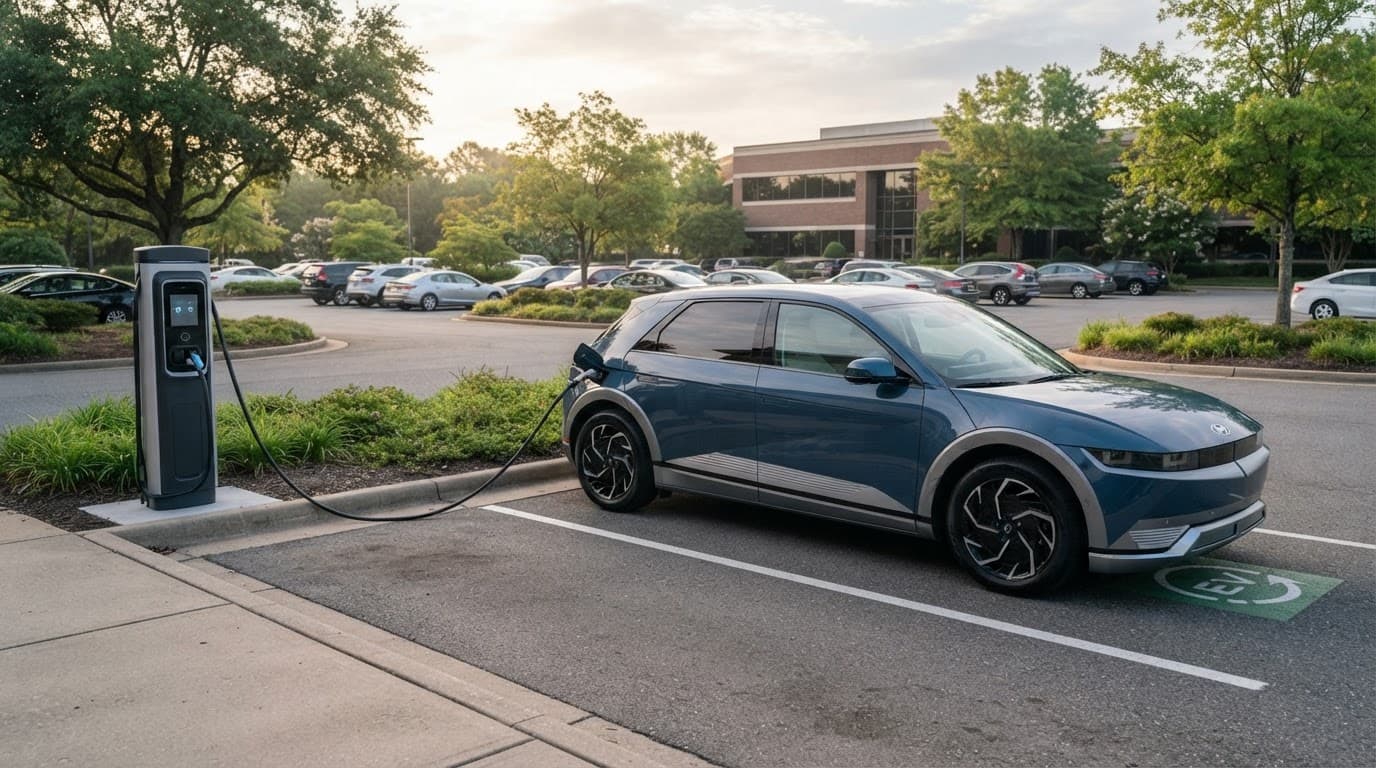
Use reliable free stations as a supplement, rather than the sole source of power for your commute. Favor locations where you naturally spend time, such as your office, gym, grocery store, library, or a regular weekend destination.
Match the charger to your schedule
Choose home charging for predictable overnight needs. Use workplace charging when your car sits for most of the day. Free destination charging makes sense during errands or activities that already take an hour or more.
Paid DC fast charging belongs in your plan when time, distance, or a low battery calls for it. Keeping those roles clear prevents you from circling a parking lot hunting for a free plug when you need to be somewhere else.
Keep a backup ready
Update your charging apps, carry any adapter your vehicle supports, and save nearby paid stations as favorites. Before a long trip, check station status and leave with more range than your first stop requires.
Also keep enough charge to reach an alternative location. A charger is useful only when it is accessible, working, and compatible with your EV.
Free Charging Works Best With a Backup Plan
Free public EV charging stations can lower your driving costs and add range during ordinary stops. Their limits matter as much as their price, so check access rules, connector type, parking terms, and recent status reports before relying on one.
A good routine combines convenient free charging with home, workplace, and paid options. Move your car when charging ends, respect posted limits, and keep enough battery to reach another station. Reliable range is more valuable than a charger that happens to be free.