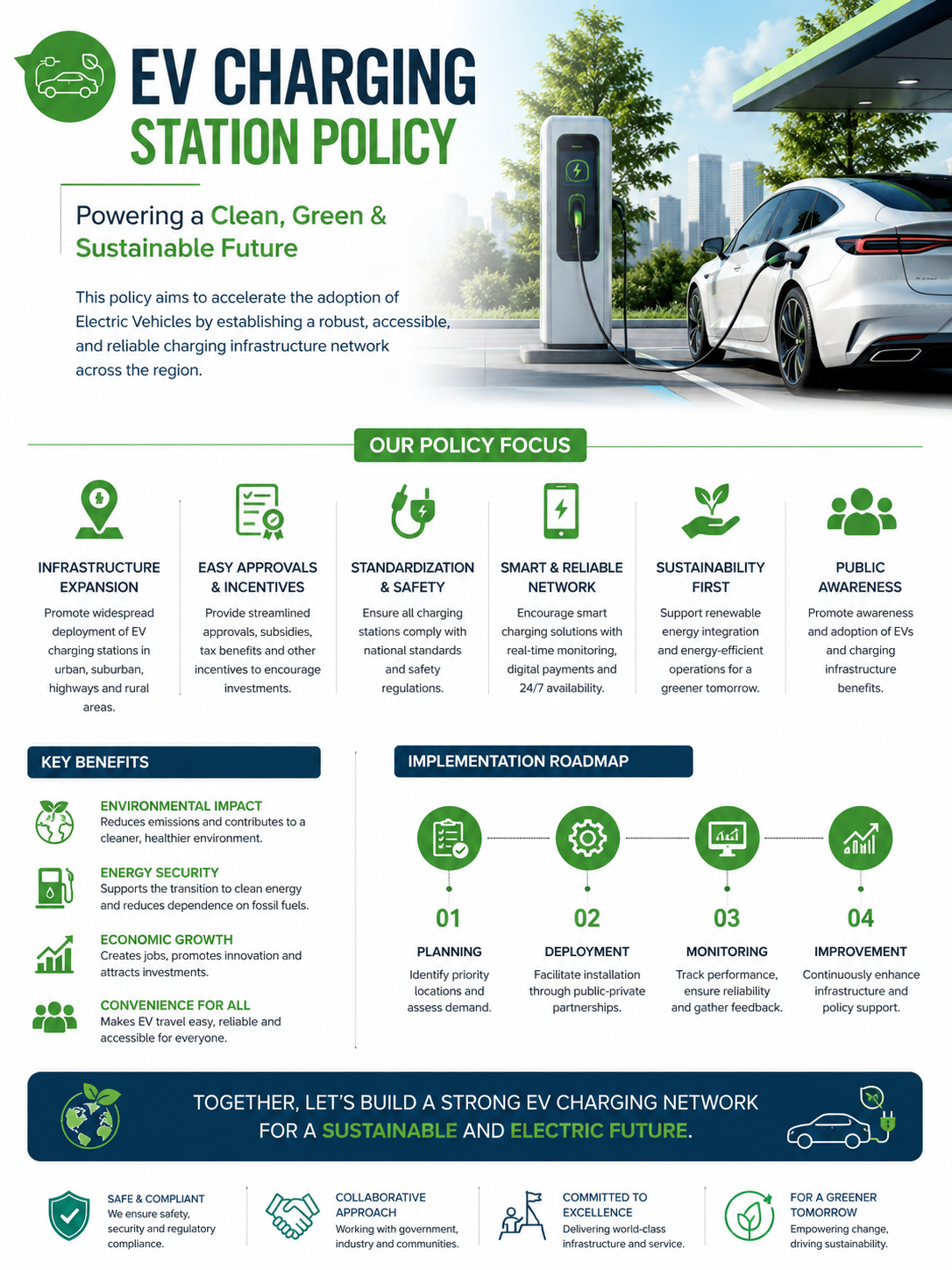
A charger can be installed, energized, and still fail as a public charging project. EV charging station policy affects the money behind the site, the permits on the wall, the equipment at the curb, and whether drivers can use it when they arrive.
For property owners, operators, employers, and fleets, the rules can feel scattered across federal programs, utility paperwork, and local code offices. In 2026, federal guidance is still subject to revision, so confirm current requirements before committing to a charger or construction contract.
The safest projects start with the agencies, site conditions, and operating duties that apply to that exact address.
What EV Charging Station Policy Covers and Who Sets the Rules
EV charging station policy is the set of public rules, funding conditions, technical standards, and local approvals that govern where chargers go and how they operate. It reaches far beyond selecting a pedestal and running conduit.
At the federal level, the U.S. Department of Transportation and the Federal Highway Administration (FHWA) set requirements for programs they fund. State transportation agencies administer many of those dollars. Utilities control service connections and electricity rates. Then cities, counties, fire departments, and building officials decide whether the actual site plan meets local rules.
A property owner also has authority. Lease terms, parking agreements, insurance, operating hours, and maintenance responsibilities often sit outside government regulations but can decide whether a station succeeds.
Federal approval doesn’t replace local approval
A project can meet federal funding conditions and still wait months for a zoning decision, electrical permit, or utility upgrade. Federal programs set a funding framework. Local agencies apply land-use rules, building codes, fire requirements, parking rules, and inspection procedures.
Workplace and multifamily charging makes this split obvious. A national program may support the project, but the landlord, HOA, tenant parking plan, and existing electrical service often determine what can be built.
A funding award is not a building permit, and a building permit is not a utility service agreement.
Put every decision-maker on one early call
Before design begins, bring together the owner, civil engineer, electrical engineer, utility representative, charger supplier, network provider, and local permitting office. That conversation exposes conflicts before equipment arrives on a loading dock.
It also gives the operator a clear record of who owns each task. Without it, a small issue, such as a transformer location or accessible route, can force expensive redesign work.
Federal Funding, NEVI, CFI, and Buy America Rules
The Bipartisan Infrastructure Law created major charging programs, including the National Electric Vehicle Infrastructure Formula Program and the Charging and Fueling Infrastructure program. USDOT lists $5 billion for NEVI, which focuses on building a connected national network of public charging sites through state programs.
For fiscal year 2026, FHWA made $885 million in NEVI formula funds available for distribution to states. The typical federal share is up to 80 percent, leaving a nonfederal match for the remaining project costs. The details still depend on the state solicitation and project agreement.
USDOT’s federal EV infrastructure funding overview helps distinguish the main programs before an applicant chooses a path.
Buy America records need attention before procurement
Federally funded projects can trigger Buy America requirements for charger equipment and related materials. Final assembly in the United States and domestic component content are not details to sort out after delivery. They belong in the bid documents and purchase order.
In February 2026, USDOT announced a revised Buy America public-interest waiver that could raise required domestic content from 55 percent to as much as 100 percent. The policy direction has moved quickly, so review USDOT’s Buy America waiver update and the current state program terms before buying hardware.
Keep manufacturer affidavits, component-cost records, steel certifications, and mill certificates in the project file. A charger that appears compliant is not enough if the operator can’t document its origin.
How to Choose a Charging Site That Meets Policy Requirements
A good charging address does more than look busy on a map. It has space for vehicles to enter and leave safely, room for charging equipment, a path for people using mobility devices, and enough electrical capacity to support the planned load.
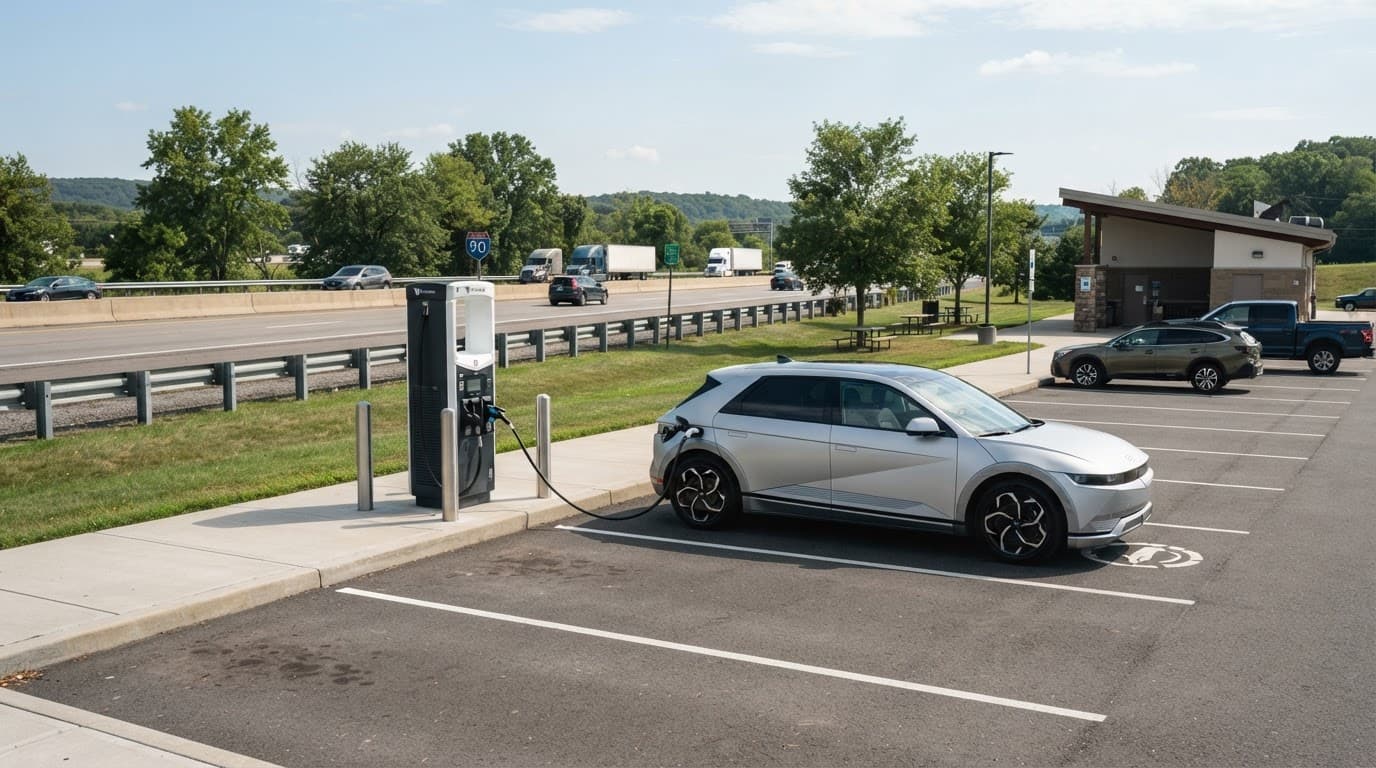
For NEVI corridor projects, location and access rules may shape eligibility. For public destinations, drivers need lighting, safe circulation, predictable parking, and nearby amenities. A tight lot can turn a high-traffic store into a poor charging site if vehicles block aisles or cannot reach the charger comfortably.
Public access, ADA design, and parking layout
Federally supported public stations usually need to welcome the public during stated hours. That expectation affects gate access, payment methods, site signs, and the route from parking to nearby facilities.
Accessibility needs attention while the site is still lines on a plan. Accessible routes, stall geometry, charger placement, reach ranges, curb cuts, surfaces, lighting, and payment access all matter. Local building officials apply the codes that control the final design, so don’t rely on a generic layout from a charger catalog.
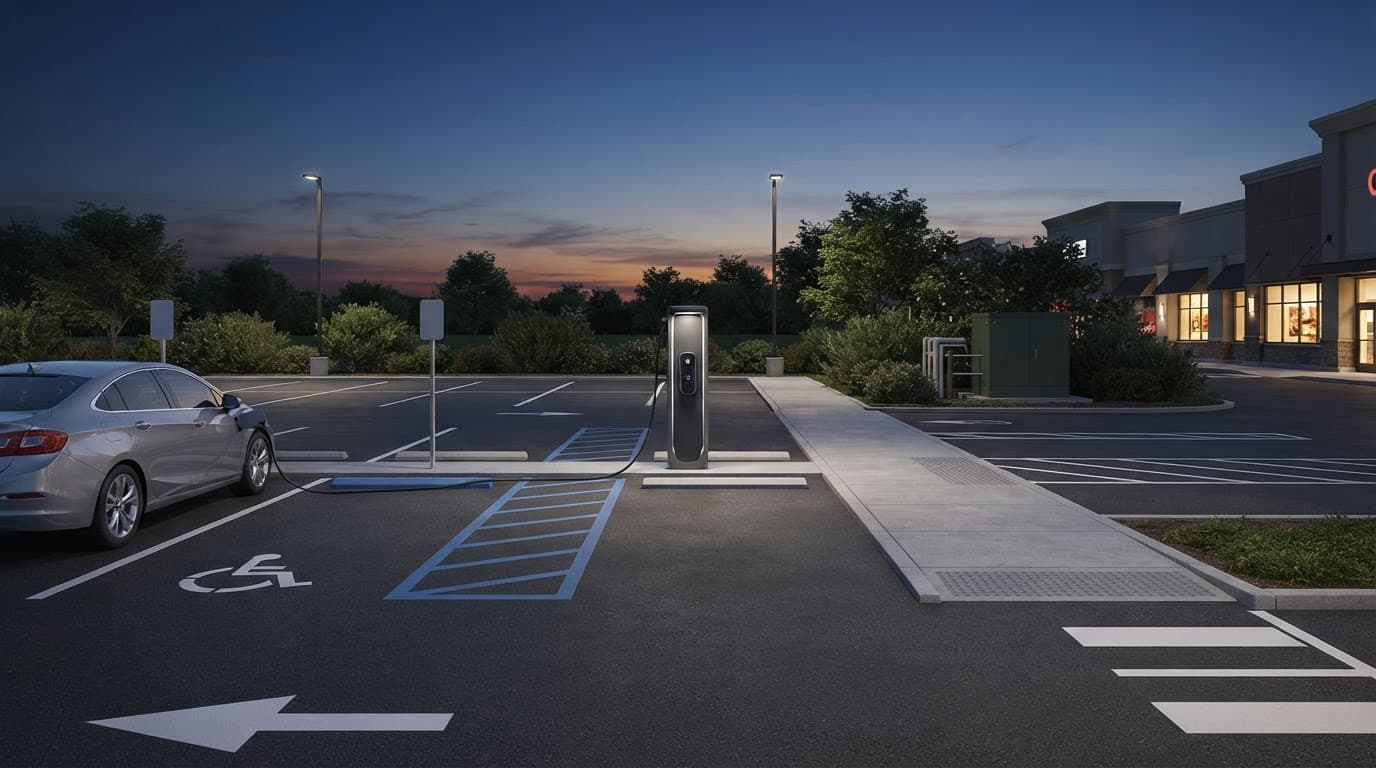
Local planners may also require parking-space markings, signs, lighting levels, and enforcement rules for charging-only spaces. Review those conditions before signing a lease.
Utility interconnection can control the schedule
Charger power, utility service, and site design are tied together. A Level 2 installation may fit on an existing panel. Several DC fast chargers may need a service upgrade, transformer, switchgear, utility study, or work in the public right-of-way.
Those steps can take longer than the charger order. Ask the serving utility about available capacity, construction lead times, tariff options, demand charges, and future expansion. Electricity pricing is set by the utility and state regulators, not by one nationwide EV charging law.
Planning conduit and switchgear for future ports may cost less than tearing up finished pavement later. Still, don’t oversize equipment without a load study and an operating forecast.
Equipment Standards, Reliability, and Reporting
Compliance continues after final inspection. The operator must choose compatible connectors, set up payment access, monitor the network, maintain equipment, and provide the reporting required by a funding agreement.
Level 2 equipment usually suits long dwell times at homes, workplaces, apartments, hotels, and public garages. DC fast charging supplies much more power for drivers who need to continue a trip. Review fast EV charging basics before setting power levels and expected session times.
Choose connectors and power for the drivers you serve
CCS remains an important North American DC fast-charging standard, while NACS is increasingly common on newer vehicles and charging networks. Adapters can improve access, but they do not replace a careful review of the vehicles expected at the site.
For AC charging, J1772 remains common on many non-Tesla vehicles. A small property might consider an Emporia Level 2 home charger for J1772-equipped EVs, while Tesla drivers can use a compatible adapter.
Port count matters as much as maximum kilowatts. Two lower-power ports can fit a workplace need better than one high-output unit. Public sites may need more power, but the electrical service, state specifications, site demand, and expected vehicle mix must support the choice.
Plan for uptime, maintenance, and required data
A station earns trust when it works at 8 p.m. in bad weather, not only during commissioning. Operators need remote monitoring, payment testing, preventive maintenance, repair response times, spare parts, customer support, and a process for documenting outages.
Current federal charging rules used in NEVI and CFI projects include uptime and reporting expectations. CFI project materials commonly require an average annual uptime above 97 percent for each port, along with quarterly reporting through FHWA’s EV-ChART framework.
Revised NEVI guidance announced by USDOT shows why operators should check the latest state requirements before launch. Track outage timestamps, causes, repairs, and whether a port successfully dispensed power. Reliability can affect reimbursement, state oversight, and eligibility for later work.
A Practical EV Charging Station Policy Compliance Checklist
A disciplined sequence prevents the common mistake of treating chargers as ordinary appliances. Use this order before construction begins:
- Identify the funding source and read the current grant or state solicitation terms.
- Verify current federal requirements, including domestic-content rules and reporting duties.
- Confirm site eligibility, public-access terms, traffic flow, and future expansion space.
- Contact the utility for a load review, interconnection process, cost estimate, and tariff details.
- Review zoning, electrical, building, fire, and parking permits with local officials.
- Create an ADA-ready plan that covers routes, parking placement, equipment location, signs, and payment access.
- Select charger power, connector types, networking, and payment systems for the vehicles and dwell time expected.
- Collect Buy America documentation before accepting equipment deliveries.
- Set up maintenance, support, uptime tracking, and required data reporting.
- Test every port, payment method, network alert, emergency shutoff, and customer support process before opening.
Keep permits, inspection records, interconnection documents, maintenance agreements, equipment specifications, manufacturer affidavits, component-cost breakdowns, and steel records in one compliance file. It saves time during audits, repairs, ownership changes, and funding closeout.
Common planning mistakes that add cost
Ordering chargers before the utility confirms service capacity is one of the most expensive errors. The equipment can sit idle while the site waits for a transformer or switchgear.
Accessibility also suffers when it becomes a late design change. So do budgets that ignore demand charges, network subscriptions, software fees, replacement parts, and field service costs.
Other avoidable mistakes include ignoring local parking rules, choosing plugs without checking target vehicles, and assuming a federal waiver will remain unchanged. Early coordination among the owner, engineer, utility, permitting office, charger supplier, and network provider reduces rework.
A Well-Planned Station Is Easier to Operate
A sound EV charging station policy approach joins federal funding rules with local permits, domestic sourcing records, utility requirements, accessibility, equipment choices, and ongoing performance duties. Each layer has a different owner, but they all meet at the same parking space.
Confirm current federal guidance, involve the utility and local authorities early, and document every compliance decision. A well-planned station is easier to approve, more dependable for drivers, and less expensive to operate over time.