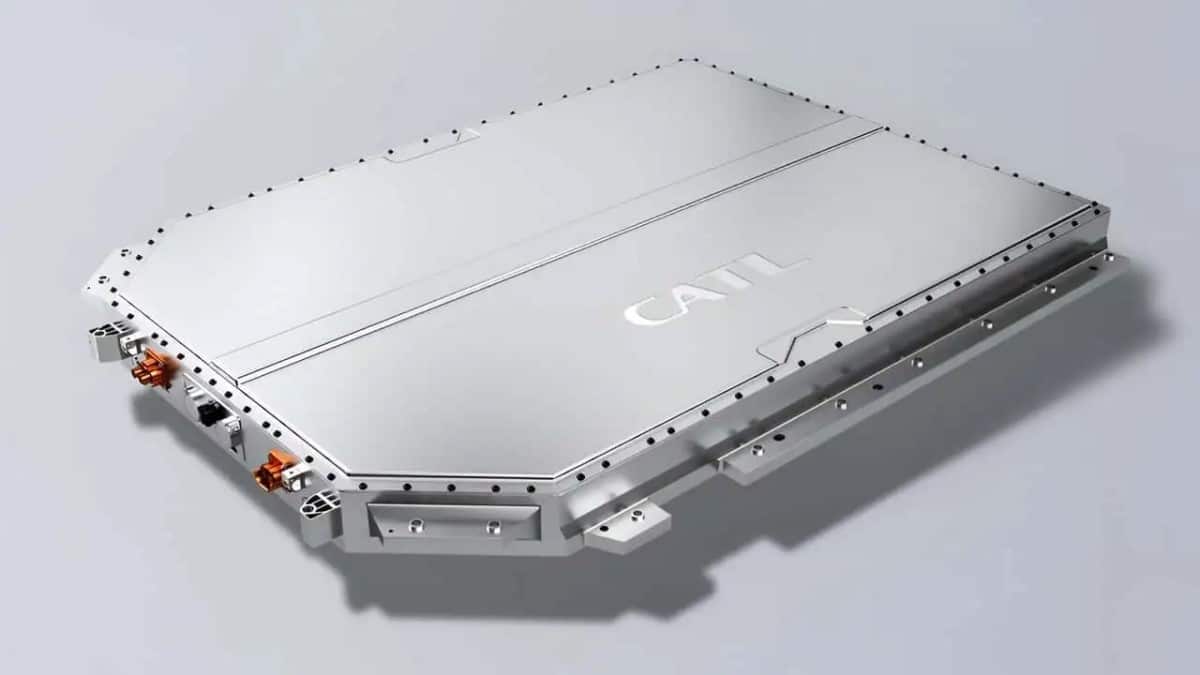
A new electric car can grab attention. A new battery can cut the hassle of owning one.
That was the bigger story at the Beijing Auto Show, where CATL, the company behind about 40% of the world’s EV batteries, showed off battery tech that could make EVs easier to live with much sooner than many people expect. If these claims hold up in production cars, drivers get more range, shorter stops, and battery packs built for different jobs.
Why CATL’s battery news matters
When one supplier builds packs for brands such as Tesla, BMW, and Stellantis, its roadmap matters well beyond one show stand. CATL is not a fringe player. It helps shape what the next wave of EVs can do.
That is why the battery launches at Beijing mattered as much as the cars around them. TechRadar’s Beijing Auto Show battery report picked up the same theme, charging times and battery chemistry are moving fast, and they will do more to change daily EV use than most styling updates ever could.
The next big EV upgrade may sit under the floor, not in the design studio.
The three CATL batteries worth watching
This quick comparison puts the headline claims in one place.
| Battery | Main claim | Why it matters |
|---|---|---|
| Qilin Condensed | Up to 930 miles of range | Less charging, lighter pack, improved safety |
| Shenxing 3 | 10% to 80% in 3 minutes 44 seconds | Charging stops start to feel much shorter |
| Qilin 3 | Over 600 miles of range, up to 3 MW instant power | Strong mix of range, efficiency, and performance |
Qilin Condensed aims at extreme range
The boldest claim came from the Qilin Condensed battery, which CATL says could deliver up to 930 miles, or 1,500 km, on one charge. The key change is inside the pack. Instead of a liquid electrolyte, CATL uses a compressed gel. That matters because the liquid electrolyte in today’s batteries is the part most tied to leaks and thermal runaway when cells are damaged.
CATL says the result is a safer and more energy-dense pack, so the battery stores more energy for its weight. On a 20-mile daily commute, that kind of range could last about 46 days between charges. CATL also says some drivers in China may need to charge only six times a year. The pack is light enough that CATL sees potential beyond cars, including aircraft. This one appears farther off than the others, and premium models will likely get it first.
Shenxing 3 targets the charging stop
The Shenxing 3 battery goes after a different problem. CATL says it can charge from 10% to 80% in 3 minutes and 44 seconds.
That speed comes from 10C charging, which means the charge rate is meant to scale even with larger packs. In other words, a big 120 kWh battery and a smaller 50 kWh battery could both hit that 10% to 80% window in under four minutes, if the charger can supply enough power. That could make a road-trip stop feel less like a break and more like a quick refill.
Qilin 3 looks like the all-arounder
Then there is Qilin 3, a high-density NMC battery aimed at range and performance together. If you want a refresher on comparing LFP and NMC battery chemistries, the tradeoff usually comes down to cost and longevity on one side, and range and performance on the other.
CATL says an LFP pack with similar range potential would weigh about 255 kg more and take up roughly 112 liters more space. It also claims more than 600 miles of range and up to 3 MW of instant power. That points to high-end EVs where efficiency, pack size, and power output all matter at once.
The battery is ready faster than the infrastructure
The biggest hurdle is not always the pack. It is the charger waiting for it.
CATL’s fast-charging claims need charging hardware that most markets do not have yet. In places such as the UK, today’s top public chargers are around 400 kW. That is already enough for some EVs to add about 100 miles in under five minutes, but it is still short of what Shenxing 3 is built to exploit. The same chicken-and-egg problem applies in the US and Europe, chargers will not spread until cars can use them, and cars will not chase those speeds until the chargers are common.
CATL also showed battery swapping, which can replace a pack in about 90 seconds, and sodium-based batteries that can rapid-charge at minus 50 degrees C. For a closer look at how sodium-ion EV batteries work, the appeal is clear: lower cost, better cold-weather behavior, and a useful alternative for some vehicles.
Where EV battery tech is heading next
The most important takeaway is not one headline number. It is the shift toward different batteries for different needs.
Some EVs will prioritize ultra-long range. Others will chase ultra-fast charging, low cost, cold-weather strength, or high performance. If CATL is right, the next phase of EV progress will feel less about flashy concept cars and more about picking a battery that fits the way you drive.