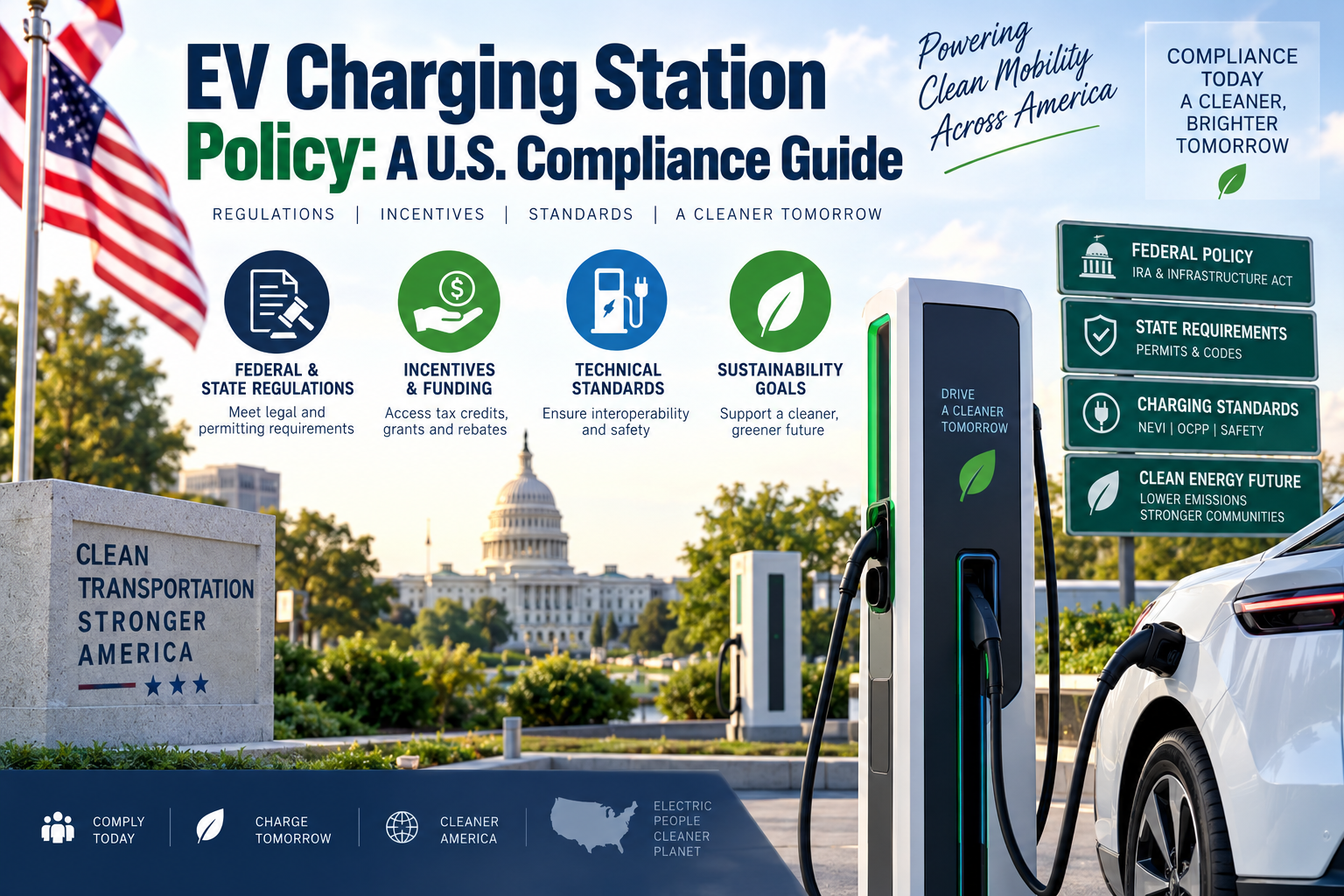
EV Charging Station Policy: A U.S. Compliance Guide
A public EV charging plug sits at the end of a long chain of decisions. Before a driver can connect, a project may need local permits and inspections, a utility connection or service upgrade, payment systems, accessible parking and routes, maintenance plans, and regular data reporting.
That’s why an EV charging station policy isn’t one rule. In the United States, it combines federal funding requirements, state programs, local approvals, utility decisions, and private property rules. Federally funded public chargers, including many projects covered by the National Electric Vehicle Infrastructure program, follow additional standards for installation, operation, maintenance, interoperability, pricing, availability, accessibility, and reporting. Workplace, apartment, fleet, and home charging follow different requirements, so the same policy doesn’t apply to every plug.
These rules affect where stations are built, how dependable they are, what drivers pay, which connectors they support, and how quickly new sites open. This guide focuses on the United States and separates each charging setting, starting with the policy layers behind EV charging stations across the USA.
What EV Charging Station Policy Covers in the United States
An EV charging station policy covers more than the charger itself. It can govern site selection, electrical work, public access, payment, pricing, accessibility, maintenance, and data reporting. The exact requirements depend on who funds the project, where it operates, and whether drivers use it publicly, at work, in an apartment, or at home.
Federal rules for publicly funded chargers
Federally funded public stations face the clearest national requirements. The National Electric Vehicle Infrastructure program applies to eligible chargers built along designated Alternative Fuel Corridors. Its standards address connector types, charging power, port capacity, payment methods, uptime, pricing information, and data submission.
Under the federal framework, a funded station must remain physically accessible to the public 24 hours a day, seven days a week, all year. Operators also need to support open-access payment methods rather than forcing every driver into a single proprietary app or membership plan. The NEVI Formula Program requirements provide the federal baseline for these projects.
Reliability is another major part of the policy. NEVI-funded charging ports must maintain an average annual uptime above 97 percent. Operators need records that show whether each port was available, in use, or out of service. They also submit information about use, costs, maintenance, and reliability on a quarterly schedule.
State and local EV charger regulations
Federal funding is only one layer. States may add their own rules for charger performance, pricing, data sharing, installation, consumer disclosures, and public incentives. California, for example, has state requirements tied to uptime and real-time charger availability. Other states use building codes, utility programs, grants, or emissions policies to shape new charging sites.
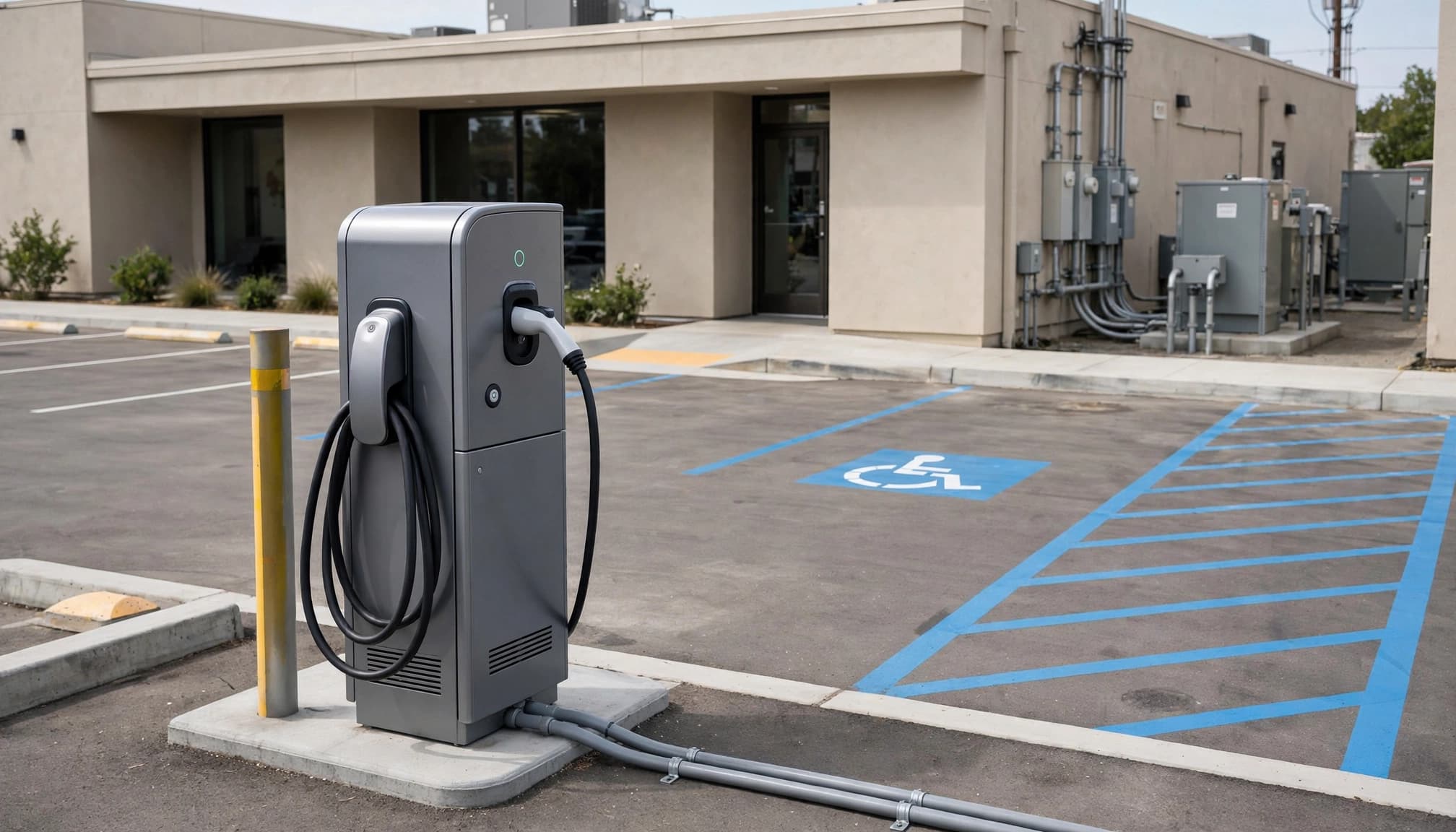
Local governments control much of the physical approval process. A project may need zoning clearance, an electrical permit, plan review, construction inspection, and approval for new utility service. Local parking rules can also affect accessible spaces, signs, curb cuts, lighting, and pedestrian routes.
Private charging sites follow a different path. A homeowner usually deals with electrical and permitting rules, while an apartment owner may also face property agreements, tenant notices, parking assignments, and utility billing questions. Workplace and fleet stations can have additional safety, labor, and access controls.
For a home installation, local approval still matters. These EV charger installation requirements often include a permit and inspection for new high-voltage circuits. A national policy doesn’t automatically control every private charging site, so owners should check the rules of the city, county, utility, and state before work begins.
How Federal EV Charging Station Policy Shapes Public Networks
Federal EV charging station policy turns a publicly funded charger into a dependable service, not just a piece of electrical equipment. NEVI requirements cover access, uptime, payment, data, domestic manufacturing, and fair use. They also shape what drivers see before they pull into a charging space.
NEVI standards for access, uptime, payment, and station data
NEVI stations along designated Alternative Fuel Corridors must generally remain open 24 hours a day, seven days a week, all year. Current program guidance also commonly requires each charging port to maintain at least 97% average annual uptime. That standard applies to NEVI-related projects, not every charger in the country.
Drivers should be able to check a station’s status before arriving. Public data should show its location, whether each port is available or in use, charging power, connector type, and pricing. Real-time reporting helps prevent a frustrating detour to a station with a broken screen or offline port.
Pricing must be visible before charging begins, and current NEVI guidance requires a contactless payment method that accepts major credit or debit cards without forcing membership. That requirement is different from an industry preference for every possible payment option. Operators still need to follow the funding program and state guidance that apply to their project.
Interoperability means the car, charger, and charging network can communicate, even when different companies operate them. Common connectors, reliable network communication, roaming between networks, and open payment options reduce the need for separate accounts and adapters. Drivers can learn more about U.S. EV charging connector standards before planning a long trip.
Buy America rules and the shift toward domestic charger content
Federal procurement rules affect the entire supply chain. Manufacturers must document where chargers and components come from, while developers and state agencies must preserve records that support reimbursement and project approval.
Under the current Buy America implementation and applicable waiver guidance, chargers manufactured on or after July 1, 2024, generally need final assembly in the United States and more than 55% domestic component cost. The exact obligation depends on the funding source, applicable waiver, manufacturing date, and current federal guidance. The Federal Highway Administration’s program materials provide the starting point for reviewing those requirements.
DOT proposed a move toward 100% domestic content for certain federally funded chargers in August 2026. That is a proposal, not a final rule. Until federal action changes the operative standard, project teams should rely on current FHWA requirements while tracking the proposal.
Supplier declarations, invoices, component lists, assembly records, and certifications can determine whether a charger qualifies. A missing record may delay approval even when the equipment appears compliant.
Accessibility, equity, and fair use of public chargers
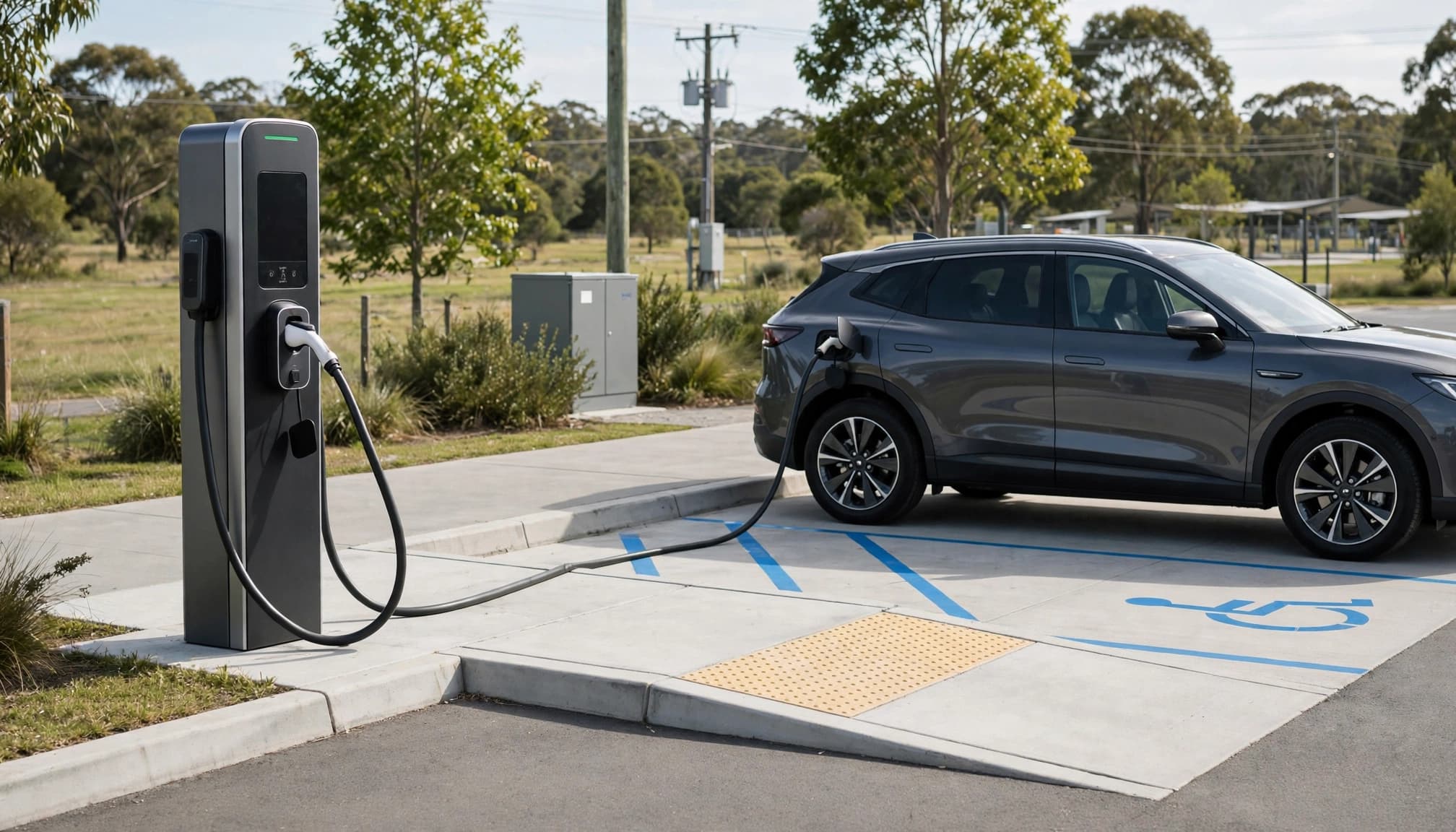
Public charging sites need more than an accessible parking sign. Drivers with disabilities may need a clear route from the space to the charger, enough usable room around equipment, reachable controls, readable signage, and payment interfaces they can operate independently. Sidewalks, curb ramps, lighting, and nearby restrooms also affect whether a site is genuinely usable.
Federal planning also considers people who cannot charge at home, including renters, apartment residents, rural drivers, lower-income households, and people without private garages. Justice40 forms part of that broader equity context by encouraging benefits for disadvantaged communities. It doesn’t mean every state must direct exactly 40% of charging funds to those areas. Location studies, community input, and corridor planning still determine how benefits are delivered.
How State and Local Rules Decide Where Chargers Can Be Built
State programs may encourage EV charging, but local governments and utilities often decide whether a proposed site can actually move forward. Zoning, parking rules, curb access, traffic control, lighting, stormwater, and electrical capacity can affect the schedule as much as the charger hardware.
Permits, utility interconnection, and the hidden project timeline
A charger can be technically installable yet still lack enough electrical capacity for its intended use. A Level 2 unit may fit an existing panel, while several DC fast chargers may require new service, a larger transformer, switchgear, underground conduit, and utility construction.
The approval path often includes:
- A zoning or site review, especially when the project changes parking, lighting, traffic flow, stormwater drainage, or curb access.
- An electrical permit, plus a building or civil permit when construction affects pavement, structures, sidewalks, or utility routes.
- A utility service inquiry, load calculation, single-line diagram, and engineering review.
- Easements or right-of-way approvals when equipment, conduit, or access crosses property boundaries.
- Trenching, conduit installation, switchgear placement, and inspections before the utility can set a meter or energize service.
The U.S. Department of Energy’s utility program guidance for EV charging notes that developers generally need utility approval, property rights, and permits from the authority having jurisdiction. If the utility identifies a transformer or feeder constraint, the project may face an upgrade charge and a longer construction window.
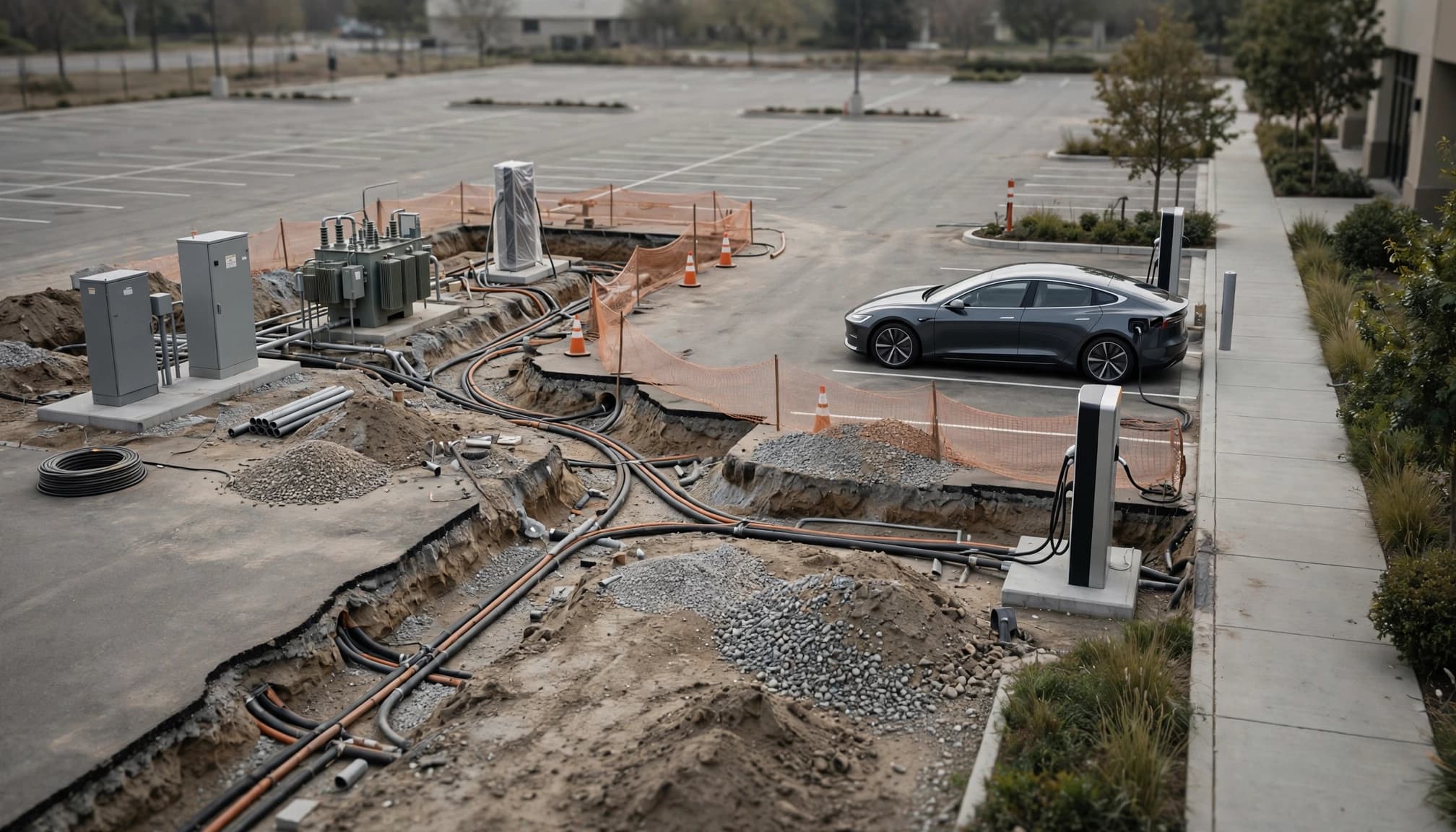
The utility may also control the delivery date for transformers, service conductors, meters, or other equipment. Therefore, involve the utility and permitting office before signing a construction contract. A site walk, preliminary load review, and permit conversation can reveal schedule risks while design changes remain affordable.
Workplace, apartment, fleet, and home charging follow different rules
Private charging projects usually need property-owner approval, code-compliant electrical work, local permits, inspections, and a utility capacity review. Multifamily properties may also need landlord, condominium, or HOA approval, parking assignments, tenant notices, and a plan for shared electrical costs.
Policy decisions should answer practical questions early:
- Who can use each charger, and can visitors access it?
- Will residents or employees pay through a network, reimbursement plan, or building bill?
- Will charging stop during certain hours or after a vehicle reaches a set limit?
- Does each user have a separate meter, or does the property allocate electricity costs?
Workplace and apartment projects often benefit from business EV charging guidance because vehicles may remain parked for hours, allowing lower-power charging and scheduled use.
Fleet depots require a separate design. Vehicle routes, departure times, battery sizes, delivery operations, and simultaneous charging loads can determine the number of ports and the required service capacity. Public corridor sites add traffic control, accessible routes, signs, lighting, and public-access rules. Home charging is usually smaller, but a crowded electrical panel or a long trench can still trigger permit, inspection, or service-upgrade delays.
The Real Cost of Following EV Charging Policy
Compliance costs are only one part of an EV charging station’s business case. A site owner must separate policy-driven expenses, such as permits, accessible site design, reporting systems, and procurement records, from normal operating costs, including electricity, software, repairs, payment processing, and replacement parts.
A project can meet every federal requirement and still struggle if utility tariffs, low utilization, or unreliable equipment reduce its margin.
How pricing, demand charges, and uptime affect the business case
The price a driver pays reflects more than the electricity used. A station may charge by kilowatt-hour, by time, or through a combination of energy and session fees. Parking or idle fees can apply when a vehicle remains in the space after charging ends. Operators may also offer membership pricing while charging nonmembers more, and every transaction can create payment-processing costs.
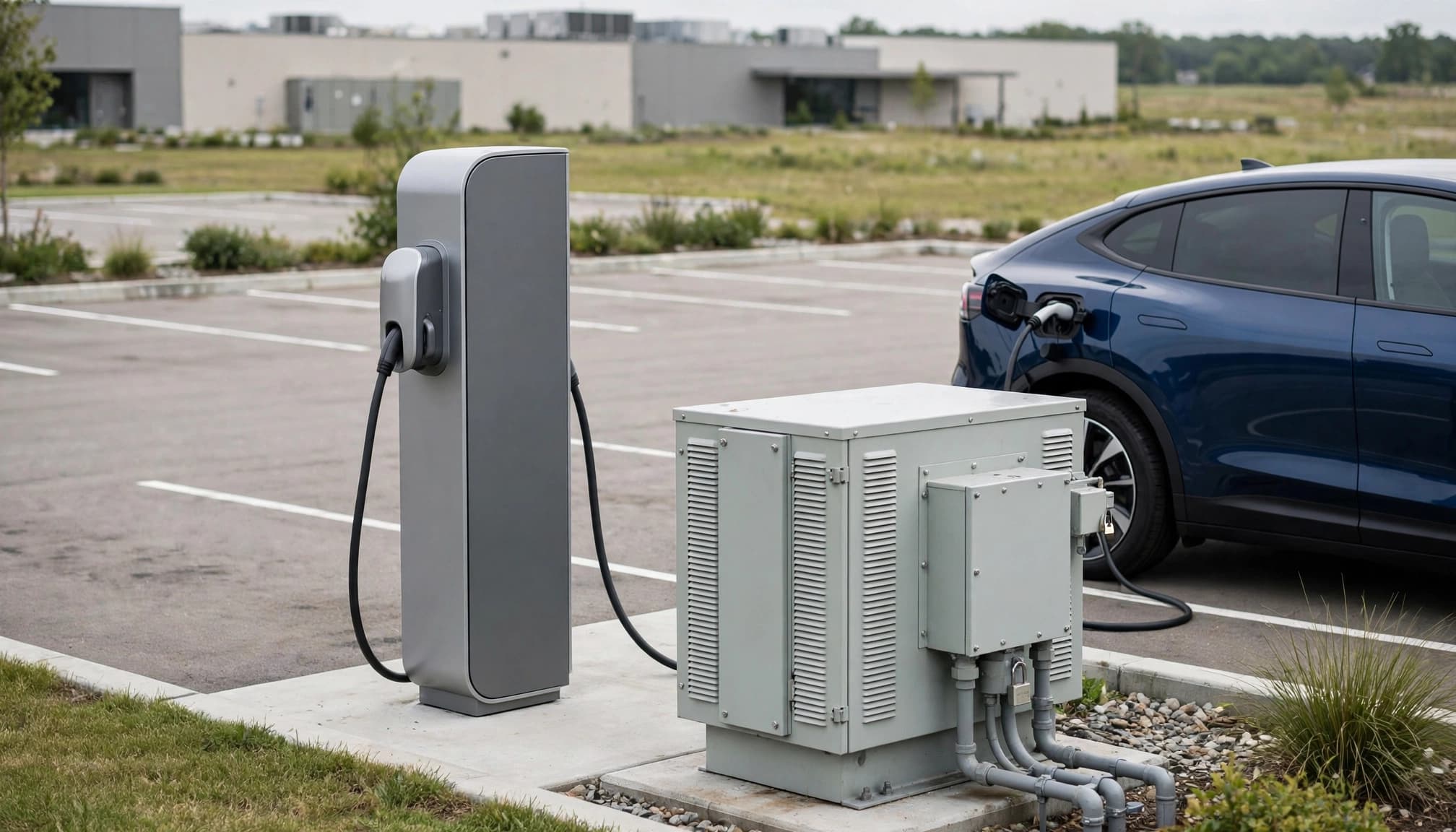
Utility bills add another layer. Demand charges can apply when a site reaches a high power draw, especially during busy periods at a DC fast-charging station. Transformer upgrades, new service equipment, and utility construction can also add major upfront costs. These expenses are not uniform federal requirements. They depend on the utility tariff and service territory, so developers should request the current commercial rate schedule directly from the serving utility.
Maintenance, cellular connectivity, network software, replacement parts, and technician visits reduce revenue over time. A charger that remains unavailable loses charging sales while weakening driver trust. For federally funded NEVI stations, operators generally must maintain more than 97% average annual uptime per port. That standard makes monitoring and rapid repairs part of the financial plan, not optional extras.
Connector choices, software, and future-proof equipment
CCS Type 1 remains important in the U.S., while NACS is now standardized as SAE J3400 and is appearing in more vehicles and charging deployments. The transition isn’t complete everywhere. For federally funded projects, current rules and state solicitations may still require CCS while allowing SAE J3400 as an additional connector.
Before selecting equipment, confirm:
- Which connectors local vehicles use, and whether approved adapters are supported.
- Whether the funding program or state requires specific ports, power levels, payment hardware, or reporting.
- Whether the charger supports remote monitoring, diagnostics, and real-time availability data.
- Whether its network uses open standards such as OCPP, ISO 15118, and OCPI.
- Whether the operator can change networks, replace modules, or add ports without rebuilding the site.
Federal charging data requirements include location, pricing, accessibility, and real-time availability. The Alternative Fuel Vehicle Infrastructure Trends report also documents the continuing shift toward SAE J3400. Selecting equipment with open communication, contactless payment, and upgradeable power hardware can protect the site’s value as vehicle compatibility changes. Further guidance on U.S. EV charging business models can help owners compare network and revenue structures.
A Practical Compliance Checklist for New Charging Projects
The most common project mistake is choosing the charger first, then investigating electrical capacity, funding rules, accessibility, and operating costs. Reverse that order. Before signing a purchase contract, confirm the site’s legal, technical, financial, and operational requirements with the relevant agency, utility, and permitting office.
Questions to settle before selecting a site or charger
Use these questions as a decision checklist:
- Who owns the land, and does the owner approve construction, access, easements, signage, and future upgrades?
- Who will use the charger: the public, tenants, employees, fleet drivers, or a restricted group?
- Does federal, state, or utility funding apply? If so, which FHWA, state DOT, domestic-content, reporting, payment, or uptime rules must the project meet?
- Which vehicles will arrive, and should the site support CCS1, SAE J3400, J1772, or more than one connector?
- How many charging sessions are expected each day, and how many vehicles may charge at the same time?
- Can the utility serve the proposed load, or will the project need a transformer, new service, switchgear, or feeder upgrade?
- Which zoning, electrical, building, civil, right-of-way, stormwater, and construction permits are required?
- How will drivers pay, and will the system support contactless cards, accessible payment, phone or text payment, and clear fee disclosures?
- Who will monitor uptime, respond to faults, stock replacement parts, and pay for repairs?
- Does the design include lighting, personal safety, accessible parking and routes, weather protection, visible signs, and safe pedestrian movement?
- What data must the operator share with the network, state DOT, utility, or funding agency?
- Can the site add chargers, battery storage, solar canopies, or larger electrical service later?
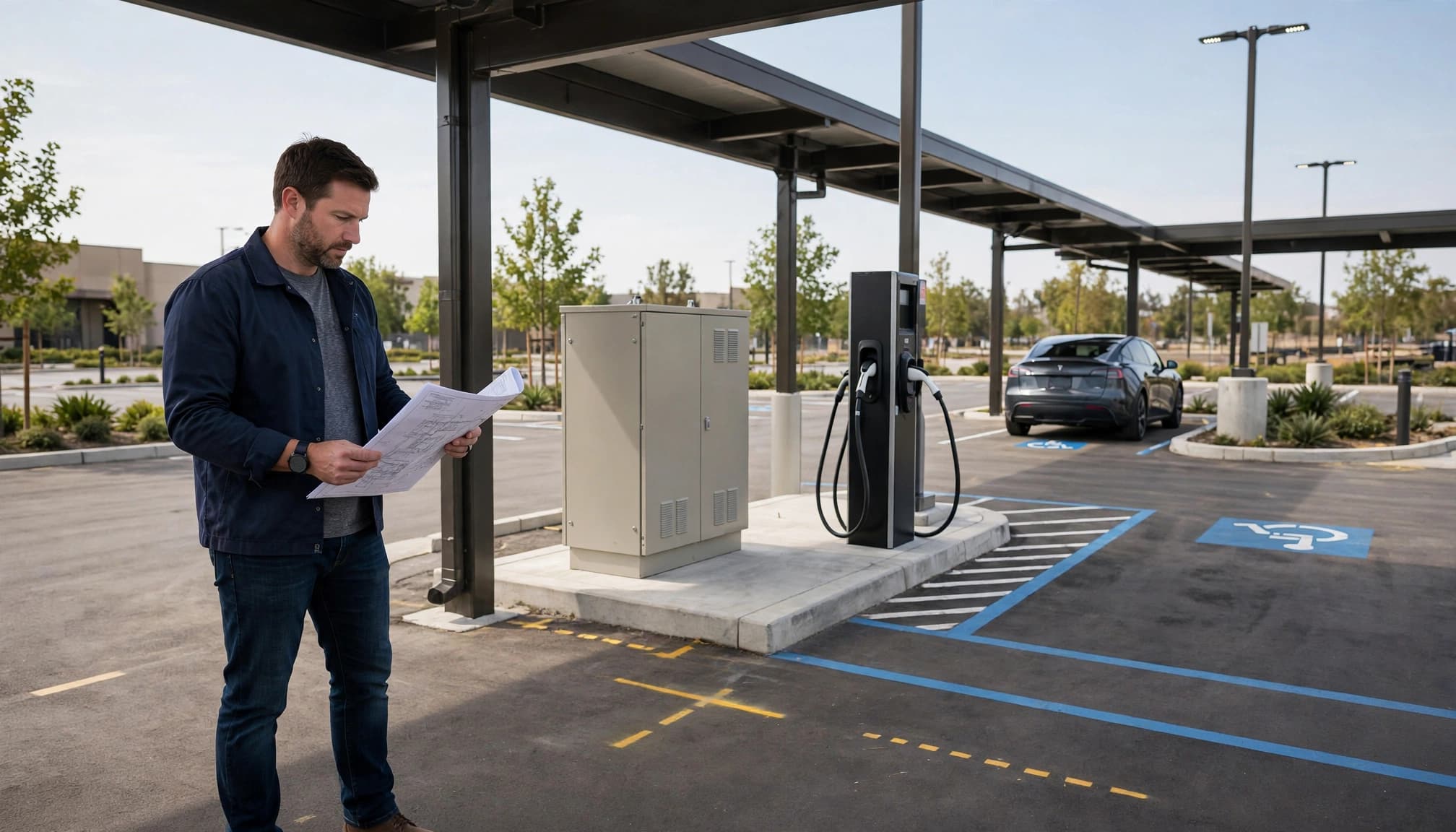
Ask the FHWA, state DOT, utility, and local permitting office to confirm current requirements before equipment arrives. A written response can prevent an expensive redesign.
Policy mistakes that create delays, fines, or unusable chargers
Several errors appear repeatedly in new EV charging projects. Treating a private installation like a NEVI project can add unnecessary costs, while assuming a funded project follows ordinary private-site rules can make equipment ineligible. Skipping local permits may stop energization after construction.
Utility delays create another risk. A project that ignores transformer lead times can sit with finished pavement and no power. Missing domestic-content records can delay reimbursement, even when the charger itself works. Choosing a connector without checking nearby vehicle demand leaves drivers searching for adapters or another station.
Hidden session, parking, or idle fees damage trust and may violate funding or state disclosure rules. Poor accessible routes, tight clearances, unreachable controls, or inadequate lighting can make a compliant-looking site difficult to use. Without uptime monitoring, owners may not discover failures until drivers report them. Finally, unclear repair duties create long outages because the property owner, network provider, and equipment vendor each expect someone else to act.
Confirm current FHWA, state DOT, utility, and local permitting requirements before signing the purchase contract.
Conclusion
A successful EV charging site must be legal, accessible, dependable, easy to pay for, connected to the grid, and supported by a realistic maintenance plan. Those requirements determine whether a charger works as a trusted service or becomes an expensive space with a broken screen and no power.
Federal rules apply most directly to publicly funded projects, especially NEVI-supported stations. Private workplace, apartment, fleet, and home chargers have more flexibility, but they still must follow electrical codes, permits, property rules, utility requirements, and accessibility obligations.
Policies, connector standards, and domestic-content requirements can change, so responsible operators should verify current federal, state, utility, and local guidance before construction or procurement. Treat permitting, utility planning, compliance records, and long-term service as part of the charger itself, not as paperwork added after installation.