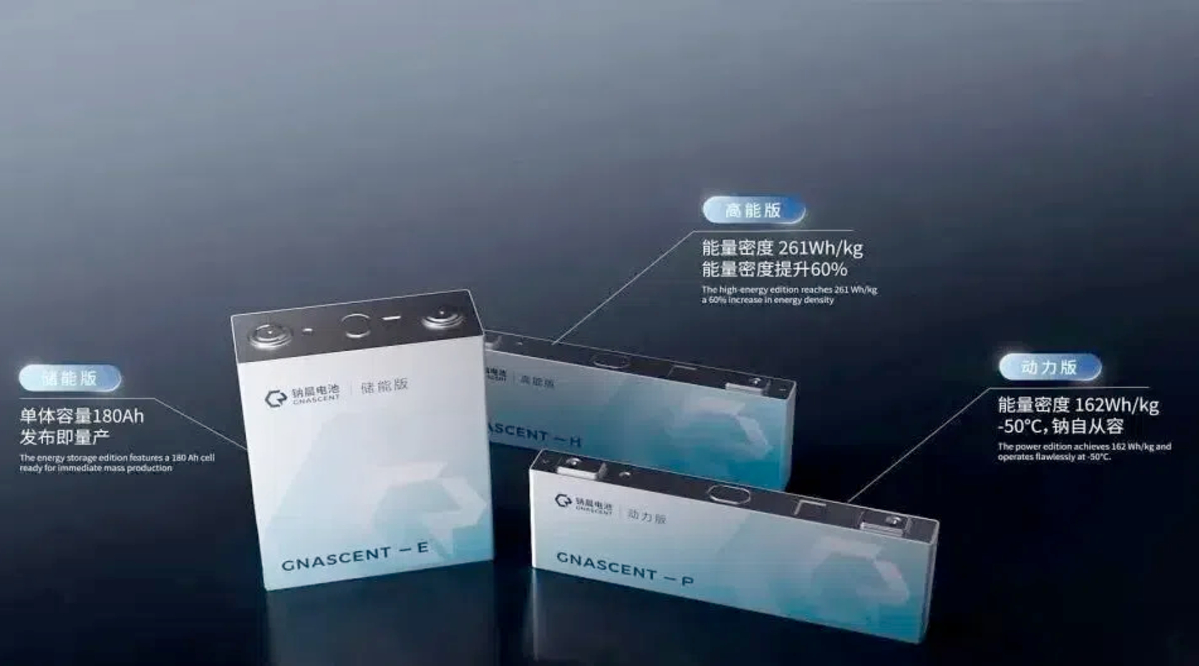
Six months ago, 175 Wh/kg made sodium-ion look serious. Now Gotion says it has a 261 Wh/kg sodium cell, and that pushes the chemistry into ground once reserved for top lithium packs.
If you follow EV batteries, you know why that number matters. Sodium has long offered lower material risk, solid safety, and strong cold-weather behavior, but it trailed lithium on energy density. Gotion’s latest announcement changes the old argument.
Why 261 Wh/kg matters
For years, sodium-ion stayed below 160 Wh/kg in commercial form. Meanwhile, lithium iron phosphate, or LFP, became the practical standard because it was affordable, stable, and good enough for mainstream cars.
The old knock on sodium was simple: it was cheaper and safer, but too weak for serious EV range.
This comparison shows why Gotion’s claim matters:
| Battery | Reported energy density | Role |
|---|---|---|
| CATL sodium-ion cell | 175 Wh/kg | Recent sodium benchmark |
| BYD Blade battery | 192 Wh/kg | Mass-market LFP reference |
| Tesla 4680 cell | about 261 Wh/kg | High-performance lithium target |
| Gotion G-NaScent sodium cell | 261 Wh/kg | Passenger EVs and drones |
That puts Gotion above BYD’s Blade number and level with Tesla’s 4680 on the figure people watch first. It also narrows a gap that shaped much of the LFP vs NMC vs sodium-ion battery debate. If the claim holds in real vehicles, sodium is no longer a niche chemistry by default.
How Gotion appears to have done it
The challenge starts with the ion itself. Sodium ions are larger than lithium ions, so they move through battery materials less easily. As a result, it is harder to pack in energy without adding weight.
Gotion’s answer combines a polyanion cathode with an anode-less cell design. The cathode chemistry referenced in the announcement is sodium manganese iron pyrophosphate. Polyanion materials tend to be more stable than layered oxide designs, and that fits Gotion’s long-cycle storage claim.
The anode-less part matters too. Instead of carrying a traditional anode host material, the cell allows sodium to plate onto the current collector during charging. That cuts inactive weight and helps lift energy density. It also reduces material use.
If you already know how sodium-ion EV batteries work, the leap here is easy to see. Gotion did not change the basic idea of the battery. It targeted the weak points that kept sodium from catching lithium.
Safety is part of the story as well. Gotion says the cells passed an 8 mm nail penetration test without ignition. The company also says the cells did not ignite under 400 C of external heat. For a high-energy cell aimed at vehicles, those results matter as much as the headline spec.
Three batteries, not one lab demo
Gotion grouped the launch into three products under its G-NaScent platform, as outlined in CleanTechnica’s report on the sodium battery launch.
The first is the 261 Wh/kg version for passenger EVs and drones. The second is a 162 Wh/kg cell for buses, construction machines, and other heavy-duty work in deep cold. Gotion rates it down to -50 C, which is a striking claim for fleets in harsh climates.
The third version targets energy storage, and its headline spec is 20,000 charge-discharge cycles. That is twice the 10,000-cycle target often attached to CATL’s sodium storage chemistry. At one full cycle per day, that points to decades of use in grid applications.
Gotion is also not a small newcomer. The company was founded in 2006, Volkswagen owns a 30% stake, and Gotion says its 20-factory network reached 400 GWh of capacity by the end of 2025. It also says gigawatt-hour-scale production is already running across two large factories in China.
What this could mean for EVs and the grid
The pressure point is cost. CATL has said sodium-ion could reach $19 per kWh by 2030. Current LFP pricing from major Chinese suppliers is closer to $55 per kWh. If sodium reaches similar or better energy density at far lower cost, premium lithium chemistries such as NMC and NCA lose part of their case.
That matters for automakers, but the bigger shift may land on the grid. A safe sodium battery with 20,000 cycles could lower storage costs enough to compete with gas peaker plants in some use cases. That would not erase lithium, and it would not happen overnight. Still, it would widen the battery market well beyond passenger cars.
For Volkswagen, the logic looks plain. A 30% stake in Gotion is not only access to cells. It is access to a cheaper supply path in a market where battery cost still decides winners and losers.
Final thoughts
Sodium-ion used to sound like the compromise option. Gotion’s 261 Wh/kg claim suggests it may become a front-line battery for some EVs and a strong contender for grid storage.
The story now shifts from lab numbers to road and grid performance. Yet the old argument, that sodium could not reach serious EV territory, looks much weaker than it did a few months ago.