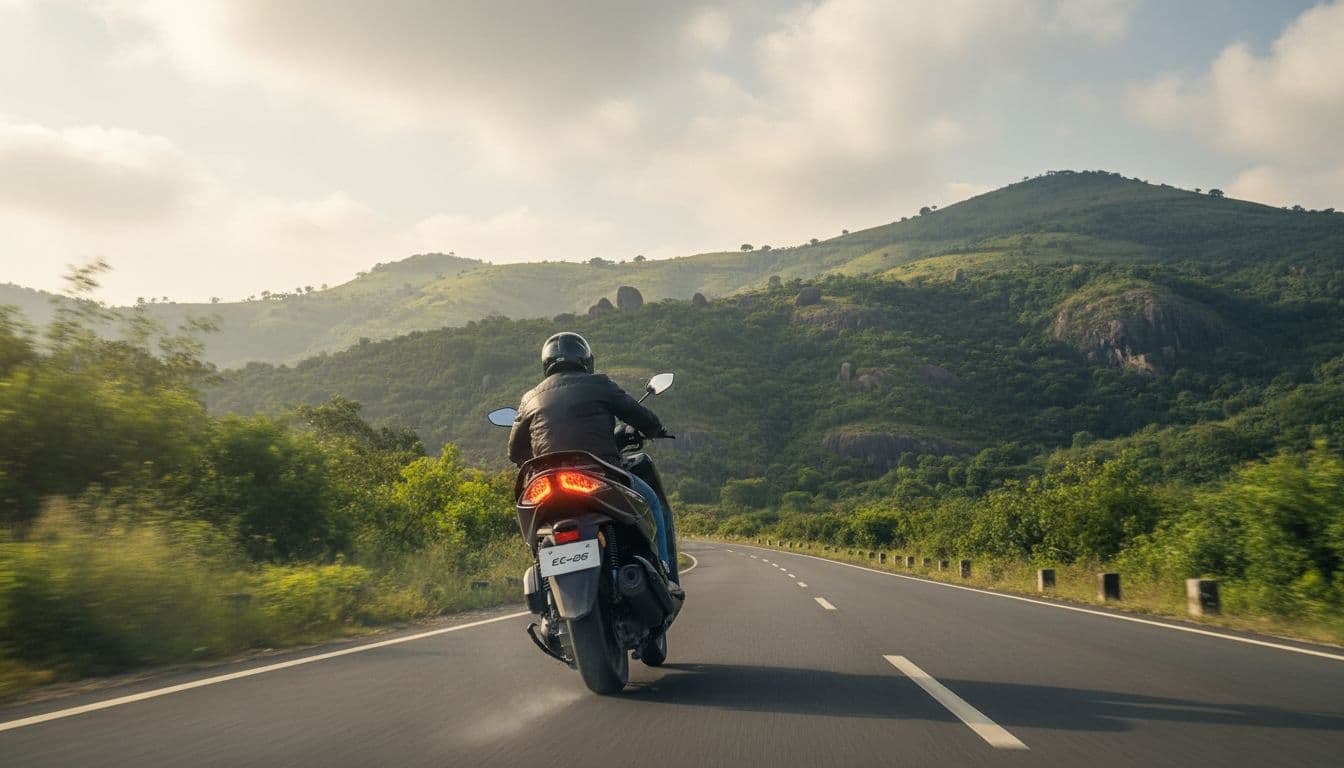
Some electric scooters chase attention with giant screens, wild shapes, and big claims. The Yamaha EC-06 takes a different road, and that’s what makes it easy to notice.
If you care more about how a scooter feels on broken roads, in traffic, and through a fast bend than how flashy its dashboard looks, this one gets interesting fast. Yamaha hasn’t started from scratch here, but that may be the whole point.
Why the Yamaha EC-06 matters more than it first appears
Yamaha’s entry into India’s electric scooter space was always going to draw attention. Still, the EC-06 stands out for a reason that goes beyond the badge on the front. It shares its core architecture with the River Indie, a scooter that has already built a strong name for itself as one of the more sorted electric two-wheelers in the country.
That changes the question right away. This is not about whether Yamaha can build a usable EV scooter. The base already proved it could. What matters is whether Yamaha has given that platform a clearer identity, and whether those changes show up once the road turns rough, tight, or steep.
In a market that keeps getting busier, that strategy feels smart. There’s pressure from established electric names, and there’s also growing curiosity around future entries, including models people are tracking through stories like this look at the Tata electric scooter expected price in India. Yamaha didn’t try to enter this space with a science project. It picked a good base and tuned it for its own audience.
That audience is easy to understand. The EC-06 seems built for riders who want something practical, but not sleepy. It wants to be a commuter that still feels alive in your hands. On paper, that sounds simple. On the road, it’s harder to get right.
The design keeps things clean, calm, and easy to live with
Yamaha calls the EC-06’s look its “horizontal core” philosophy. In plain English, that means the scooter sits flatter and more upright, without the nose-heavy, lean-forward posture some sporty scooters chase.
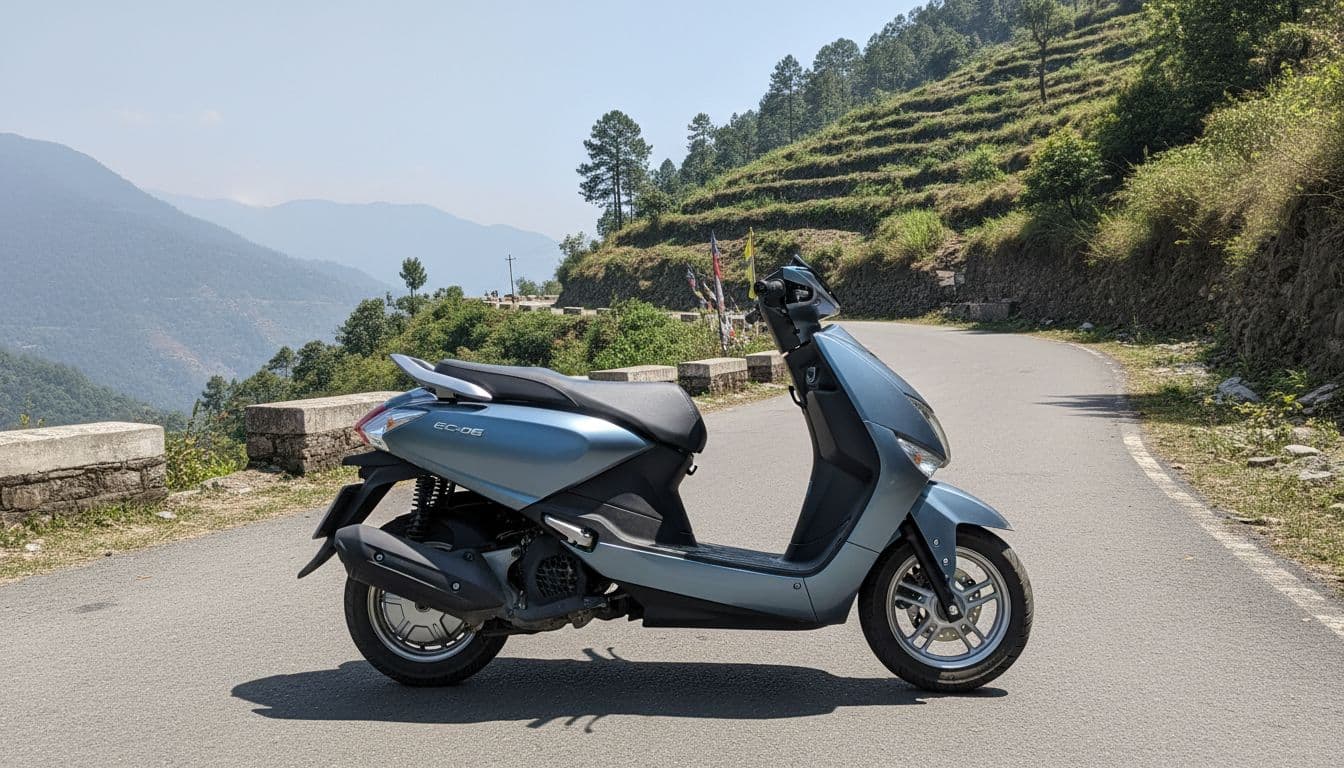
That shape works because it matches the way the scooter feels the moment you climb on. The riding position is relaxed. The seat is broad, yet it narrows toward the front more than the River Indie’s seat does, so shorter riders should find it easier to manage at a stop. The floorboard is wide as well, which helps both comfort and day-to-day utility.
There’s a quiet confidence to the design. The EC-06 doesn’t look bulky in the way the River Indie can, even though the two share a lot under the skin. It also doesn’t try too hard to look futuristic. That matters, because a lot of EV scooters start aging the moment trends move on.
A quick look at Yamaha’s official EC-06 specs page backs up the main numbers, but the styling story matters here too. The EC-06 comes across as more premium and better resolved than a plain commuter, while still staying grounded in what riders need every day.
The riding position leans toward comfort, not drama
There’s an interesting split in the way Yamaha has tuned this scooter. The motor response gets a sportier edge, but the ergonomics go the other way.
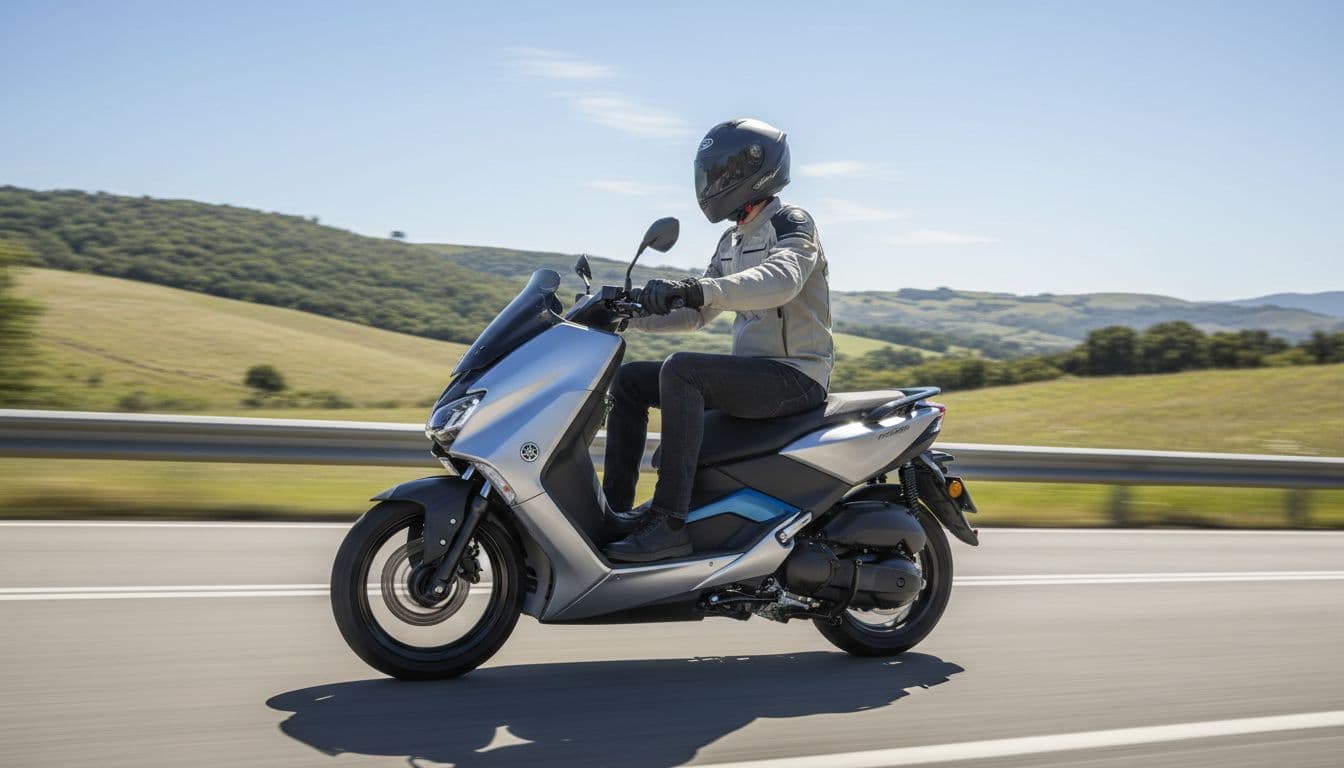
You sit on the EC-06 in a natural, upright posture. The bars don’t push you into a sporty crouch. The seat supports you well. Because of that, the scooter feels approachable before it even moves. That may sound small, but it shapes the whole ownership experience.
The result is a scooter that looks sharper than a plain city runabout, yet feels easy and familiar when you ride it. That balance is one of its best traits. It doesn’t punish you with an aggressive setup, and it doesn’t bore you with a dead one either.
Performance is brisk, clean, and strongest in the mid-range
The key numbers are competitive without trying to steal the whole show. The EC-06 makes 6.7 kW of peak power and 26.4 Nm of torque. Yamaha claims an IDC range of 169 km, and the top speed sits around 79 to 80 km/h.
Here’s the quick spec picture:
| Spec | Yamaha EC-06 |
|---|---|
| Peak power | 6.7 kW |
| Torque | 26.4 Nm |
| Claimed range | 169 km (IDC) |
| Top speed | Around 79 to 80 km/h |
| Underseat storage | 24.5 liters |
| Weight | 132 kg |
Those numbers place it close to the River Indie Gen 3 and ahead of the Ather 450X in claimed range. On the road, though, the EC-06 feels a little different from both.
The biggest point is not raw launch drama. It’s the way the power arrives. In Eco mode, the throttle is gentle and progressive, which suits lower-speed city use. Standard mode sharpens that response and feels like the sweet spot for mixed riding. It gives you enough urgency for overtakes without draining the battery as quickly as Power mode.
Then there’s Power mode, and that’s where Yamaha’s tuning starts to show.
The difference is not huge on paper, and it may not hit you like a bolt. Yet when you ride it back to back with the River Indie, the EC-06 feels cleaner and more eager. You can switch modes on the move too, as long as you close the throttle first, which makes quick bursts of pace easy to access.
The EC-06’s charm is not brutal speed. It’s the way it gives you usable, repeatable performance without feeling fussy.
That shows up clearly on climbs. On the steep roads around Lonavala, the torque delivery stays consistent. There’s no sagging feeling halfway up a slope, and no sense that the scooter is running out of breath when you ask a bit more from it. The review’s takeaway is strong here: the EC-06 feels more sorted uphill than the Ather 450X did on the same stretch.
Handling and suspension give the EC-06 its real personality
This is where the scooter starts to feel more Yamaha than River. The hardware may remain the same in broad terms, but Yamaha has changed the spring rates and damping. That tuning gives the EC-06 a sharper edge without turning it into something nervous.
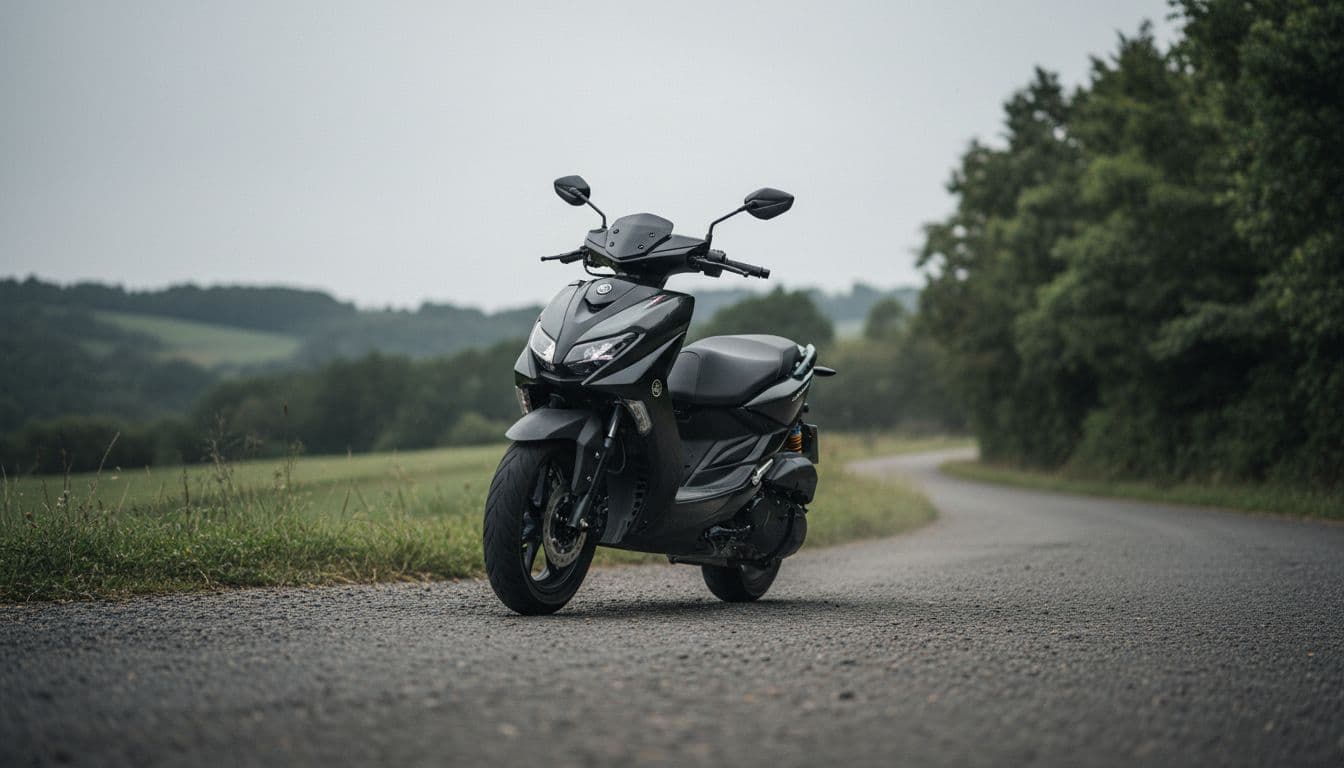
Turn-in feels crisp. Mid-corner stability is strong. Quick lane changes come naturally. On winding roads, that matters more than a spec-sheet sprint number. The River Indie already had a good name for chassis balance, and the EC-06 tightens that formula a touch more.
It also gets CEAT tires, and grip feels predictable on slightly bumpy roads. You can carry pace with confidence because the scooter tells you what the front end is doing. That feedback is part of the EC-06’s appeal. It doesn’t float over everything in a soft blur.
Of course, that has a flip side. The suspension is firmer than softer, comfort-first scooters like the TVS iQube or the Bajaj Chetak. Sharp edges and expansion joints come through more clearly. Still, the ride does not sound harsh or punishing. It sounds firm in a way that riders with a sporty bent of mind will appreciate.
The clever part is how well the scooter hides its 132 kg curb weight. On paper, that number looks heavy beside some rivals. In traffic, in a parking lot, or through a narrow gap, the EC-06 doesn’t feel like it’s fighting its own mass. It stays easy to place and easy to flick, which keeps it true to the basic promise of a scooter.
For a closer side-by-side look at the shared roots, NDTV’s EC-06 vs River Indie comparison is a useful reference. The two are related, but they do not feel identical.
Everyday practicality hasn’t been sacrificed for the sportier feel
A lot of scooters promise utility. The EC-06 backs it up with a wide flat floorboard and decent storage, which means it still understands the boring parts of life, and that’s a good thing.
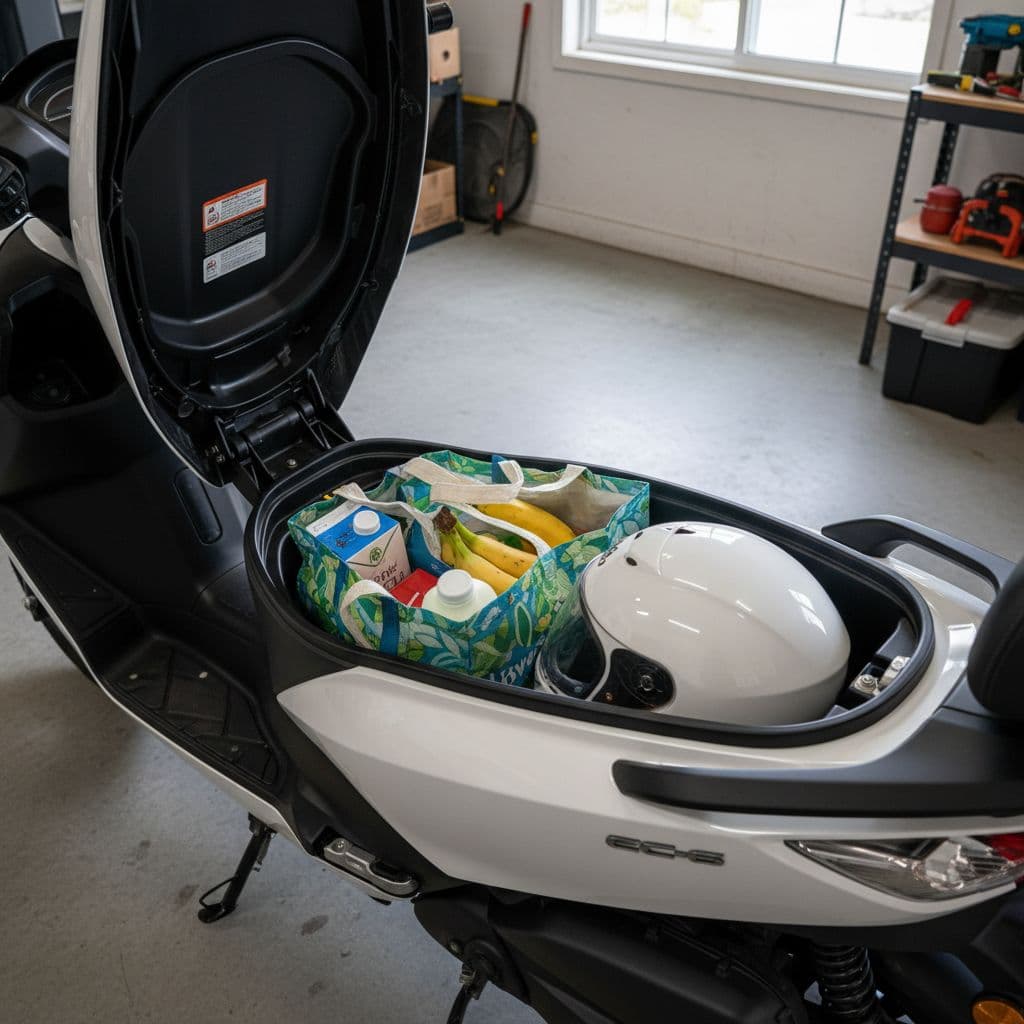
The underseat storage is rated at 24.5 liters. That sounds usable, and it is, but there’s a catch. A full helmet fit is not guaranteed, and in the ride this one did not take a Japanese helmet under the seat. So the storage is useful for errands, office runs, and daily carry items, but not class-leading for helmet storage.
The tech approach is also measured. Compared with an Ather, the EC-06 feels restrained. There’s no attempt to overwhelm you with flashy software tricks or screen drama. Some buyers will see that as a miss. Others will see it as a relief. Either way, the scooter seems more focused on getting the basics right than on showing off.
Range follows the same pattern. The claimed 169 km figure looks strong on paper, while the expected real-world number lands between 90 and 120 km, depending on mode, traffic, terrain, and how hard you ride. The more important point is consistency. The EC-06 appears to deliver its performance without forcing you to ride like you’re trying to win an efficiency contest.
That makes it easier to live with. You don’t have to constantly second-guess the throttle. You ride it, and it gets on with the job.
Yamaha EC-06 vs River Indie vs Ather 450X
These three scooters may sit close on many shopping lists, but they speak to different kinds of riders. The table below keeps the comparison simple.
| Scooter | What it does well | Where it gives ground |
|---|---|---|
| Yamaha EC-06 | Better chassis tuning, more polished design, good range, sporty but usable feel | Firmer ride, tech list feels modest |
| River Indie Gen 3 | Balanced, practical, slightly softer and easier-going | Styling may feel too rugged or bulky for some buyers |
| Ather 450X | Lighter feel, stronger outright acceleration, more features and tech | Lower range in this company, ride and styling won’t suit everyone |
The River Indie is the sensible starting point in this story. It’s practical, stable, and already well liked for the fundamentals. The EC-06 takes that same recipe and seasons it differently. It feels tighter, a bit sharper, and more premium in both design and tuning.
The Ather 450X goes another way. It brings more tech, a lighter feel, and stronger straight-line urgency. Yet the EC-06 seems to answer with a calmer design, a more planted feel on rough and hilly roads, and a range advantage. If you want the raw comparison numbers, HT Auto’s 450X vs EC-06 matchup lays out the spec side.
Where the EC-06 sits in this trio
The EC-06 lands in the middle, but not in a bland way. It combines the River’s practical strengths with a more rider-focused setup. It doesn’t chase the Ather on gadget appeal, and it doesn’t lean as far into utility-first styling as the River.
That middle ground is often where the best daily machines live. The EC-06 feels like it understands that.
The bigger surprise is how clearly Yamaha’s tuning comes through
Many badge-engineered products struggle because they never develop a voice of their own. The EC-06 doesn’t seem to have that problem.
It still carries the River DNA that made the base scooter good in the first place. Yet the throttle mapping, the suspension tuning, the cornering confidence, and even the way the ergonomics pair with the sharper chassis all give it a distinct identity. It feels less like a rebadged scooter and more like a Yamaha interpretation of a proven platform.
That also explains why it came across as the better all-round Yamaha EV in the ride impressions. The other Yamaha EV discussed in the review, the maxi-scooter alternative, may promise more style and enthusiast appeal on paper. On rough roads, though, it fell short on comfort, front-end confidence, build feel, and day-to-day ease. Against that backdrop, the EC-06 looks like the more complete product.
The strongest takeaway is simple. The EC-06 doesn’t try to reinvent the electric scooter. It takes a solid base and gives it a stronger point of view. In a segment crowded with flashy promises, that feels refreshingly grounded.
The Yamaha EC-06 stands out because it remembers what a scooter is supposed to do first, then adds a layer of character on top. It may not win every spec-sheet argument, but it makes a strong case where it counts, on real roads, at real speeds, with real compromises.
That leaves one lasting question hanging in the air: when the novelty fades, will more buyers start valuing feel, balance, and ease of use over one more flashy screen?