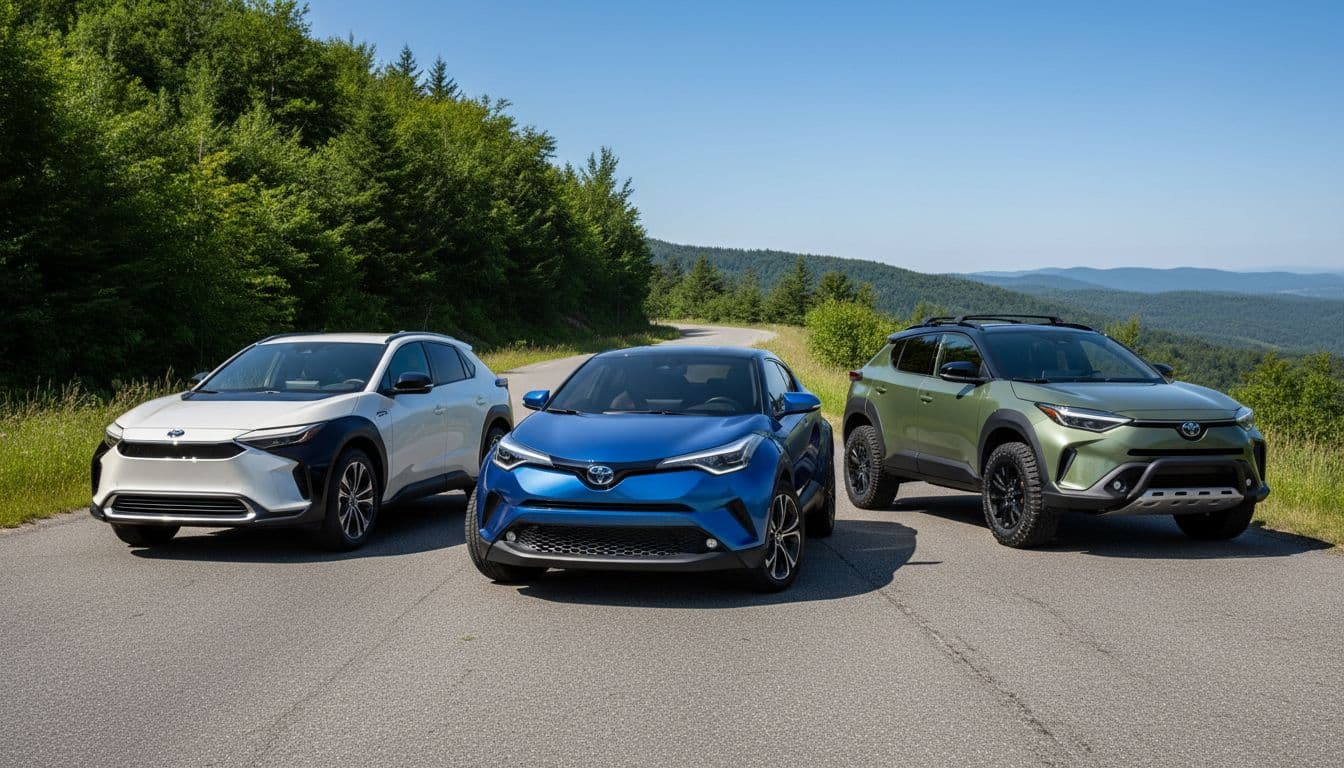
As of March 2026, Toyota’s EV story finally feels easier to follow. The Toyota EV lineup in the US now has three clear personalities: the refreshed bZ, the new all-electric C-HR, and the more rugged bZ Woodland.
That matters because shopping EVs can feel like reading a map in the rain. You want the basics fast: range, charging, price, comfort, and which model fits your life. Here’s the simple version, without the fog.
Toyota EV lineup at a glance, from city-friendly to trail-ready
Toyota now covers three common needs with its EV family. The bZ is the safe middle lane. The C-HR brings more style and punch. The bZ Woodland adds a tougher, outdoor-first setup for buyers who want dirt-road confidence.
The 2026 Toyota bZ is the practical everyday choice
For most shoppers, the 2026 bZ is the core Toyota EV. It works like a solid compact crossover should: easy to park, roomy enough for family duty, and less flashy than some rivals.
Toyota’s refreshed bZ lineup centers on trims such as XLE FWD, XLE AWD, and Limited AWD. Published figures vary a bit by trim and source, but the headline numbers are easy to grasp. The smaller-battery XLE FWD starts around 236 miles, while higher trims stretch farther. Early published figures have also put AWD versions at up to about 291 miles. Power also jumps with AWD, which feels much stronger in daily driving. The bZ is already on sale in the US and Canada.
The 2026 Toyota C-HR brings more speed and sharper style
The new electric C-HR is the choice for drivers who want a Toyota EV with more edge. It trades some upright crossover calm for a coupe-like shape, quicker reflexes, and standard dual-motor AWD.
Toyota says the C-HR makes 338 horsepower, which helps it feel far livelier than the old gas model ever did. Range figures depend on source and market, but the common window sits around 287 to 314 miles. Toyota’s own C-HR model page lists an EPA-estimated 287 miles for the SE, while other early reports have cited higher numbers in other versions or markets. US dealer arrival is pegged for March 2026, so it’s no longer a far-off promise.
The bZ Woodland adds a more rugged edge
The bZ Woodland takes the regular bZ and gives it hiking boots. It comes with standard dual-motor AWD, more ground clearance, all-terrain tires, and up to 375 horsepower in early reports.
That’s enough to make it the most outdoor-minded Toyota EV yet. Still, think light trails, gravel, snow, and camp roads, not hard-core rock crawling. Detailed range numbers remain less settled than they are for the regular bZ, so buyers should watch dealer and EPA updates closely.
Range, charging, and real-world use matter more than hype
Big numbers look nice on a spec sheet, but daily life is where an EV proves itself. Commutes, winter mornings, highway speeds, and charging stops all shape the real experience.
How far a Toyota EV can go on a charge
In plain English, the bZ covers a broad range depending on version. At the low end, the smaller-battery XLE FWD lands around 236 miles. Higher versions go farther, and some published figures place AWD trims near 291 miles. Separate reports on larger-battery trims have gone even higher, so exact numbers depend on the model in front of you.
The C-HR sits in a strong spot, too. Expect about 287 to 314 miles, depending on trim, market, and source. That’s plenty for most weekly routines. Still, range is like a weather forecast, useful, but not perfect. Cold air, fast highway runs, rough tires, hills, and a heavy foot can all trim those miles.
Charging is easier now, thanks to NACS support
This is one of the biggest upgrades for US shoppers. NACS matters because it opens the door to a much wider charging network, including Tesla Superchargers where access is supported.
Toyota has also moved to 11 kW onboard charging on key models, which helps at home or on Level 2 public stations. On DC fast charging, Toyota has said the main 2026 models can go from about 10 to 80 percent in roughly 30 minutes in the right conditions, as outlined in Toyota’s C-HR launch release. For road trips, that means a coffee break, not a half-day pause.
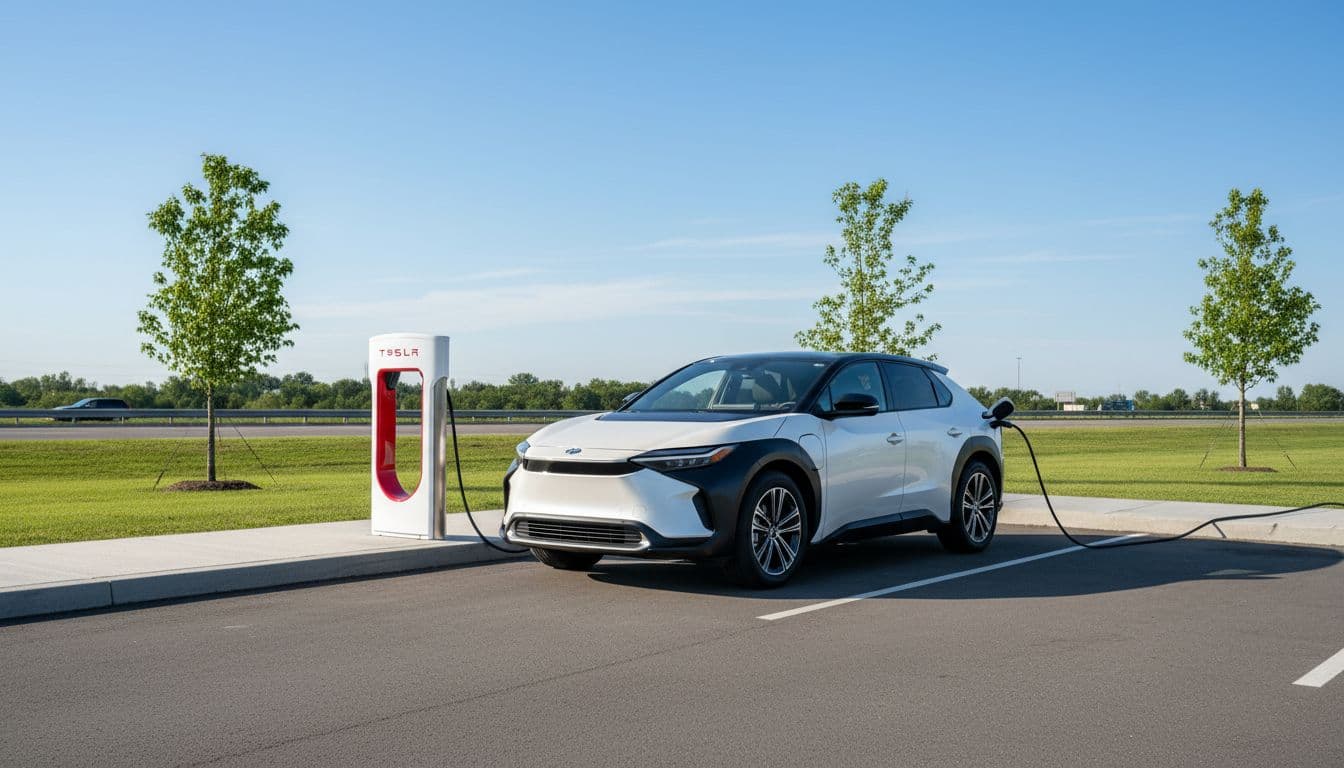
For many buyers, charging access matters as much as range. A good charging network can make a 280-mile EV feel easier to live with than a longer-range car with fewer charging options.
What you get for the money, and which Toyota EV fits your life
Price still shapes every EV decision. Sticker price, trim choice, and local fees can move the numbers, but current MSRPs give a useful starting point.
Toyota bZ pricing and value for families
The bZ XLE FWD starts at about $36,000, which makes it the most accessible entry point here. Step up to AWD, and the price rises, but so does power and bad-weather confidence.
For families, the value case is easy to see. You get crossover space, modern safety tech, and range that works for commuting, errands, and weekend trips. It feels like the calm, sensible choice.
Toyota C-HR pricing makes sense for drivers who want fun first
The C-HR starts around $37,000 to $38,395 before fees, depending on source and trim details. Reported figures from InsideEVs’ pricing coverage place it close enough to the bZ that the decision becomes more about personality than budget.
If you care about quick acceleration, standard AWD, and a bolder shape, the C-HR makes a lot of sense. The trade-off is simple. You may give up some everyday practicality for style and speed.
Choose by lifestyle, not just by the spec sheet
The bZ fits the broadest crowd. It’s the daily family car, the school-run helper, and the easy commuter.
The C-HR suits buyers who want their Toyota EV to feel sharper and quicker. Meanwhile, the bZ Woodland is for drivers who spend weekends on rougher roads and want an EV that looks ready for mud, even if it still lives mostly on pavement. Your best pick depends on budget, cargo needs, commute length, and where you’ll charge.
Toyota EV features that stand out in everyday driving
After the test drive glow fades, the small things matter more. That’s where Toyota’s comfort and driver-help features carry real weight.
Safety and driver-assist tech come standard across the lineup
Toyota Safety Sense 3.0 helps keep the lineup easy to trust. In simple terms, that means features like automatic emergency braking, lane support, and adaptive cruise control.
Those tools don’t replace attention. They do, however, reduce stress in traffic and on long drives. For many buyers, that’s worth more than a flashy performance stat.
Cabin tech, comfort, and traction features add daily value
The C-HR stands out with a large 14-inch touchscreen, a more premium cabin feel, and softer-touch materials in the places your hands and elbows actually meet. That makes the cabin feel less like a gadget and more like a place you’ll enjoy on Monday morning.
Toyota also gives its AWD EVs traction-focused tools such as X-MODE, which can help on slick roads or loose surfaces. Those details matter because ownership isn’t a brochure. It’s winter rain, crowded parking lots, and road trips where comfort counts.
Toyota’s EV lineup in 2026 feels more complete, and more shoppable, than it did before. The bZ is the balanced pick, the C-HR is the sporty one, and the bZ Woodland is the rugged option.
The smartest choice isn’t the one with the loudest spec. It’s the Toyota EV that matches your routine, your charging setup, and your budget.
If you’re shopping this year, start with how you drive each week. The right answer usually shows up there first.