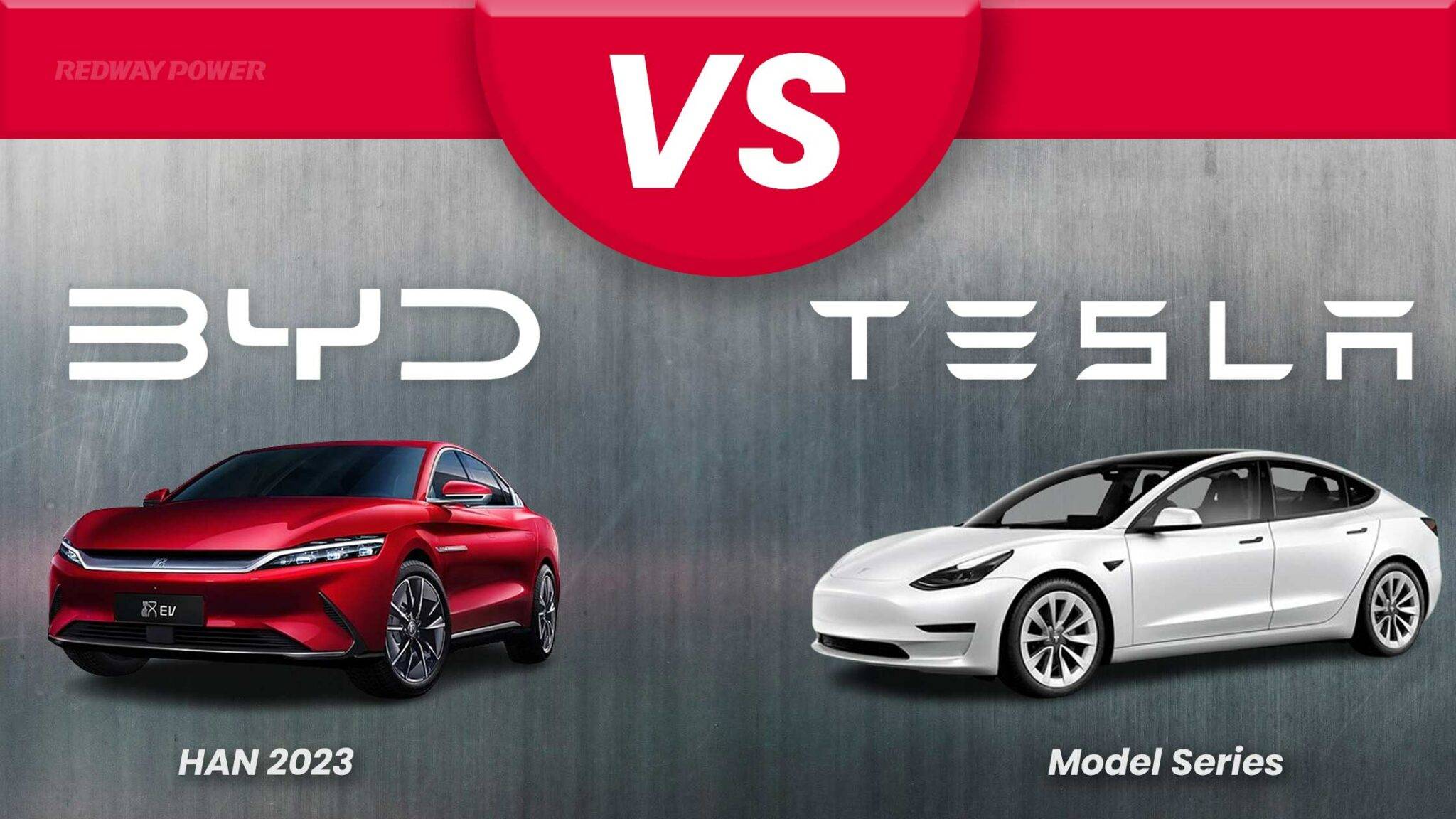
The global electric vehicle (EV) race is no longer just about selling more cars. It is about defining how people will move in the future. Two companies are leading this shift with very different approaches: Tesla’s push toward autonomous robotaxis and BYD’s focus on affordable, mass-market EVs.
Understanding Tesla’s Robotaxi Vision vs BYD’s Mass-Market EV Strategy helps explain where the EV industry—and transportation itself—may be heading over the next decade.
Two Competing Paths to EV Leadership
Tesla and BYD are both dominant players in the EV market, but their strategies differ at a fundamental level.
- Tesla is building toward a future of self-driving robotaxis powered by artificial intelligence and software.
- BYD is concentrating on producing large numbers of affordable EVs for global consumers today.
This contrast makes Tesla’s Robotaxi Vision vs BYD’s Mass-Market EV Strategy one of the most important strategic comparisons in the automotive world.
Tesla’s Robotaxi Vision: A Bet on Autonomy
Tesla’s long-term value proposition is centered on autonomy. The company believes that once full self-driving becomes reliable and approved by regulators, every Tesla could operate as part of a shared robotaxi network.
Key elements of Tesla’s approach
1. Full Self-Driving software
Tesla is investing heavily in AI training, real-world driving data, and neural-network-based perception to achieve unsupervised driving.
2. Software-driven revenue
Instead of relying only on car sales, Tesla expects future income from:
- Autonomous ride-hailing services
- Software subscriptions
- Data-driven mobility platforms
3. Platform economics
If robotaxis succeed, Tesla could shift from automaker to mobility platform company, dramatically increasing margins.
Risks for Tesla
- Regulatory approval for true autonomy remains uncertain.
- Technical challenges are still significant.
- Delays could allow competitors to dominate EV sales volume.
BYD’s Mass-Market EV Strategy: Winning Through Scale
While Tesla bets on the future, BYD is winning in the present by making EVs accessible and affordable to millions of buyers.
Core strengths of BYD
1. Deep vertical integration
BYD produces batteries, semiconductors, and powertrains in-house, lowering costs and protecting supply chains.
2. Broad product lineup
From budget city cars to premium sedans and SUVs, BYD targets multiple price segments rather than a narrow premium niche.
3. Rapid global expansion
BYD is aggressively entering markets across Asia, Europe, and Latin America, prioritizing volume and affordability.
Risks for BYD
- Lower profit margins compared to software-heavy models.
- Exposure to price competition in the EV market.
- Possible disruption if autonomy becomes the main value driver.
Tesla’s Robotaxi Vision vs BYD’s Mass-Market EV Strategy: Key Differences
Innovation vs execution
- Tesla focuses on breakthrough autonomy technology.
- BYD focuses on manufacturing efficiency and rapid deployment.
Margins vs volume
- Tesla aims for high future margins from software and services.
- BYD prioritizes large-scale vehicle sales with tighter margins.
Shared mobility vs personal ownership
- Tesla envisions autonomous ride-hailing reducing car ownership.
- BYD supports continued growth in privately owned EVs worldwide.
Which Strategy Could Dominate the Future?
The outcome of Tesla’s Robotaxi Vision vs BYD’s Mass-Market EV Strategy depends on how quickly autonomy becomes reality.
If robotaxis succeed:
Tesla could unlock powerful platform economics and reshape transportation.
If autonomy is delayed:
BYD’s affordable EV dominance could define the global market for years.
Most likely scenario:
Both models coexist—BYD leading in vehicle volume, Tesla leading in autonomous mobility services.
Final Thoughts
The debate around Tesla’s Robotaxi Vision vs BYD’s Mass-Market EV Strategy is really about two visions of the future:
- A world of autonomous, shared transportation networks
- A world of affordable electric cars for everyone
Tesla is pursuing a high-risk, transformative breakthrough.
BYD is scaling a proven path to global EV adoption.
Whichever vision dominates, the rivalry between these two companies will play a major role in shaping the next era of electric mobility.
Conclusion: Two Visions, One Electric Future
The comparison between Tesla’s Robotaxi Vision vs BYD’s Mass-Market EV Strategy is not simply a rivalry between two automakers—it represents two fundamentally different paths for the future of transportation.
Tesla is aiming for a transformational leap powered by autonomy, artificial intelligence, and shared mobility networks. If robotaxis become reliable and widely approved, Tesla could redefine how people move and unlock an entirely new economic model built on software and services.
BYD, in contrast, is focused on solving today’s problem at a global scale: making electric vehicles affordable, accessible, and practical for millions of drivers. Through vertical integration, aggressive pricing, and rapid international expansion, BYD is accelerating real-world EV adoption faster than any competitor.