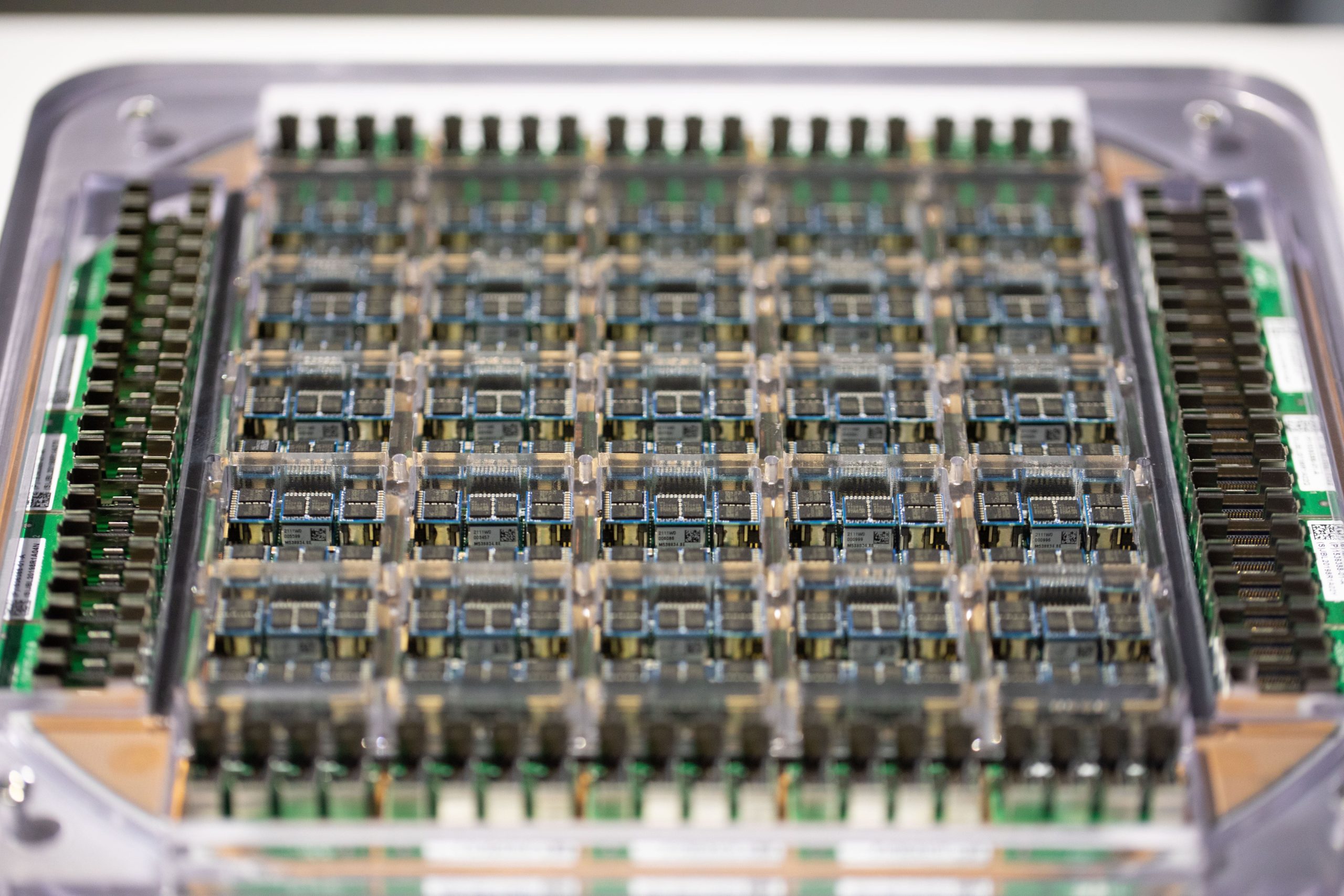
Explore how the Tesla AI chip enables Full Self-Driving, its architecture, performance advantages, and what it signifies for the future of autonomous vehicles in 2026.
Tesla AI Chip: The Technology Powering Self-Driving Cars
The Tesla AI chip is one of the most important pieces of technology behind Tesla’s vision of fully autonomous driving. Designed in-house, this custom silicon enables Tesla vehicles to process massive amounts of real-time data from cameras, sensors, and neural networks—far faster and more efficiently than traditional automotive processors.
In this guide, we’ll explore how the Tesla AI chip works, why Tesla built it, how it compares to competitors, and what the future holds for autonomous driving.
What Is the Tesla AI Chip?
The Tesla AI chip—often referred to as Hardware 3 (HW3) or the Full Self-Driving (FSD) computer—is a custom system-on-chip created specifically for neural-network-based driving.
Unlike general-purpose GPUs used by many automakers, Tesla’s chip is optimized for:
- Real-time vision processing
- Neural network inference
- Low power consumption inside vehicles
- High reliability for safety-critical systems
Each Tesla vehicle contains two identical AI chips running in parallel for redundancy, ensuring continued operation even if one fails.
Why Tesla Designed Its Own AI Chip
Tesla previously relied on third-party hardware, but limitations in performance and efficiency pushed the company to design its own silicon.
Key reasons Tesla built the AI chip:
1. Massive Neural Network Demands
Autonomous driving requires processing video streams from multiple cameras simultaneously. Off-the-shelf chips couldn’t deliver the speed necessary per watt.
2. Vertical Integration Strategy
Tesla controls hardware, software, and AI training—allowing faster innovation compared to competitors relying on suppliers.
3. Cost and Scalability
Custom silicon reduces long-term cost while enabling deployment across millions of vehicles.
Tesla AI Chip Architecture Explained
The Tesla AI chip is engineered specifically for deep-learning workloads inside a moving vehicle.
Core architectural highlights:
- Dual neural-network accelerators
- High-bandwidth memory for real-time video
- Safety microcontrollers for fail-safe operation
- Redundant power and compute pathways
- Dedicated image-signal processing pipeline
This architecture allows Tesla cars to analyze surroundings, detect objects, predict motion, and make driving decisions in milliseconds.
Performance of the Tesla AI Chip
Tesla claims dramatic performance improvements compared to earlier hardware generations.
Key performance metrics:
- Trillions of operations per second (TOPS) for neural inference
- Real-time processing of multiple high-resolution camera feeds
- Lower latency than GPU-based automotive systems
- Energy efficiency suitable for electric vehicles
These capabilities enable advanced features such as:
- Navigate on Autopilot
- Smart Summon
- Traffic-aware cruise control
- Ongoing Full Self-Driving beta improvements
Tesla AI Chip vs. Competitors
Many companies are racing to build autonomous driving processors, including NVIDIA, Qualcomm, and Mobileye.
How Tesla stands out:
End-to-End Design
Tesla integrates chip design with neural-network training and vehicle software.
Fleet Learning Advantage
Millions of Tesla vehicles continuously generate real-world driving data used to improve AI models.
Cost Efficiency at Scale
In-house silicon avoids supplier margins and supports rapid deployment.
However, competitors still lead in some areas like simulation ecosystems and partnerships with multiple automakers.
The Future: Tesla’s Next-Generation AI Hardware
Tesla is already moving beyond Hardware 3.
Expected developments:
- Hardware 4 (HW4) with higher compute power
- Improved camera resolution and sensor bandwidth
- Better support for advanced neural-network architectures
- Integration with Tesla’s Dojo supercomputer for training
These upgrades aim to push Tesla closer to true autonomous driving without human supervision.
What the Tesla AI Chip Means for Autonomous Driving
The Tesla AI chip represents a major shift in the automotive industry—from mechanical engineering to AI-driven computing platforms on wheels.
Its impact includes:
- Faster progress toward self-driving vehicles
- Increased competition in custom automotive silicon
- New software-defined vehicle capabilities
- Potential transformation of transportation and mobility
If Tesla achieves full autonomy, the AI chip will be remembered as the core technology that made it possible.
Final Thoughts
The Tesla AI chip is more than just a processor—it’s the foundation of Tesla’s autonomous future. By designing custom silicon optimized for neural networks and real-time decision-making, Tesla has positioned itself at the forefront of self-driving innovation.
As new hardware generations arrive and AI models improve, the Tesla AI chip will continue shaping how vehicles perceive the world, make decisions, and ultimately drive themselves.