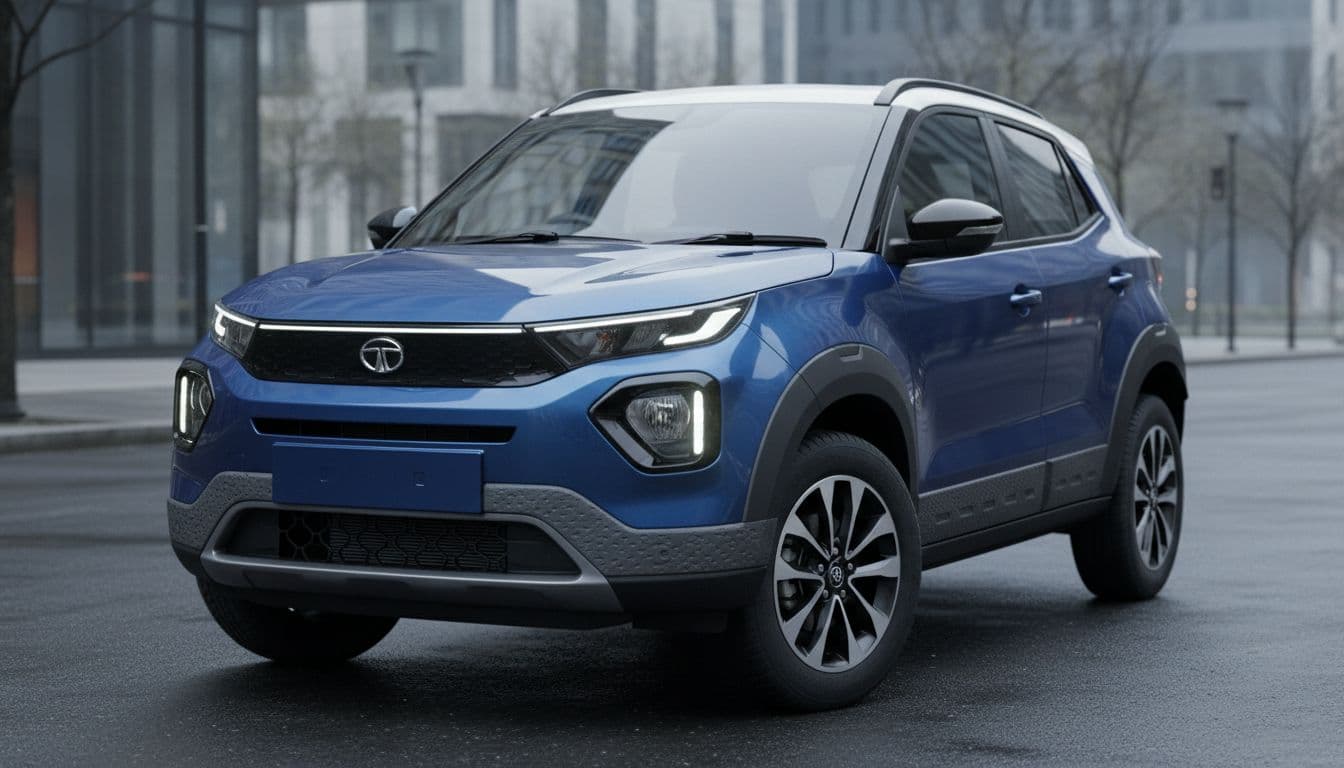
Some EV updates feel cosmetic. The 2026 Tata Punch EV does not.
This facelift makes a stronger case for itself in the places that matter most, price, range, charging, and day-to-day ease. If you were already looking at a small electric SUV, this version feels less like a compromise and more like a smart first step into EV ownership.
That said, the car may be ready faster than the market around it. The Punch EV is easier to recommend now, and that makes the bigger EV buying questions even more important.
The Tata Punch EV arrives at an interesting moment for buyers
There is a bigger story here than one facelift. EV buyers and internal-combustion buyers are starting to think like two different groups.
For many people, the default still remains gasoline, diesel, or CNG. An EV is not yet the first thought that pops up. Still, it has become impossible to ignore, especially when the car itself starts to look this polished. That shift matters because it changes how small electric cars like the Punch EV are judged. Buyers are no longer asking only, “Is this a good Tata?” They are asking, “Is this a good EV to live with for years?”
That second question is where doubts remain. The biggest ones are not about touchscreen features or straight-line speed. They are about the messy edges of ownership, resale value, battery damage after an accident, long-term insurance claims, and what the car will be worth after four or five years.
Tata appears to understand that concern. The company is offering battery-linked plans and buyback support meant to reduce the fear around future value. That helps, but it does not erase the fact that EV finance is still a moving target. In simple terms, buyers want to know what happens if the battery gets damaged, what happens if the car depreciates faster than expected, and whether “battery as a service” is a real service or simply a second loan dressed up with softer language.
The Punch EV feels ready for mainstream buyers. The EV ownership ecosystem still does not.
That is why this update matters. The car has improved enough that the ownership questions now stand out more clearly than before.
Tata has changed the value equation, not just the styling
The facelift does not reinvent the Punch EV from the ground up. It uses the same basic platform and chassis, with updates around the battery, powertrain, packaging, and cost structure. Yet the result is more than a mild refresh.
Visually, the changes are subtle. The gray cladding gives the car a lighter look than the older black-heavy treatment. Inside, that same gray shade carries over and makes the cabin feel airier. However, the bigger change is value.
Here is the quick snapshot that explains why this facelift stands out:
| Area | Earlier Punch EV | 2026 Punch EV | Why it matters |
|---|---|---|---|
| Base battery pack | 25 kWh | 30 kWh | More usable range at the entry level |
| Top battery pack | Smaller than current car | 40 kWh, about 15% larger | Better range and stronger long-term appeal |
| Base pricing | Higher | About Rs 30,000 lower | Better value at entry |
| Top pricing | Higher | Over Rs 1.5 lakh lower | Big improvement for flagship buyers |
| DC fast charging | 50 kW | 65 kW | Faster top-ups, less waiting |
That is a rare combination. Usually you pay less and lose something, or you gain features and pay more. Here, Tata has managed to make the car cheaper while improving the hardware.
Some of that came from smart deletions. The connected LED DRL up front, which also acted as a charging indicator, is gone. Tata has also removed the rear disc brakes and replaced them with rear drums, while still keeping an electronic parking brake through a different actuation solution. The front trunk, or frunk, is no longer standard. If you want it, you pay for it.
Those moves sound small, yet together they show a clear strategy. Tata trimmed the gimmicks, kept the substance, and pushed the savings back into battery size, performance, and charging.
That broader “more for less” theme has also come up in Autocar India’s Punch EV facelift review, which mirrors the same core takeaway.
The new powertrain brings more than a bigger battery
The biggest engineering change sits under the hood, even if you barely see it. Tata has reworked the electrical package by integrating more of the drivetrain electronics into a single unit. That frees up space, cuts weight, and improves efficiency.
The claimed efficiency gain from this packaging shift is about 15%. Tata has also fitted a new motor. It now revs to 17,000 rpm instead of 12,000 rpm in the earlier car. On paper, motor torque is lower, but Tata says wheel torque stays the same because of revised gearing. In plain English, the car should feel no weaker in the way it actually moves down the road.
Real-world range looks more convincing now
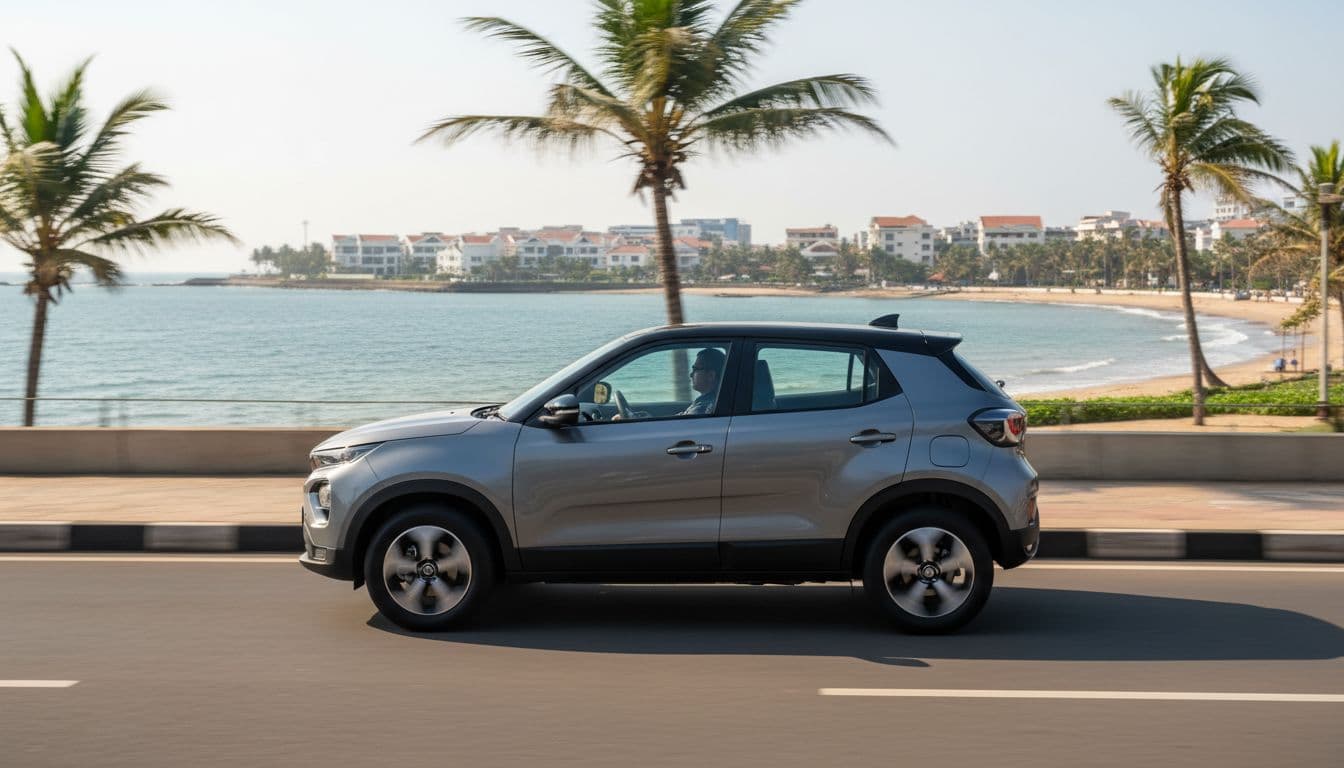
The top version now gets a 40 kWh battery pack and a claimed range of 464 km. Claimed figures always need a reality check, so the on-road observations matter more.
During the drive, roughly 120 km used about 44 to 46 percent of the battery. That points to a real-world number in the 280 to 300 km range, even with spirited driving and frequent use of Sport mode. For a compact urban EV, that is a healthy figure. It means most owners can go days without plugging in, and city use becomes far less stressful.
The base variant also looks much stronger now. It jumps from 25 kWh to 30 kWh, while also gaining power and torque. More importantly, its range is now close to what the older higher variant delivered.
Charging is faster, and that matters more than ever
DC fast charging has gone up from 50 kW to 65 kW. Tata says the car can get to 80 percent in under 30 minutes, where the older version needed close to an hour.
That is not a small convenience. It changes how the car fits into a weekend trip or a long day in traffic.
There is another battery-related point that matters even more. Tata is offering a lifetime warranty on the larger battery pack, while the smaller pack sticks to 8 years or 160,000 km. That tells you which version Tata itself feels most confident about.
If you can stretch to the larger battery pack, that is the one to buy. You get better range, fewer charge cycles over time, and stronger warranty support.
That logic applies to many EVs, not only this one. Batteries age by charge cycles, not by the clock alone. A larger pack has to work less hard to cover the same distance.
This is one of the friendliest EVs for new drivers
Some electric cars feel eager to show off the moment you touch the accelerator. The Punch EV takes the opposite approach, and that turns out to be one of its best traits.
In City mode, the throttle mapping is calm and progressive. The car does not leap forward when you move off from a standstill, even with the electronic parking brake engaged. Instead, it builds speed in a steady, natural way. That makes it easier to place in traffic and easier to trust if you are new to EVs or new to driving in crowded urban conditions.
Then, when you want the performance, it is still there. Push the throttle hard or switch to Sport mode, and the sharper response shows up. The key difference is that the car makes you ask for it. It does not throw it at you.
That tuning feels thoughtful. It turns the Punch EV into a small SUV that supports the driver instead of trying to impress them in the first five minutes.
The test route around Kochi highlighted that character. Roads were narrow, traffic-heavy, and closely watched by cameras and police. Speeds were controlled. In those conditions, the Punch EV made the most sense in its gentler calibration. It had enough shove for overtakes, yet it stayed easygoing the rest of the time.
The steering and brakes also feel predictable. There are no big surprises here, which is a compliment. A beginner-friendly EV should feel normal first, clever second. The Punch EV nails that balance.
Regen braking still needs more polish, though. Tata offers three regen levels, but there is no true single-pedal drive. The sharp transition into regen is better managed than before, yet the system still lacks the kind of consistency that disappears into the background. When the battery is near full, regen is also reduced, which can make the first stretch of driving feel different from the rest.
For another take on how the updated car behaves through a full day of use, Team-BHP’s day-long Punch.ev review is worth seeing.
Ride quality remains one of the Punch EV’s strongest traits
The original Punch EV already impressed with its suspension. This one keeps that strength.
There is a seriousness to the way it rides. That may sound odd in a small SUV, yet it fits. The car has a compact footprint and a heavy battery pack sitting low in the floor, so the suspension has to keep a firm grip on body movement. The result is a setup that deals with rough roads without crashing into them.
On broken patches and sharp flyover joints, the car stays composed. It does not bounce around, and it does not sound flimsy. That last bit matters because Tata has reduced some sound-deadening material in the facelift. Even so, the cabin still feels well isolated. Tata says better sealing and bonding of the body panels help reject noise and vibration more naturally. On the road, that claim holds up.
The battery story ties into ride quality too. Tata has kept the battery case the same size, but switched to prismatic cells to pack in more energy. The larger battery adds weight, yet the newer motor is also smaller and lighter. Tata says motor volume is down by 50 percent and motor weight by 30 percent, which helps offset the battery increase.
This is not the plushest small SUV ride on the market. There is still a faint edge of firmness over some surfaces. On a long highway trip, a sharper-backed driver might notice that. Still, for an EV of this size and price, the balance is strong. It feels planted, controlled, and calm.
That makes the Punch EV easy to live with. It also makes it easy to trust.
Inside the cabin, the Punch EV is sorted but not spotless
The cabin is familiar, and that is mostly good news. The design has not changed much, but the lighter trim gives it a fresher tone. The updated touch-based climate panel remains in place, with basic physical controls for blower speed and temperature.
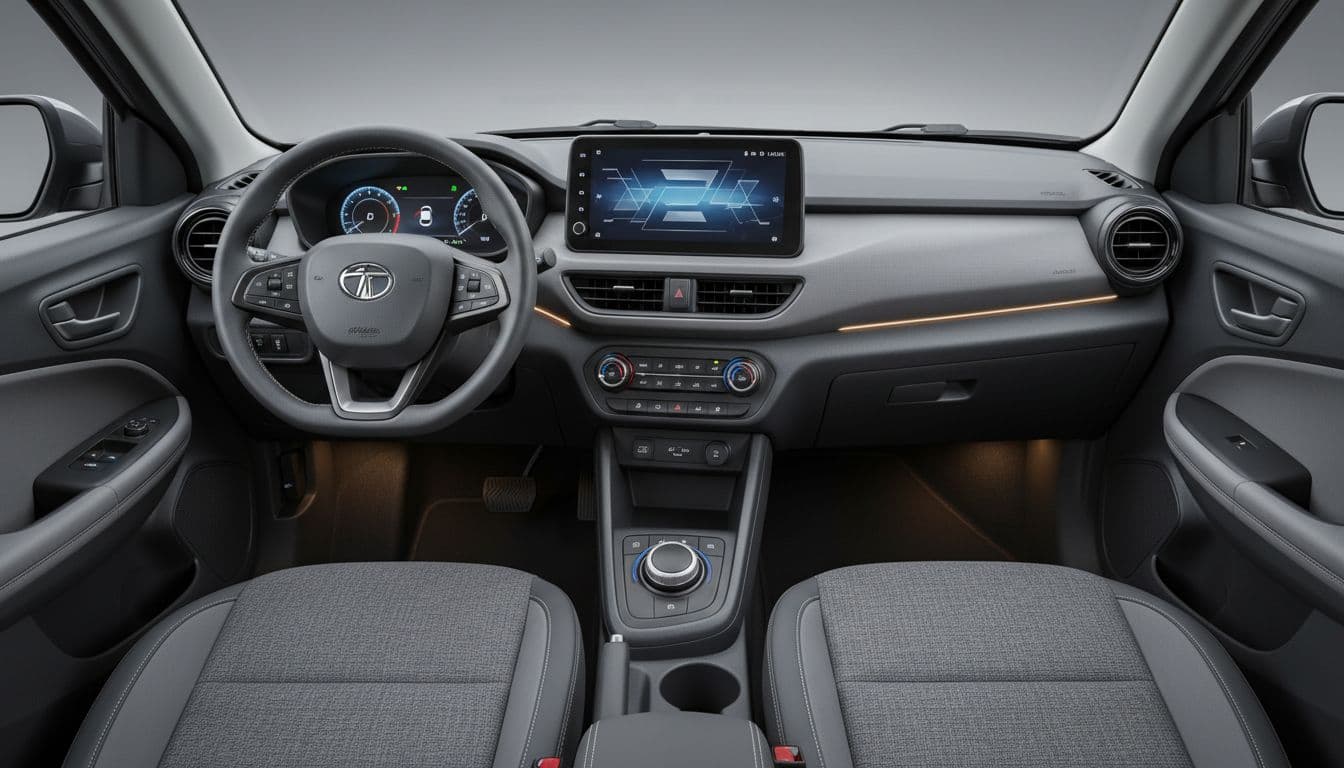
One nice detail stands out immediately. The ventilated seat controls are still mounted near the seat, but now they sit on an upward-facing panel that is easier to see and use. That sounds minor until you compare it with the hidden controls in some larger Tata models.
There is solid equipment here too. You get a 360-degree camera, ventilated seats, a large central touchscreen, and a JBL audio system. The touchscreen experience has improved, with shortcut buttons that make native menus easier to reach. The digital instrument cluster, though, remains the weaker screen of the two. The 10-inch unit looks modern, but readability is not as clean as it should be.
Comfort is mixed in the right way. The rear seat remains usable for adults, and Tata has raised the rear bench slightly to preserve under-thigh support despite the battery packaging. That helps comfort. At the same time, taller passengers should double-check headroom, especially in sunroof-equipped versions. Space under the front seats is also tighter than before.
Not everything is polished. Fit and finish still show old Tata habits in places. Some trim pieces feel less secure than they should. A few panels do not align perfectly. There may be small scratches or rough touches around certain plastics. None of it feels like a deal-breaker, but it does keep the cabin from feeling class-above.
A few controls also annoy more than they should. The new window switches are toggle-style units that look fancy but are less intuitive in daily use. Then there is the large rotary drive selector in the center console. It suits a bigger SUV better. In the Punch EV, it feels oversized and a bit slow to confirm your input. A simple action should not need a second glance.
Another early impression from AutoTorque’s 2026 Punch EV facelift review lands in a similar place: the updates move the car forward, but a few details still lag behind.
The Punch EV is better prepared than the EV market around it
This facelift sharpens the Punch EV in the ways buyers feel every day. It goes farther, charges quicker, drives with more polish, and costs less than before. That is a strong set of wins for any update, let alone one that arrives only about two years after launch.
More importantly, the car has a clear personality now. It is not trying to be the fastest or the flashiest small EV. Instead, it feels calm, easy, and confidence-building. That makes it a strong fit for first-time EV buyers, newer drivers, and small families who want an urban car that does not ask much from them.
The hardest part of the Punch EV story is no longer the car itself. It is the world around the car. Insurance clarity, accident repair outcomes, resale support, and battery-finance language still need to catch up. That is where many buyers will pause.
Even so, the 2026 Tata Punch EV feels like proof that the product side of the EV shift has matured faster than many expected. The car is no longer making excuses for being electric. It is quietly making a case for why that might be the better choice.
If your shortlist already includes a small EV, the larger-battery Punch EV is the version that makes the most sense. And if you have been waiting for a compact electric SUV that feels easy from the first kilometer, this one comes closer than ever.