Fast electric motorcycles often promise two things: speed and freedom. The LiveWire S2 Alpinista absolutely nails the first one, then makes you think hard about the second.
At its new discounted price, this bike starts to make a lot more sense. Still, the same traits that make it exciting, instant torque, sharp handling, and addictive launches, also chip away at range fast. That tension defines the whole experience.
The first ride makes one thing clear: this bike rips
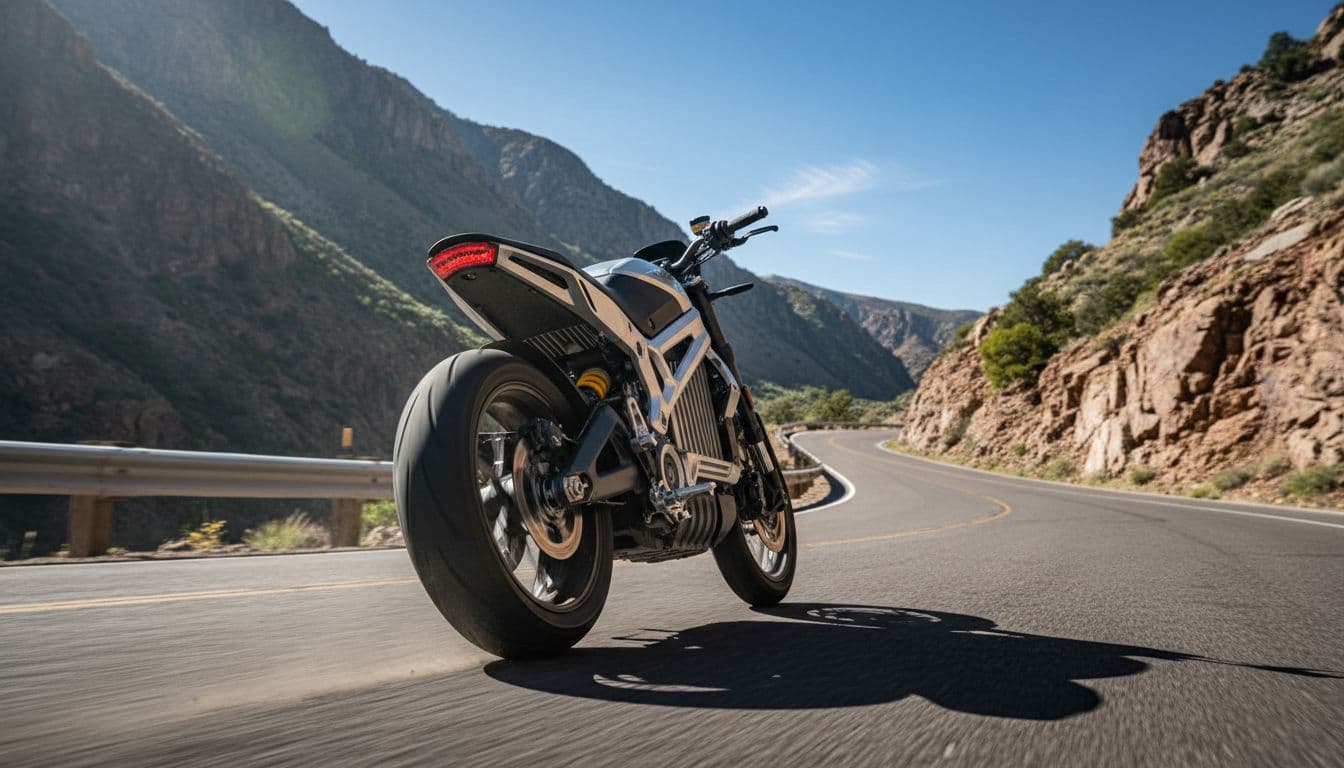
The Alpinista makes its case the moment you twist the throttle. LiveWire says it can hit 0 to 60 mph in 3 seconds, and out on Colorado roads that claim feels believable. The pull is immediate, hard, and clean, with no shifting to break the rhythm.
What stands out most is how it exits a corner. Crack the throttle mid-turn, and the bike surges forward with a smooth, linear rush. It feels light on its feet, yet planted enough to stay composed when speed piles on in a hurry.
That matters on twisty canyon roads, because this is where the Alpinista comes alive. The review bike was pushed through Colorado foothills and mountain curves, and the story stayed the same: turn in, pick up the bike, feed in throttle, then hang on. The rider compared the feel to a GSX-R1000 in the way it changes direction and fires out of bends, even if the top-end speed doesn’t match a big gas superbike.
There was another detail worth noting. This was a media bike with around 500 miles on it when it arrived, yet the tire edges still looked almost untouched. That suggests plenty of people sampled the bike, but few really leaned on it. Once ridden like a sport bike instead of a commuter, the Alpinista starts showing what it’s built for.
The quietness changes the mood, too. No engine buzz. No heat pouring onto your legs. No exhaust note fills the canyon. Instead, speed arrives almost like a sneak attack, and that’s part of what makes the bike feel so wild.
Why the Alpinista feels so alive on real roads
A lot of electric motorcycles are quick in a straight line. Fewer feel this sorted when the road gets technical.
Launches, brakes, and traction control all work together
From a stop sign or stoplight, the Alpinista sounds like a laugh waiting to happen. The launch is one of its best tricks. Full torque arrives instantly, so even a casual start can turn into a hard rush forward.
Yet it isn’t a reckless machine. LiveWire built in traction control that can detect when the front wheel lifts and gently bring it back down. In rain mode, the system is more restrictive. In sport mode, it allows a bit more play before stepping in. That gives the bike some attitude without making it feel sketchy.
Braking gets equal praise. The regen braking is strong enough in city riding that you often won’t need much lever input if the settings are dialed in right. When you do need more stopping force, the Brembo setup answers fast.
The Alpinista feels like a bike that wants to go hard, but it still keeps one hand on your shoulder.
That blend is rare. The bike can feel playful and controlled in the same breath.
Quiet speed changes the whole ride
Because it’s electric, the Alpinista does something gas bikes can’t. At lower speeds, especially in scenic areas, you hear the wind through trees instead of engine noise. You don’t smell fuel. You don’t feel heat baking up from the machine.
That makes even mellow sections memorable. The ride described moments of rolling through nature at 15 mph, hearing leaves move, seeing wildlife, and then snapping back into eye-widening acceleration the instant the road opened up. It gives the bike two personalities, a silent glider and a small missile.
Seat height also helps confidence. The Alpinista sits lower than many performance motorcycles, with a quoted unladen seat height of 31.18 inches. Under rider weight, it drops to around 29.5 inches. That makes it more welcoming for shorter riders who want both feet closer to flat at a stop.
Meanwhile, the lack of vibration helps in ways you don’t expect. The mirrors stay clearer than those on many gas motorcycles, simply because the bike isn’t shaking itself the whole time.
The hardware backs up the feeling
The Alpinista isn’t all sensation and no substance. The specs and parts list explain why it feels premium once the road starts bending.
Here are the headline numbers that shape the ride:
| Spec | LiveWire S2 Alpinista |
|---|---|
| Power | 63 kW |
| Horsepower | 84 hp |
| Torque | 194 lb-ft |
| 0 to 60 mph | 3 seconds |
| Weight | 434 lbs |
| Front tire | 120/70 R17 Dunlop |
| Charging port | J1772 Type 1 |
| Fastest supported charging | Level 2 AC only |
| 20 to 80% on Level 2 | 78 minutes |
| 0 to 100% on Level 2 | 142 minutes |
The quick takeaway is simple. This is a light, torque-heavy electric motorcycle with premium suspension and brakes, but charging speed trails the performance.
The design feels premium without trying too hard
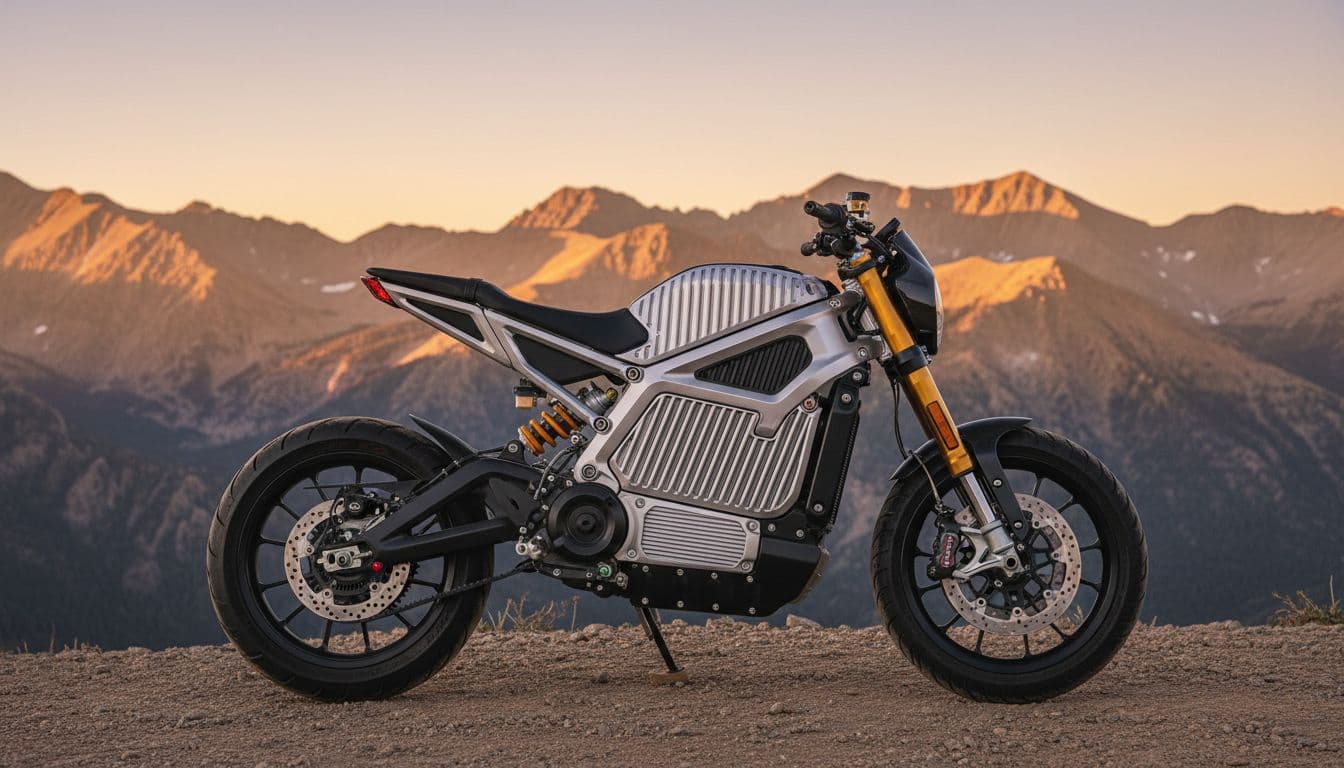
The ribbed side structure is one of the bike’s visual signatures. It gives the Alpinista a muscular, exposed look, almost like a mechanical rib cage wrapped around the center-mounted motor. It’s striking in person, and people noticed. Charging the bike in public led to plenty of questions from curious onlookers.
Showa suspension helps the performance match the styling. Up front, it uses fully adjustable 43 mm inverted Showa forks. Out back, there is a Showa monoshock with adjustable preload and rebound damping. The factory setup felt on the firm side, though that stiffness suits the bike’s instant torque and high-speed stability.
Braking hardware is equally serious. Up front, there’s a four-piston Brembo setup, with strong bite and confidence under hard braking. The rear uses a Brembo floating caliper and is controlled by the foot brake. Both ends get 4.72 inches of suspension travel, and the bike uses a belt drive, which helps keep the ride quiet and low-maintenance.
The cockpit is one of the bike’s best features
The display got strong praise, especially in direct sunlight. It’s crisp, easy to read, and avoids the washed-out look that plagues some motorcycle screens.
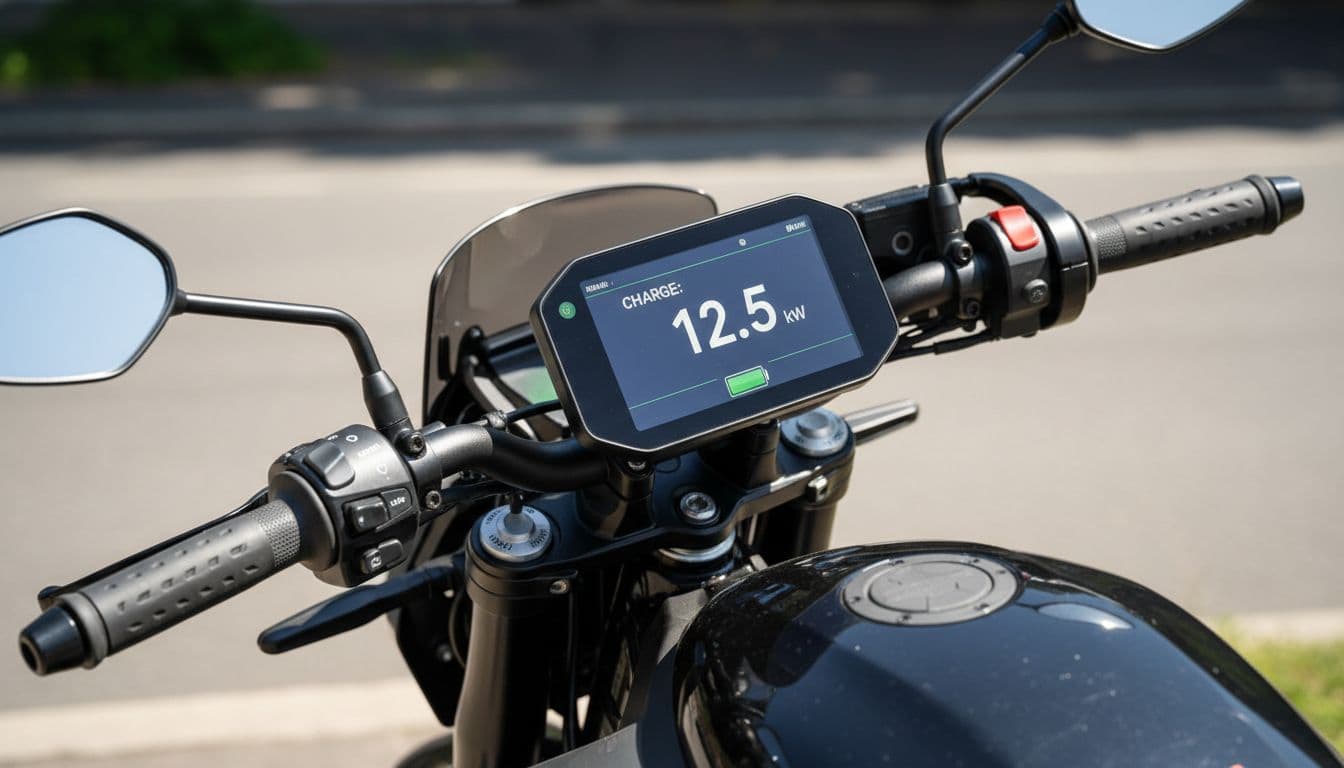
Control layout is straightforward. Riders can switch among rain, eco, touring, and sport modes, plus set up two custom modes through the app. There are controls for cruise control, lighting, traction control, Bluetooth headset functions, trip info, music, diagnostics, and settings.
One small touch stands out more than it should. The throttle has a subtle “heartbeat” feel when you gently move it, a way of telling you the bike is live. It’s odd, but memorable.
The built-in turn-by-turn navigation is a useful feature when it behaves. You can also update software through the system, connect Bluetooth, and customize ride settings through the app. That matters here, because the S2 platform has already gained meaningful updates after launch.
For a broader look at official specs and the original MSRP before discounts, Cycle News published a helpful 2025 LiveWire S2 Alpinista specs and prices report.
The software updates and price drop change the value story
This bike didn’t only get cheaper. It also got better.
After the review filming, LiveWire added a few standout updates. The first is a reverse function, activated by rolling the throttle forward. That’s a small feature until you need to back a bike out of a tight parking spot or slope, then it suddenly matters a lot.
The second update adds roll-forward regen control. In plain English, you can now roll the throttle forward to manage regen braking more directly, which gives the electric braking system a more natural feel.
Then there’s the price shift, which is the real headline. According to the video description, LiveWire’s limited-time incentives run through October 31, 2025, with the S2 Alpinista discounted by $4,000 to $11,999. The S2 Del Mar drops by $6,250 to $9,999, and the S2 Mulholland drops by $5,500 to $10,999. Those figures are listed on LiveWire’s Twist & Go promo pricing page.
That changes the conversation. At the original price, the Alpinista felt easier to admire than justify. At $11,999, it becomes much more compelling, especially given the premium parts, software features, and sheer entertainment value.
If availability is the next question, LiveWire also has a dealer locator for S2 test rides and inventory.
Where the LiveWire S2 Alpinista still falls short
For all its strengths, the Alpinista doesn’t hide its weak spots. Most of them come back to one issue, range versus fun.
When ridden hard, range drops fast. The review ride burned through 25 percent of the battery before even entering the canyon, despite trying to stay mostly under 70 to 75 mph. When the throttle stays open and the pace stays aggressive, real-world range lands around 50 to 60 miles. Ride more moderately, and 70 to 80 miles seems possible.
Ride it like a sport bike, and the battery answers like one. The thrill rises fast, and the miles fall just as quickly.
That problem gets worse once charging enters the picture. The Alpinista only accepts Level 2 AC charging through a J1772 port. It won’t take DC fast charging. So even a normal mid-ride top-up is measured in chunks of an hour, not minutes. If faster charging is high on your list, this roundup of best electric motorcycles for fast charging shows how much quicker some rivals have become.
There was also a thermal complaint. During a mountain climb, the bike briefly entered limp mode and showed a turtle icon on the display. Acceleration dropped off, and top speed fell to about 65 mph for a short stretch before the system cleared and full performance returned. That kind of protection makes mechanical sense, but it clashes with the bike’s whole reason for existing.
The rest of the complaints are smaller, though still real. Top speed is capped at 99 mph, which may frustrate riders coming from liter-bike territory. The mirrors are stable but could be slightly bigger. The display is sharp, yet the map itself feels cramped, and the turn-by-turn navigation sometimes needed a reset when it failed to track movement correctly.
If battery behavior, charging, and thermal limits are part of your comparison, this explainer on LFP vs NMC battery chemistries gives useful context for why EVs can feel so different in day-to-day use.
Who the S2 Alpinista fits best
The Alpinista makes the most sense for a rider with a clear use case. It shines brightest as a city bike, canyon toy, or short-range adrenaline machine.
It suits riders who want:
- Brutal low-end acceleration without shifting
- A lower seat height that feels more approachable at stops
- Quiet operation with no engine heat or fuel smell
- Premium suspension and brakes on a relatively light chassis
- A fun-first electric motorcycle rather than a practical tourer
It fits less well for riders who want:
- Long highway days without careful charge planning
- Fast mid-route charging
- Higher sustained top speed
- A bike that can be hammered for extended mountain runs without thermal concerns
That doesn’t make the Alpinista a bad motorcycle. It makes it a focused one.
The people who will love this bike are the same people who grin at every stoplight, hunt for empty on-ramps, and don’t mind structuring their ride around short bursts of intensity. In that role, it sounds close to brilliant.
The LiveWire S2 Alpinista feels like a machine built around one central idea, make every short ride unforgettable. On that front, it delivers.
The lower price finally brings the value closer to the performance. Still, the same bike that thrills in the city and on canyon roads asks for patience once the battery gets low.
For riders who want a quiet, fast, premium electric motorcycle and can live with the charging limits, the S2 Alpinista makes a stronger case now than it did at launch.