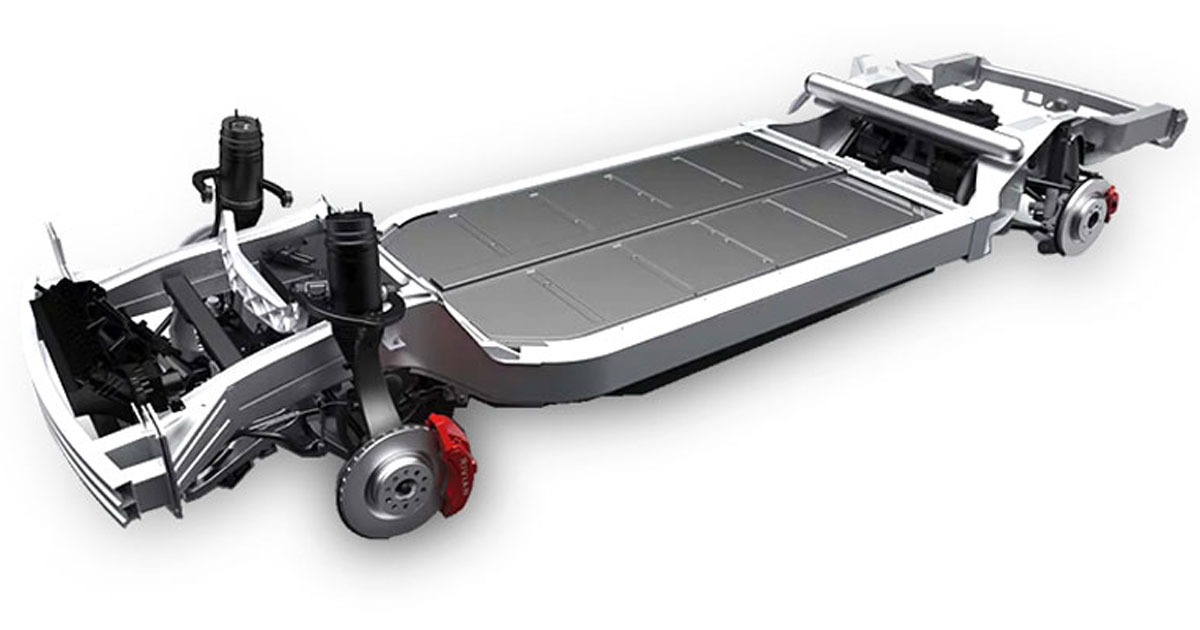
Shoppers want three things that usually fight each other: a low price, real truck utility, and enough range that life stays simple. That’s why ford affordable ev pickup battery size questions keep popping up. Battery size (measured in kilowatt-hours, or kWh) is the energy your truck can store. More kWh usually means more range, but it also brings more weight, higher cost, and longer charging sessions.
Battery size also shapes towing range, payload feel, and even ride quality. Think of the pack like a fuel tank that’s also a giant piece of structure. Make it too big and you pay twice, once at purchase, then again in efficiency.
As of February 2026, Ford says its new affordable electric pickup is planned for about 2027 with a starting price around $30,000, but Ford has not confirmed the exact battery capacity or EPA range yet. Recent reporting and Ford statements point to a strategy: don’t chase a huge pack, chase efficiency and lower pack cost. For a good summary of what’s been reported so far, see this Electrek update on Ford’s $30,000 EV pickup.
What we know so far about Ford’s affordable EV pickup battery size (and what’s still unknown)
Ford hasn’t published the battery kWh number, the EPA range, or the trim walk yet. So any exact “it will have X kWh” claim is guessing. What is more solid is the platform direction and the engineering priorities Ford is talking about.
Multiple outlets reporting on Ford’s Universal EV Platform describe an affordable mid-size electric truck aimed at a starting price near $30,000, with a launch timeline around 2027. Those reports also say Ford plans to use LFP chemistry in prismatic cells and focus hard on aerodynamics, mass reduction, and simplified electrical architecture. InsideEVs has a detailed rundown in this UEV platform report.
That approach fits the economics of EVs. The battery pack is usually the single heaviest system in the vehicle, and it’s also one of the biggest cost items. Because of that, a smaller but well-used pack is one of the few realistic ways to land near a $30,000 starting price without stripping the truck down to nothing.
Another important detail from the UEV reporting is the electrical setup. Coverage points to a 400-volt battery system paired with a 48-volt low-voltage architecture. That matters because less copper, fewer modules, and fewer harnesses can cut cost and assembly time. Ford has also talked about using the pack as a structural part of the floor, which can save mass and improve stiffness, but it can also make pack design more demanding.
Why Ford is leaning on LFP batteries for a lower price
LFP (lithium iron phosphate) is easier to explain if you start with what it skips. LFP packs typically avoid nickel and cobalt, which can reduce material cost swings and supply risk. In day-to-day use, many LFP packs also tolerate frequent charging well, which matters if you’ll charge to a higher state of charge often.
LFP does come with trade-offs. For the same kWh, LFP can weigh more than some nickel-based chemistries, so the truck needs better efficiency to match range. Cold weather can also expose limits in power and charging if thermal control isn’t strong. That doesn’t mean LFP “doesn’t work in winter,” it means buyers should watch for how Ford handles heating, preconditioning, and the cold-weather charging curve.
Ford’s own messaging about affordable EVs frames the broader strategy: build vehicles people can buy, then protect long-term ownership costs. For Ford’s stated direction, see Ford’s official update on reinvesting in affordable EVs.
Efficiency first: how Ford may get more range without a bigger pack
Range is kWh times efficiency. That’s it. So if Ford can raise miles per kWh, it can hold range steady while shrinking the pack. A smaller pack helps cost, mass, braking, and tire wear. It also helps payload because the truck has less battery weight to carry around.
Reported UEV details point to aggressive aero and weight work. Claims include about 15% better aerodynamics than other pickups, plus big attention to underbody airflow. Reports also mention major part consolidation (large castings) and a simplified wiring approach, including thousands of feet less wiring and about 22 pounds saved versus a reference design. MotorTrend summarizes several of those engineering choices in its feature on Ford’s affordable electric truck development.
One useful way to think about this is a backpacking analogy. Carrying more water (kWh) helps you go farther, but it also makes every step harder. If you instead pack lighter and walk more efficiently, you can carry less water and still finish the trail.
A battery pack can’t be “cheap, huge, and light” at the same time. Affordable EV pickups usually pick two and engineer around the third.
How big should the battery be in an affordable EV pickup to feel “enough” in real life?
Without Ford’s final kWh number, the practical move is to decide what “enough” means for your use. Most pickup owners don’t tow daily. Many drive 30 to 60 miles a day, then have occasional long trips, job-site days, or winter highway runs.
Battery size bands help frame expectations. The table below uses a simple efficiency range (2.0 to 2.5 miles per kWh) to show what different packs might feel like in mixed driving. These are illustrative estimates, not Ford specs.
| Battery size band (kWh) | Estimated mixed range at 2.0 mi/kWh | Estimated mixed range at 2.5 mi/kWh | Who it tends to fit |
|---|---|---|---|
| 60 to 80 | 120 to 160 miles | 150 to 200 miles | City driving, short commutes, reliable home charging |
| 80 to 110 | 160 to 220 miles | 200 to 275 miles | Most daily drivers, light hauling, some trips |
| 110 to 150 | 220 to 300 miles | 275 to 375 miles | Frequent road trips, colder regions, more buffer |
The “right” band depends on your charging access. If you can charge at home on Level 2, a smaller pack often feels larger because you start every morning full. On the other hand, apartment charging or frequent highway travel pushes you toward more kWh, or at least faster DC charging.
If you want context on how today’s electric pickups stack up on range and battery capacity, this overview of electric pickups with long range in the USA is a helpful baseline for what the market looks like right now.
A simple way to estimate the battery size you need
You don’t need perfect math. You need a repeatable method that matches your week.
- Write down your real miles. Use your phone’s driving history for two weeks. Note your daily average and your longest common trip.
- Pick an efficiency assumption. For a mid-size EV pickup, use a rough 2.0 to 2.5 mi/kWh range as a planning band (not a promise).
- Add a buffer. Take 15% to 30% off your expected range for winter, high speeds, headwinds, and terrain.
- Mark your towing days. If you tow often, plan for a large range drop and a bigger buffer.
- Match it to your charging routine. Nightly home charging lowers the kWh you need. Public-only charging raises it.
Here’s a light example. Say you want 220 miles of usable mixed range in mild weather. At 2.3 mi/kWh, that’s about 96 kWh (220 ÷ 2.3). Then you apply a 20% buffer for cold snaps and faster highway stretches. Now you’re at about 120 kWh of “comfort.” If Ford’s truck hits higher efficiency than expected, that comfort point drops. If it’s less efficient, it rises.
The trade-offs shoppers feel most: price, range, towing, and charging time
A bigger pack usually raises the sticker price because the pack adds materials, modules, cooling hardware, and stronger structure. It also adds weight, which can reduce efficiency and eat into payload. That’s why “just put a 150 kWh pack in it” rarely works at a $30,000 starting point.
Charging time has its own trap. People often look at peak kW, but road trips depend more on average charge power across the session. A larger pack can accept more energy, yet if the curve drops early, you still wait. Meanwhile, a smaller pack with a strong curve might add “useful miles” faster.
Towing is the real range stress test. Any EV pickup, regardless of brand, uses more energy pulling a tall trailer. Aero drag climbs fast with speed, and a trailer is basically a wall behind the cab. That’s why battery size feels “smaller” when you tow, and why published towing-range test data matters.
For more reporting on Ford’s stated plan and where the platform is heading, ACT News has coverage in this UEV strategy article.
What to watch before you buy: specs that matter as much as battery size
When Ford finally posts specs, don’t stop at the kWh headline. Two trucks can share the same battery size and still feel very different on the road.
Start with the pack numbers, but look for the fine print. Automakers often publish total battery capacity, while drivers care about usable capacity (the portion available for driving). The buffer protects the cells, but it also changes your real-world math.
Also pay attention to what test cycle the range number comes from. EPA range gives a common reference, yet your highway speed, temperature, and tires can move the result. If you live in Minnesota or tow on weekends, you need more than a single EPA figure.
Battery size tells you how much energy is onboard. The charging curve tells you how quickly you can get it back.
Range and charging details that can beat a bigger battery
If you only track one thing, track how fast the truck adds miles on a trip. These are the numbers that make that real:
- EPA range and highway range (if Ford publishes a highway figure).
- Winter range notes and whether the truck uses a heat pump.
- Miles added in 10 minutes on a DC fast charger (at a stated temperature).
- Peak kW and average kW from 10% to 80%, not just a single peak number.
- Battery preconditioning for fast charging, and whether it’s automatic with navigation.
An efficient truck with stable fast charging can travel better than a less efficient truck with a larger pack. That’s why Ford’s emphasis on aero and reduced mass matters so much for an “affordable” model. For more on the efficiency claims being reported, see Electrek’s coverage of Ford’s efficiency focus and compare it with the deeper platform detail in InsideEVs’ UEV breakdown.
Truck stuff: towing range, payload, and using the battery for power
A pickup can’t live on range alone. Payload matters because battery weight competes with how much you can carry. Suspension tuning matters because a heavy pack can change ride feel, especially on rough roads. Bed and cab packaging matters because a mid-size truck still needs to fit real gear.
Towing range is the biggest missing spec for most EV trucks. When Ford releases numbers, look for range estimates at common trailer weights and shapes, not just a maximum towing rating. A 5,000-pound box trailer at 70 mph can be harder than a heavier low-profile load at 60 mph.
Bidirectional power is another feature worth watching. Running tools, powering a campsite, or backing up your home can be a major win. Still, every kilowatt-hour you export is a kilowatt-hour you can’t drive. If Ford includes strong export power, ask how the truck reports remaining energy and how it protects the pack at low state of charge.
MotorTrend’s reporting on the broader affordable truck program, including packaging and platform choices, is a useful read here: Ford’s coming $30K electric pickup feature.
Ford hasn’t confirmed the ford affordable ev pickup battery size yet, and it shouldn’t. Battery kWh only matters when it’s tied to real efficiency and real charging behavior. Still, what’s been reported points to a cost-friendly LFP pack and a serious push for better aerodynamics and lower weight so a smaller battery can go farther.
For buyers, the smart move is to match the truck to your normal life: daily miles, home charging, towing frequency, and winter conditions. As launch gets closer, watch for Ford’s final kWh (usable and total), EPA range, charging curve data, and towing range estimates, because those specs will tell you more than a single battery number ever will.