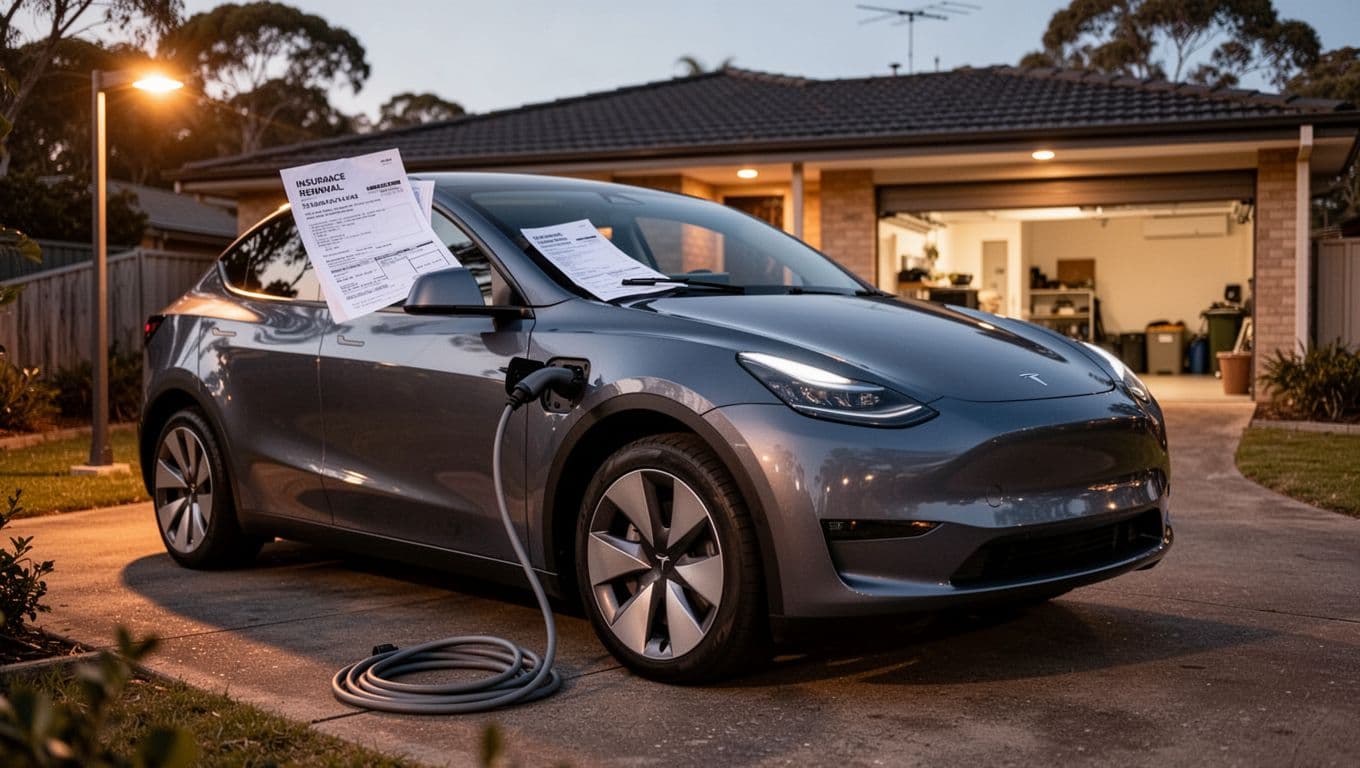
The driveway is quiet. The charging cable sits in a tidy loop. Then the renewal notice arrives, and the number on the page doesn’t match the calm scene at all.
That’s a common first surprise with ev car insurance Australia shoppers run into in 2026. The car might cost less to run day to day, yet comprehensive cover can feel stubbornly expensive. Part of it is simple math. Repairs can cost more, parts can take longer, and the battery changes how insurers treat even small crashes.
This guide keeps it practical. You’ll learn what EV policies often need to cover, why premiums can run higher, and a quick way to compare quotes without getting lost in fine print.
What EV car insurance in Australia needs to cover that petrol cars usually don’t
At a glance, car insurance looks the same. You pick comprehensive, third-party, or third-party fire and theft, then choose an excess. However, EV ownership adds a few “hidden rooms” to the house.
Think about everyday moments. A curb scrape can mean a wheel alignment, but it can also trigger an underbody check. A minor rear-end bump might need sensor calibration. Charging at home adds another piece of kit that can be stolen, damaged, or incorrectly installed.
Most mainstream insurers now mention EV-friendly features, yet the details vary by policy and the Product Disclosure Statement (PDS). Limits can hide in a single line. Some cover applies only after you prove professional installation. Others cover the item, but cap the payout.
If you’re trying to sanity-check whether EVs really cost more to insure, this Drive explainer on EV insurance costs helps frame why premiums can differ by model and repairability.
Battery damage, thermal runaway, and why a small crash can become a big claim
On many EVs, the battery pack sits low, often in the floor. That design improves stability. It also means impacts that seem minor can raise big questions. Did the battery casing crack? Did mounting points shift? Are cells stressed in a way that won’t show up until later?
Insurers care because battery checks are not always quick or cheap. In some cases, the safest call is to replace major components. In other cases, an EV gets written off sooner than a comparable petrol car because the cost to return it to a safe standard climbs too fast.
You’ll also see the phrase thermal runaway in some policies. In plain English, it describes a rare battery failure where heat spreads cell to cell and can lead to fire. It’s uncommon, but because the outcome can be severe, it shows up in EV coverage language.
When you review a policy, look for:
- How it defines battery damage (impact, water ingress, electrical fault).
- Whether fire cover clearly includes battery-related fires.
- Whether the insurer pays for battery diagnostics after a collision.
- Any exclusions tied to modifications or non-approved repairs.
A helpful rule: if the policy talks about “battery replacement,” also check what it says about “battery inspection” and “diagnostics,” because those steps often happen first.
Charging gear and home charging, what’s covered and what’s often capped
EVs don’t just come with a vehicle. They come with gear. That includes portable charging cables, adapters, and sometimes a wall-mounted home charger (EVSE). Replace a damaged cable once, and you’ll understand why “accessories cover” matters.
What tends to catch owners off guard is how charging gear is treated. Some comprehensive policies include it automatically. Others cover it only as an accessory up to a set limit. In recent market summaries, wall-charger cover is often capped (commonly around a couple of thousand dollars, but it depends on the insurer and your options).
Home charging also blurs the line between car insurance and home insurance. If a power surge fries your charger, the question becomes, “Which policy responds first?” The answer depends onthe wording, where the charger is listed, and whether the event counts as an insured incident.
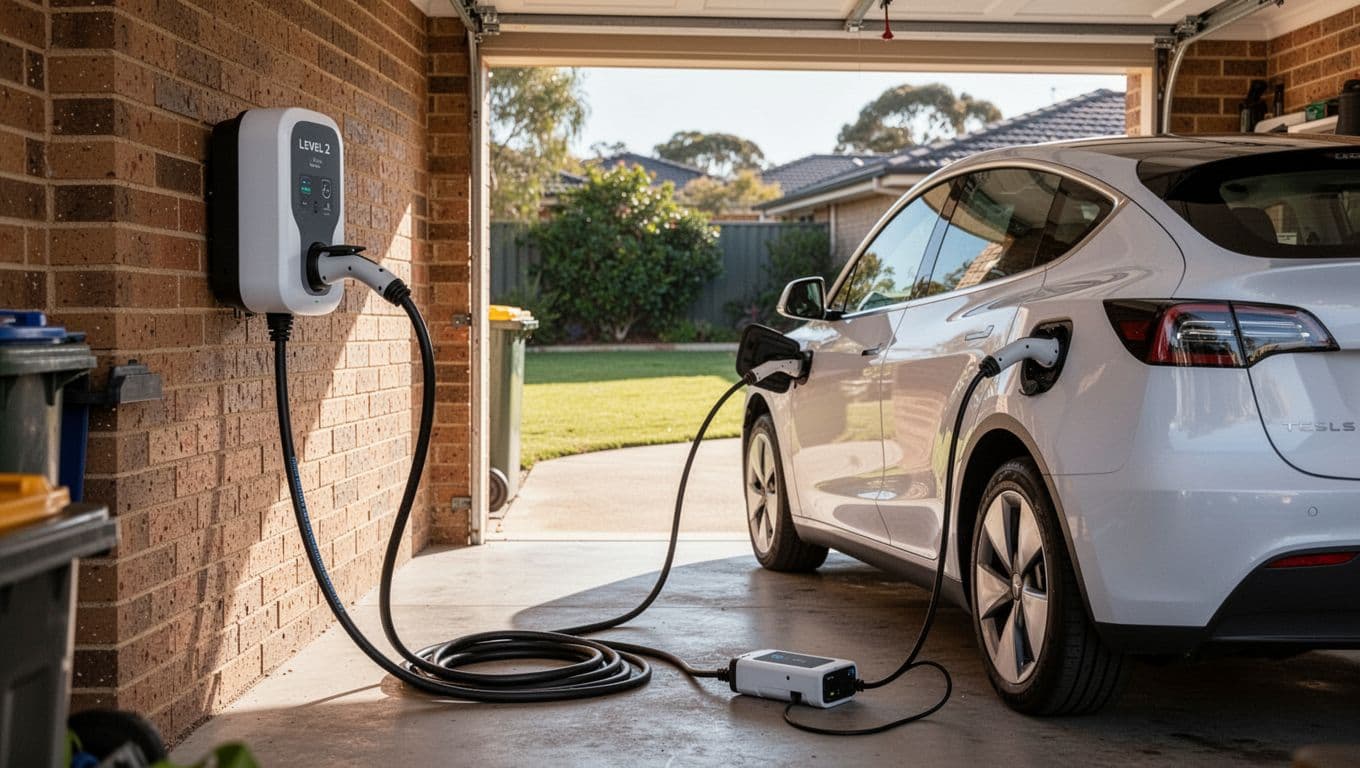 Home charging gear is part of the EV “package,” and it needs a clear cover.
A quick charging-gear check before you buy:
- Theft from a driveway or carport (not just from inside the locked car).
- Damage while actively charging (cable connected, car parked).
- Power surge wording (sometimes home policies are clearer).
- Proof of professional installation for a wall charger.
Why EV premiums can be higher in 2026, and what actually moves the price
By February 2026, more Australians will be able to buy an EV under AUD $30,000 than a few years ago. Yet insurance has not dropped at the same pace. Recent reporting and quote comparisons still show a noticeable gap between EV and petrol premiums for many drivers.
One fresh set of quote data circulating in early 2026 put average “full coverage” EV quotes at about $2,126 for six months, with hybrids and plug-in hybrids averaging about $1,623 for the same period. Quoting periods and driver profiles differ, so treat those figures as directional, not a promise. The bigger point still lands: repair reality drives pricing more than sticker price.
At the same time, Australia’s broader car insurance market has been under pressure. The Mozo car insurance report highlighted rising average premiums in recent years, which sets the background for why “normal” insurance already costs more.
So what actually moves the price on your screen?
Postcode matters because theft rates, weather risk, and repair networks vary. Model choice matters because parts supply and repair methods differ. Driver history still matters, even if you’re the kind of person who indicates perfectly and never tailgates.
Repairs take special tools and training, and that shows up in your premium
EV repairs can look ordinary from the outside. A cracked bumper is a cracked bumper. Yet the work behind it often changes.
Many EVs require high-voltage safety steps before panels come off. Some need brand-approved procedures for battery isolation. Calibration for cameras and sensors has become routine too, especially after a front-end bump. Fewer shops can do all of that safely, and that bottleneck can increase both labor costs and repair time.
Insurers respond in different ways:
- Some direct repairs to a preferred network with EV capability.
- Some allow choice of repairer, but you may pay more upfront.
- Some offer options for hire cars, but availability can vary by location.
Towing is another quiet detail. If your EV can’t be moved normally after an accident, you might need a flatbed tow. Even when it can move, you may want it taken to an EV-capable repairer, not the nearest yard.
Recent media coverage has also pointed to wide differences between models. This news.com.au report on EV insurance gaps captures how pricing can swing depending on the specific vehicle, not just the fact that it’s electric.
The battery is expensive, and insurers sometimes write off cars sooner
Here’s the hard truth that shapes many EV premiums: batteries are expensive, and they’re tightly integrated into the car.
If a crash compromises the battery pack or the surrounding structure, replacement can cost enough that the insurer declares a total loss (a write-off) earlier than you’d expect. It’s not always because the car “looks bad.” It can be because the insurer can’t confidently return it to a safe standard at a reasonable cost.
This is why it pays to ask one very plain question when comparing policies:
Do you cover battery assessment and diagnostics after a crash, even if the battery isn’t replaced?
That one line can be the difference between a smooth claim and a long argument over what “damage” means.
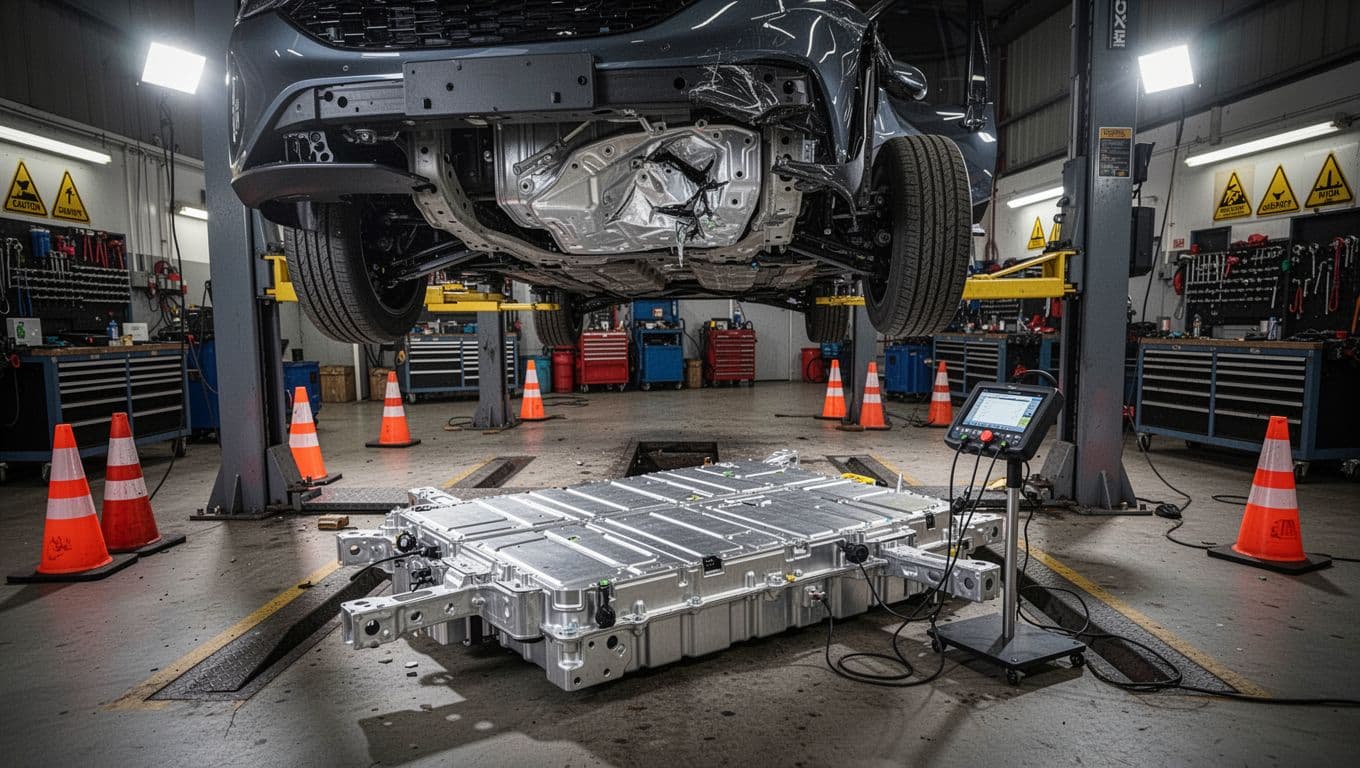 Even low-speed damage can trigger battery inspections and specialized repair steps.
How to compare EV insurance quotes without missing the one detail that matters
Comparing EV insurance can feel like comparing umbrellas in a windstorm. Every option claims to keep you dry, but the seams matter.
The simplest approach is also the most reliable: get at least three quotes using the same inputs, then verify the EV details inside the PDS. In Australia, many drivers start with mainstream insurers (Allianz, Youi, QBE) and also look at EV-specific offerings (including Tesla-focused products offered through arrangements backed by large underwriters). The best choice depends on your car, location, and how picky you are about repairer choice.
Set a timer for 10 to 15 minutes and do this:
- Choose the same cover type across all quotes (usually comprehensive for newer EVs).
- Match the excess, agreed value settings, and parked location.
- Screenshot the inclusions page, then open the PDS and search for “battery,” “charger,” and “fire.”
- Confirm towing rules and repairer choice before you care about price differences.
For extra perspective on why EV insurance can come out higher, and which levers sometimes help, this National Cover guide to EV insurance cost in Australia lays out common pricing drivers and what to watch in quotes.
A simple EV insurance checklist you can use before you buy
Use this as a fast filter. If a policy fails your must-haves, you can stop reading.
- Agreed value vs market value: Can you lock in a value that fits your replacement plan?
- New car replacement window: How long does “new for old” apply?
- Battery and fire wording: Does it mention battery damage and fire clearly (some policies reference thermal runaway)?
- Charger and cable limits: Are portable cables and a wall charger covered, and what are the caps?
- Towing to an EV repairer: Does it cover transport to a suitable repair shop, not just the closest?
- Glass and windshield: Is the glass excess-free, or at least reduced?
- Hire car rules: Do you get a hire car after not-at-fault and at-fault claims, and for how long?
- Excess amounts: Are there excesses for age, claims type, or postcode?
- Choice of repairer: Can you pick, or must you use the insurer’s network?
- Accessories cover: Does it include aftermarket items you actually bought?
Match the policy to your life, not a brochure. A short commute and home charging usually mean different priorities than rideshare work or long regional trips.
Easy ways to lower your premium without cutting corners
Dropping cover can feel like saving money by skipping a helmet. It works right up until it doesn’t. Still, you do have options that don’t leave you exposed.
Start with the levers that insurers price heavily:
- Raising your excess often reduces the premium, but only choose an amount you could pay tomorrow.
- Secure parking helps. A locked garage can price better than on-street.
- Lower annual kilometers can help if it’s accurate, and insurers may ask questions after a claim.
- Bundling policies (home and auto) sometimes reduces the total bill.
- Removing unneeded drivers from the policy can change risk ratings.
Many EV owners consider Third Party Fire and Theft as a cheaper middle ground. The trade-off is real. You may lose EV-specific extras like a charger cover, richer towing benefits, or broader battery-related wording. If your EV is financed, lenders may also require comprehensive cover.
One more reality check: there are no direct government rebates that make EV insurance cheaper in Australia. In 2026, savings mostly come from shopping around and tuning risk settings, not from a policy “hack.”
Conclusion
A good EV policy does more than tick “comprehensive.” It should protect the battery, charging gear, and the real-world cost of EV repairs. In 2026, higher premiums often reflect parts, training, and the risk of early write-offs after certain impacts.
Get multiple quotes, read the PDS where EV terms live, and confirm caps in writing if something matters to you. Then build a short must-have list and choose the policy that best fits your budget and peace of mind, so the driveway can go back to feeling quiet again.