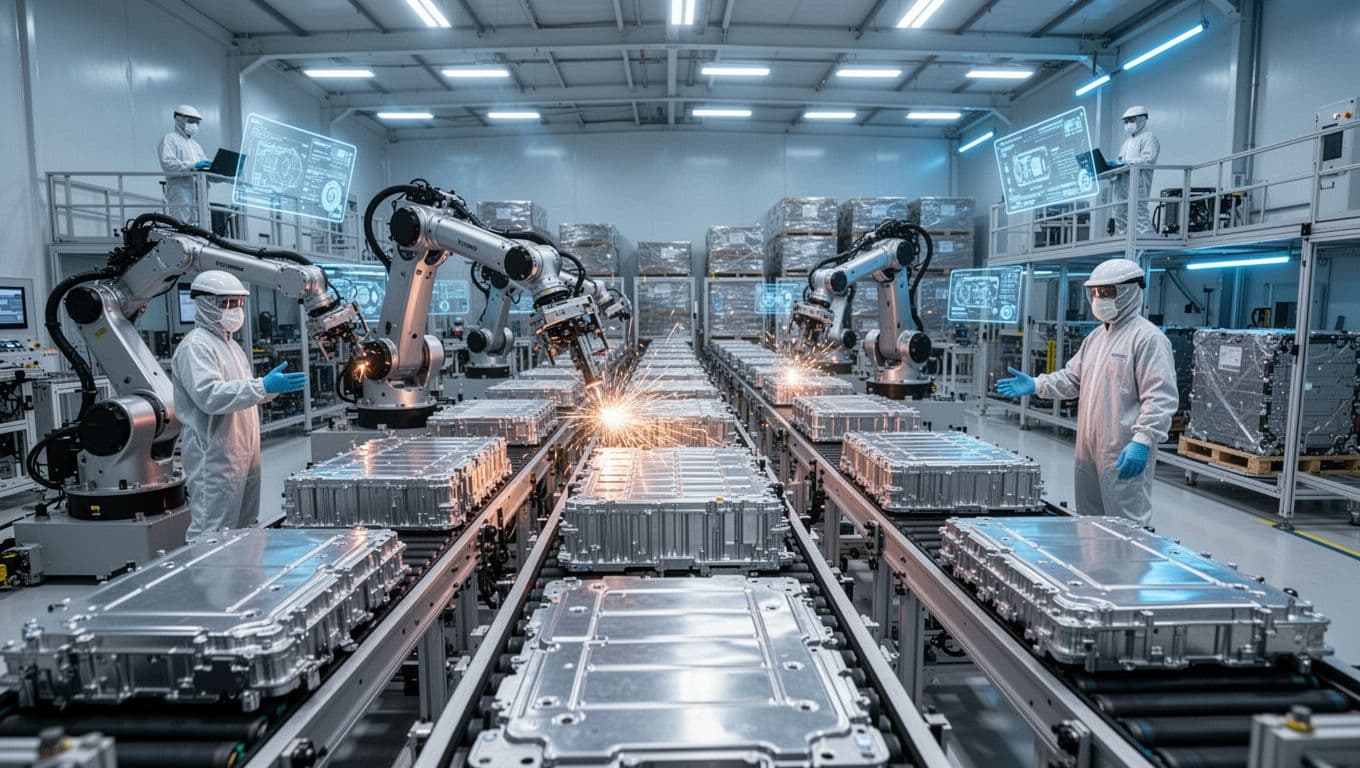
An EV battery is the car’s fuel tank and engine rolled into one box. It stores energy, delivers power, and quietly decides how far you’ll go on a cold night with the heater running.
That’s why EV battery manufacturers matter more than most drivers realize. A small group of companies shapes battery cost, range, charging speed, and even how calm you feel when you park in a hot garage.
This guide gives you a clear snapshot of the biggest makers in early 2026, how to compare them without a chemistry degree, and what changes are next (sodium-ion, solid-state pilots, and recycling).
Meet the biggest EV battery manufacturers in 2026, and what they’re known for
Battery market share numbers shift month to month, and different trackers count “installed” packs a little differently. Still, the story stays consistent: CATL sits in the high-30% range globally, BYD holds the mid-teens, and LG Energy Solution remains a top-three supplier.
Some early-2026 rollups put CATL around 36.8%, BYD around 15.8%, and LG Energy Solution around 13.6%. Meanwhile, full-year 2025 installation data published in early 2026 shows CATL at 39.2% and BYD at 16.4%, with LG in third place at a lower share. You can see those full-year figures in this 2025 global market share report.
Why does size matter if you just want a good car? Because scale usually means three things for drivers:
- Lower pack costs over time, since high volumes squeeze waste out of manufacturing.
- More stable supply, so automakers can build more trims and shorten wait times.
- Faster rollout of new designs, since big players can fund pilots and tooling.
CATL: the volume leader pushing LFP, sodium-ion, and new pack designs
CATL’s edge is simple: it builds a lot of cells, and it learns fast from doing it. It has also pushed packaging ideas that reduce extra parts. “Cell-to-pack” and “cell-to-chassis” approaches aim to cut dead space, trim weight, and lower cost. Less structure can mean more usable energy in the same footprint.
Chemistry-wise, CATL has been a loud advocate for LFP (lithium iron phosphate) in mainstream cars, because it’s durable and tends to handle abuse better than many nickel-rich blends. On the “next” list, CATL has promoted sodium-ion as a lower-cost route for shorter-range cars and grid storage, since sodium is more abundant than lithium. It has also discussed solid-state direction with pilot-scale plans, often framed around about 1 GWh of pilot capacity by 2026.
There’s also a plain risk to understand: heavy reliance on China-based production can collide with trade rules, tariffs, and sourcing limits. That doesn’t change battery physics, but it can change where cells get built and which models get them.
BYD and LG Energy Solution: two very different paths to reliable packs
BYD and LG Energy Solution both sell confidence, but they get there in different ways.
BYD is known for vertical integration, meaning it controls more of the chain from materials to pack assembly. It has made LFP a core bet, including its Blade-style pack designs that focus on safety and long life. Expansion outside China continues, but BYD faces a harder path in some markets because tariffs and local-content rules can change the math quickly. For a practical, driver-focused comparison of the big names, see this internal breakdown: BYD Blade Battery vs Tesla vs CATL.
LG Energy Solution, in contrast, is a major supplier to automakers outside China and has deep experience with NCM (nickel cobalt manganese) and other higher-energy chemistries. In North America, local production and policy incentives can help keep supply closer to US assembly plants. LG has also balanced the ups and downs of EV demand by leaning into energy storage contracts when needed, which can support steadier factory utilization.
The battery brand rarely appears on the window sticker, but it still shapes what the car feels like at 10% charge, in winter, and after year five.
How to compare battery makers without getting lost in chemistry talk
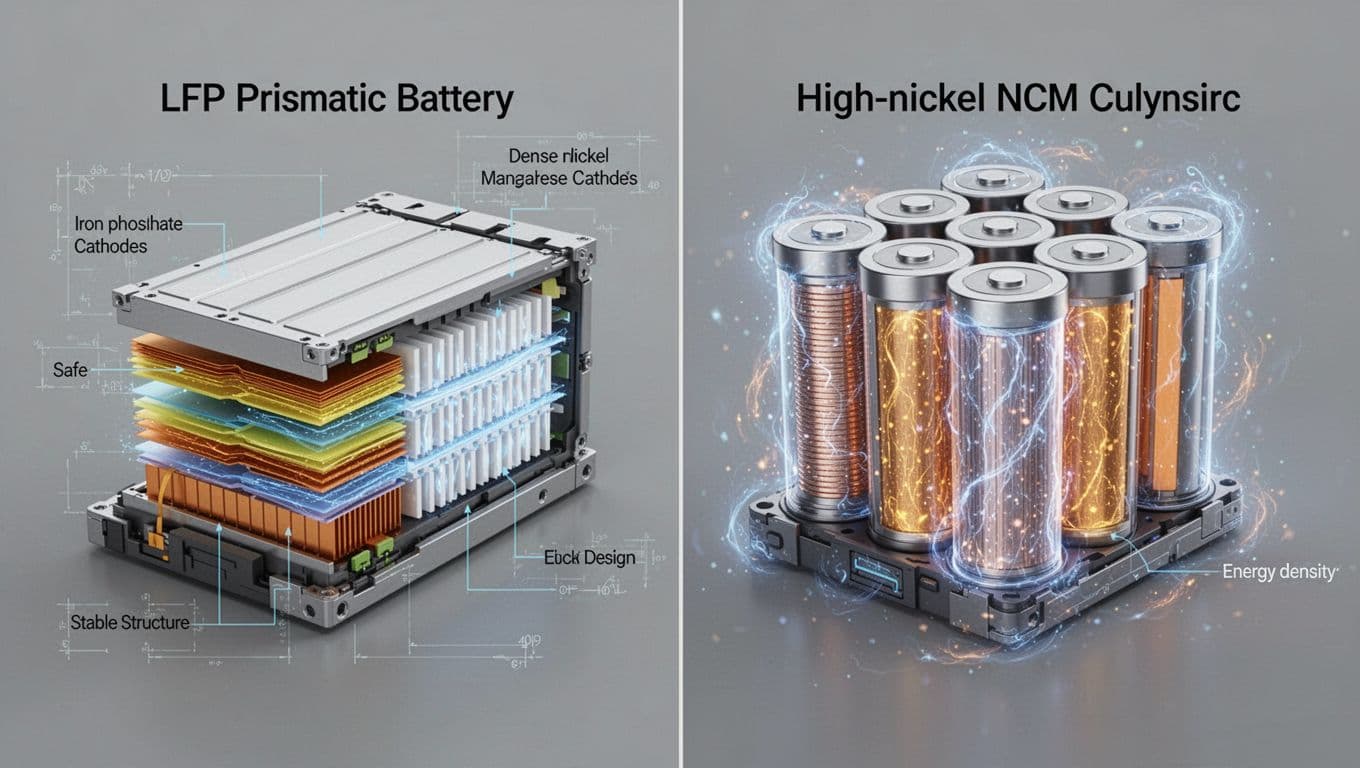 Two common EV battery chemistries shown side by side for context.
You don’t need lab terms to judge a battery supplier. You need to focus on how the pack behaves in real life: winter range, charging curve, safety controls, and long-term health.
Most mainstream EVs land around 60 kWh for usable capacity, although trucks and long-range trims go much higher. With reasonable care, many packs can last 15 to 20 years, but heat, frequent fast charging, and deep cycling can shorten that.
A quick way to stay grounded is to compare makers on four questions: What chemistry do they favor, how do their packs manage heat, how do they charge from 10% to 80%, and what does the warranty suggest about confidence?
The chemistry choices that shape cost and range (LFP vs NCM, and what’s next)
Here’s the simple translation: LFP often trades some energy density for cost and durability, while NCM usually packs more energy into the same space.
This table is a useful cheat sheet.
| What you care about | LFP (common in many mass-market EVs) | NCM / high-nickel (common in longer-range trims) |
|---|---|---|
| Cost trend | Often lower | Often higher |
| Range per pound | Usually lower | Usually higher |
| Heat tolerance | Typically strong | Needs careful thermal control |
| Best fit | Value models, fleets, hot climates | Long-range and premium models |
What’s next? Sodium-ion aims at lower-cost packs for shorter-range vehicles and stationary storage. Solid-state is the longer-term bet, promising higher energy and improved safety, but early production is still limited and expensive.
If you want a market context view of who leads and why scale matters, this EV battery market share update is a helpful reference point.
What quality looks like in real life: safety records, fast charging, and battery health
“Fast charging” isn’t one speed, it’s a curve. Many packs charge quickly at low state of charge, then slow down to protect the cells. A great battery supplier helps the automaker keep that curve strong without overheating the pack.
In practice, quality shows up as:
- Thermal management that keeps cells in a tight temperature range, especially in heat waves and winter road trips.
- Pack structure that protects cells in a crash and limits how damage spreads.
- Software limits that reduce stress when you DC fast charge often.
- Consistent manufacturing across factories, because a good design still fails with sloppy process control.
Recall history also matters, but don’t treat it as a simple “good or bad” score. Even strong manufacturers can ship a flawed batch. What you want to see is rapid fixes and clear root-cause control.
Where EV battery manufacturing is headed next, and what it means for prices
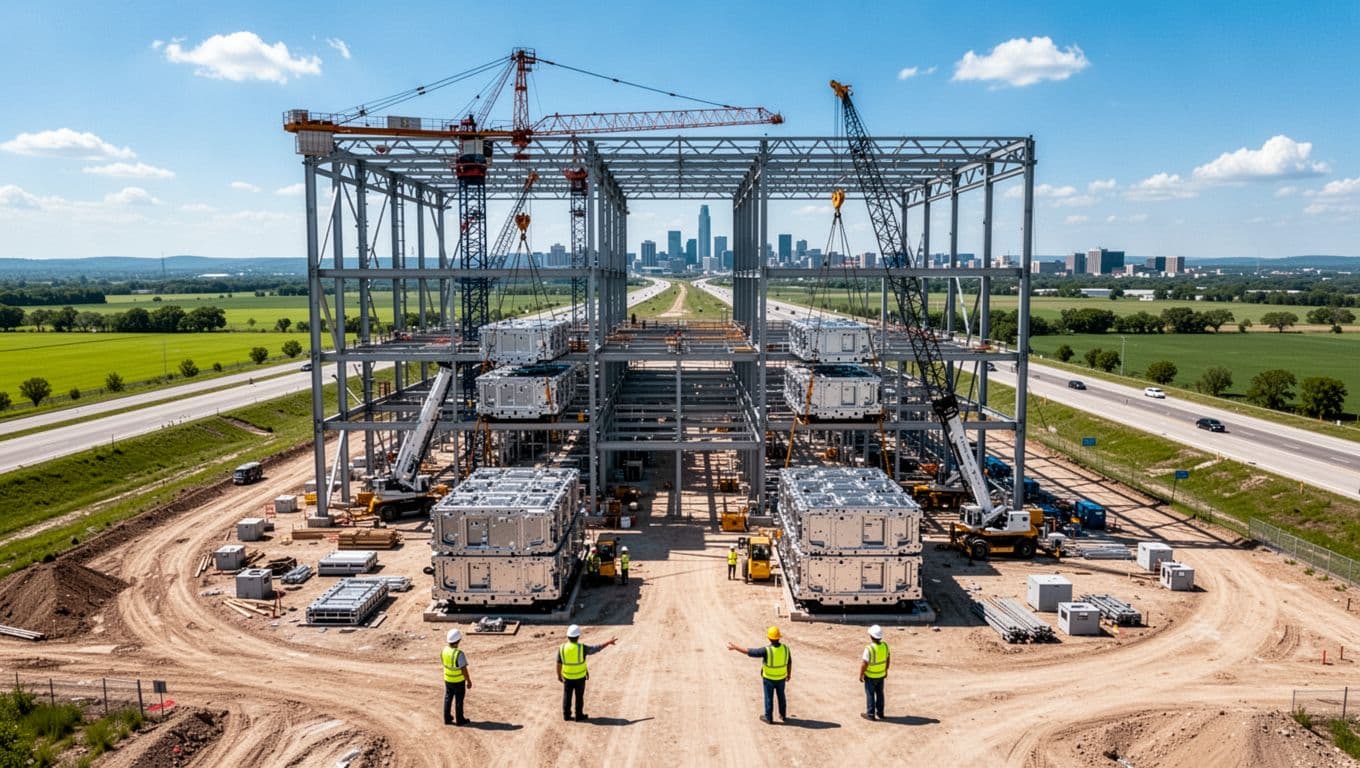 New gigafactory construction highlights the push toward local battery supply.
The EV battery market isn’t small anymore. Projections put it around $113.5 billion in 2026, with growth toward roughly $231.5 billion by 2032. That scale matters because it funds new factories, new chemistries, and better recycling. It also intensifies the tug of war between China’s current dominance and new capacity in the US and Europe.
A bigger market also tends to compress prices over time, especially for mature chemistries like LFP. When factories run at high utilization, every cell gets cheaper to make.
New factories and local supply chains, built to avoid delays, tariffs, and shortages
Automakers hate surprises. Shipping delays, tariff shifts, and single-country exposure can turn a product plan into a mess. As a result, battery makers keep building closer to vehicle assembly.
In early 2026, you see this in several directions at once: LG scaling North American operations tied to incentive structures, SK On growing US capacity, and Chinese leaders exploring manufacturing outside China for certain customers and regions. For drivers, that can mean steadier inventory and fewer “sorry, that trim is constrained” moments.
Recycling and lower-carbon batteries, because the cleanest battery is the one reused
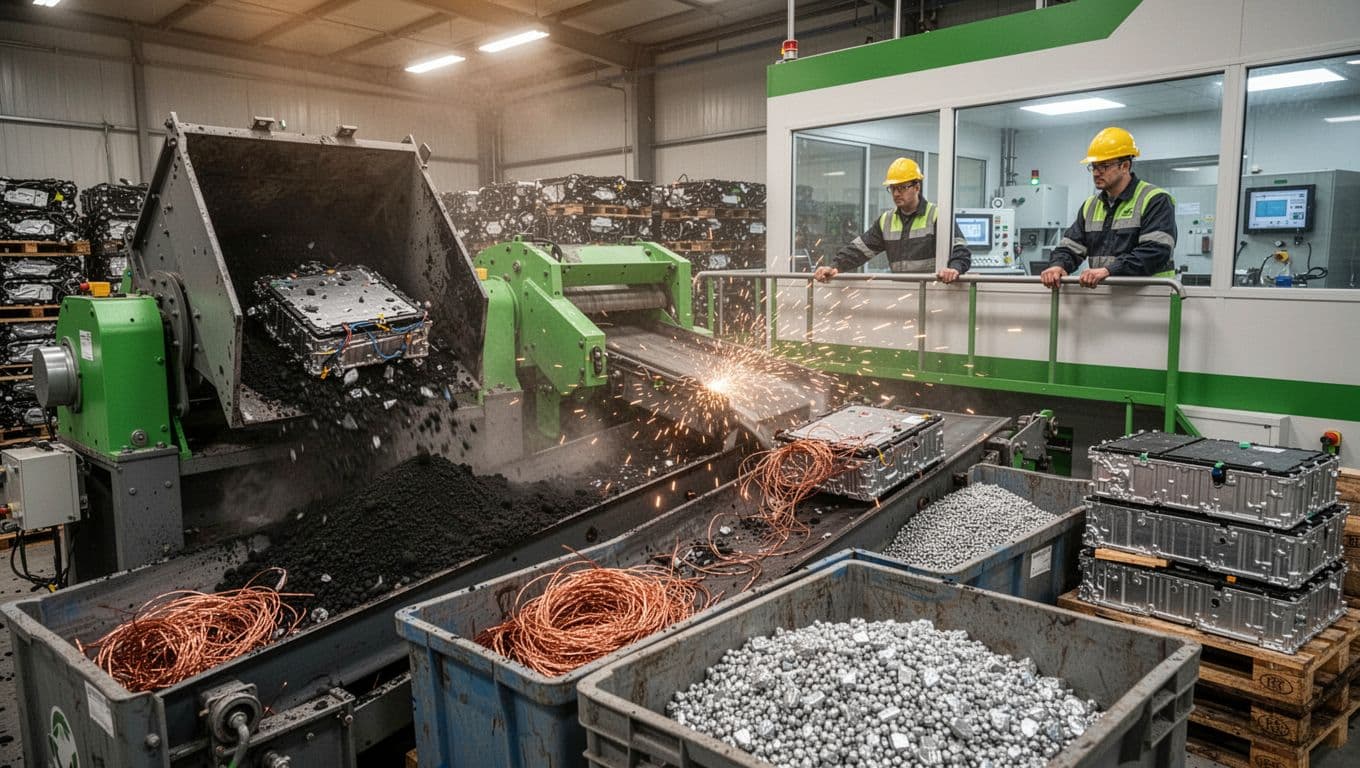 Recovered materials from used packs can feed new batteries with less mining.
Battery production can carry a heavy carbon footprint, often discussed as several tons of CO2 per pack, depending on factory power sources and materials. Recycling helps by pulling valuable metals back into the supply chain, including lithium, nickel, cobalt, and copper. That reduces new mining and can lower emissions over time.
Recycling also improves supply security. A future where old packs become local “urban mines” feels less fragile than a future built only on new extraction.
For extra background on how concentrated this industry is, and why scale keeps pushing consolidation, this explainer on EV battery market concentration in 2026 adds useful context.
Conclusion
A handful of EV battery manufacturers still sets the pace for the whole market, even if your car badge says something else. Chemistry and pack design matter as much as brand names, because they shape cost, winter range, charging behavior, and aging. Next, expect the big changes to come from cost drops, more local plants, and stronger recycling loops.
Before your next EV purchase, check what battery type the model uses, then read the warranty like it’s a long-term relationship. The fine print often tells the real story about battery health.