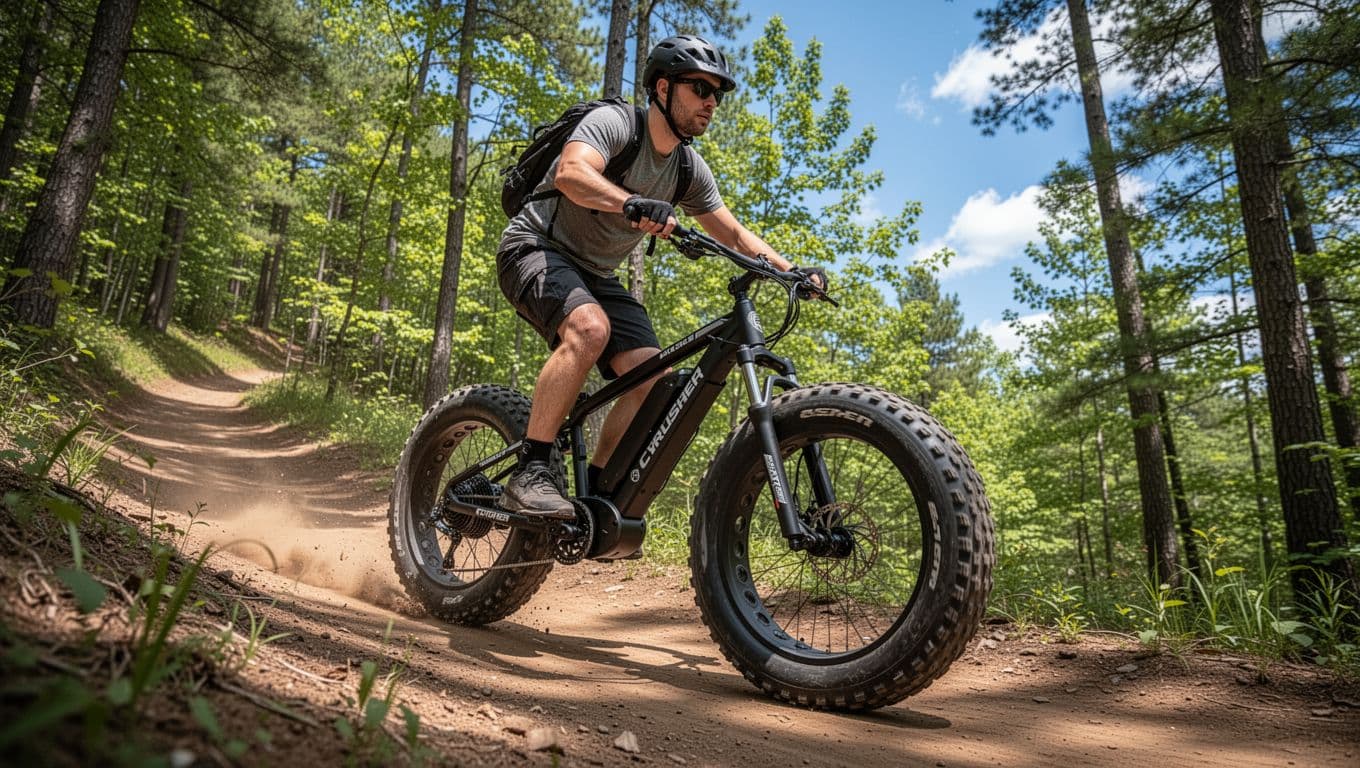
A Cyrusher can feel like a pickup truck with pedals. You get fat tires, a big stance, and a ride that stays calm when the pavement gets ugly. Many models also add full suspension, so potholes and washboard paths don’t rattle your wrists.
This roundup of Cyrusher electric bike reviews focuses on what matters after the first week: real comfort, how the motor feels on hills, practical range, handling at speed, and whether the value matches the weight. Because yes, many Cyrushers are heavy, and that single fact can decide whether you love it or list it.
One quick reality check before we start: range and speed change a lot with rider weight, hills, wind, tire pressure, temperature, and how much you pedal. A “68-mile” ride can turn into 35 if you hammer the throttle into a headwind with soft tires.
How Cyrusher e-bikes feel day to day, the good and the not so good
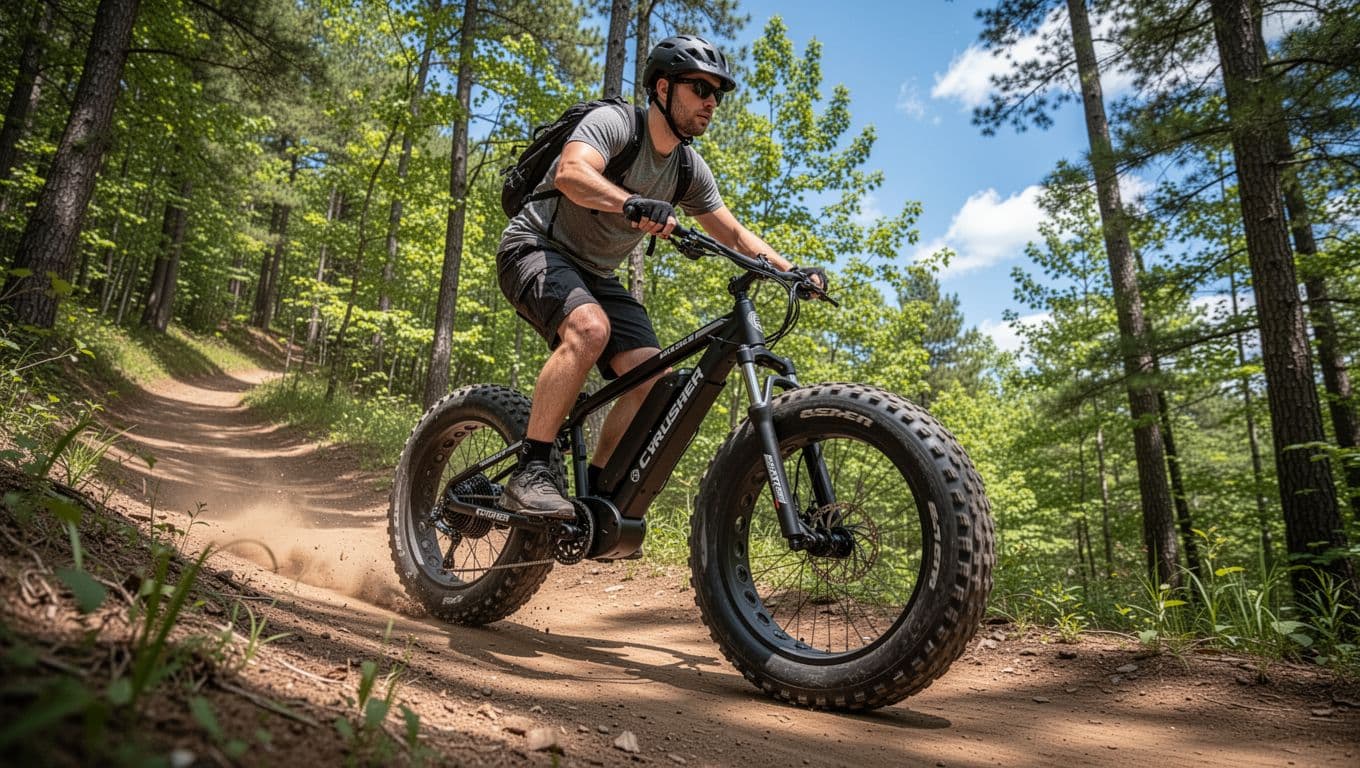 An example of the kind of mixed-terrain riding that fat tires and full suspension are built for, created with AI.
Across a lot of Cyrusher models, the pattern is consistent: they’re built to feel planted, cushy, and strong. If your normal routes include cracked sidewalks, gravel connectors, or a shortcut through a park trail, that design makes sense.
Comfort tends to be the headline. The combination of fat tires and suspension takes the sting out of bad surfaces. On days when you just want to roll without thinking, that matters more than top speed.
Power is the second theme. Many riders describe the motor as “confident,” especially on steep grades where a lighter commuter e-bike would slow down and complain. That’s why Cyrusher shows up so often in owner roundups and feedback posts like what owners are saying about Cyrusher bikes.
The tradeoff is simple: comfort and stability often come with extra mass. If you carry a bike up steps, lift onto a rack, or store it in a tight hallway, weight stops being a spec and becomes your daily problem.
What riders usually like: power, comfort, and all-terrain grip
The “Cyrusher feel” is a steady, floaty ride. Fat tires help the bike track straight on broken pavement, and they add grip on dirt, sand, and leaf-covered paths. If your city has rough winter roads, that grip can feel like cheating.
Full suspension, when included, reduces hand and back fatigue. Riders who used to finish with sore wrists often report they can ride longer with less soreness. It’s the same idea as good hiking boots: you notice them most when the terrain gets messy.
Many models are also tuned for brisk acceleration. In areas where Class 3 settings are legal and enabled, riders often talk about a “28 mph-style” experience, meaning it feels fast enough to keep up with traffic flows in bike lanes. On flatter ground, that can make commuting less stressful.
Battery size matters too. Some Cyrushers use larger packs, and that opens up longer weekend rides when you stick to pedal assist instead of treating the throttle like a motorcycle grip. The best rides often look like this: low assist on flats, higher assist on hills, and steady pedaling so the motor supports you instead of replacing you.
A Cyrusher tends to reward riders who pedal a little. You’ll usually get a calmer ride and better range.
What riders complain about: heavy frames, high-speed feel, and small comfort fixes
The biggest complaint is still weight. Many fat-tire, full-suspension e-bikes push past 70 pounds once you add racks or accessories. That’s fine until you face a flight of stairs, a narrow door, or a vehicle rack with a lift limit.
Some riders also mention the front end can feel vague at higher speeds if the bike isn’t set up well. That can come from tire pressure, fork settings, loose hardware after the first rides, or even just rider posture. A few owners describe a wobble sensation when they ride fast and tense up.
Then there’s “ghost pedaling.” At top assisted speed, cadence can get too high for comfortable pedaling, so your legs spin without adding much. It’s common on powerful hub-motor bikes. If you want a more “bike-like” feel at 25 to 28 mph, pay attention to gearing and how the assist ramps.
The good news is that several comfort issues are easy to fix. Riders commonly swap the stock saddle, replace basic pedals with wider ones, and dial tire pressure for their weight (often lower than you’d expect). It also helps to re-check bolt torque after the first 50 to 100 miles, because heavy bikes vibrate hardware loose more easily.
Cyrusher electric bike reviews by model, which one matches your riding

Photo by Josh Sorenson
Instead of trying to crown a single “best” Cyrusher, it’s smarter to match the bike to your life. The right pick depends on your mounting comfort, your storage situation, and how rough your usual roads are.
Before model-by-model notes, here’s a quick comparison using publicly discussed specs and real-world feedback as of February 2026.
| Model | Frame style | Battery (as commonly listed) | Range talk (real-world varies) | Best fit |
|---|---|---|---|---|
| Kommoda 2026 New | Step-through | 48V 20Ah | Up to ~68 miles (best with pedaling) | Comfort-first errands, paths, light trails |
| Flex | Step-over style | 48V 15Ah | Often lands in the 50 to 60-mile zone with mixed assist | One-bike-for-everything riders |
| Rover | Step-over style | 52V 15.6Ah | Often cited around 50 to 60 miles in good conditions | Speedy mixed terrain, strong hill feel |
| Trax 2.0 | Step-through | 52V 20Ah | Around mid-50s in some ride reports | Plush off-road comfort, bigger battery goals |
Now let’s talk about who each model tends to suit.
Kommoda 2026 New review, a comfy step-through for streets, paths, and light trails
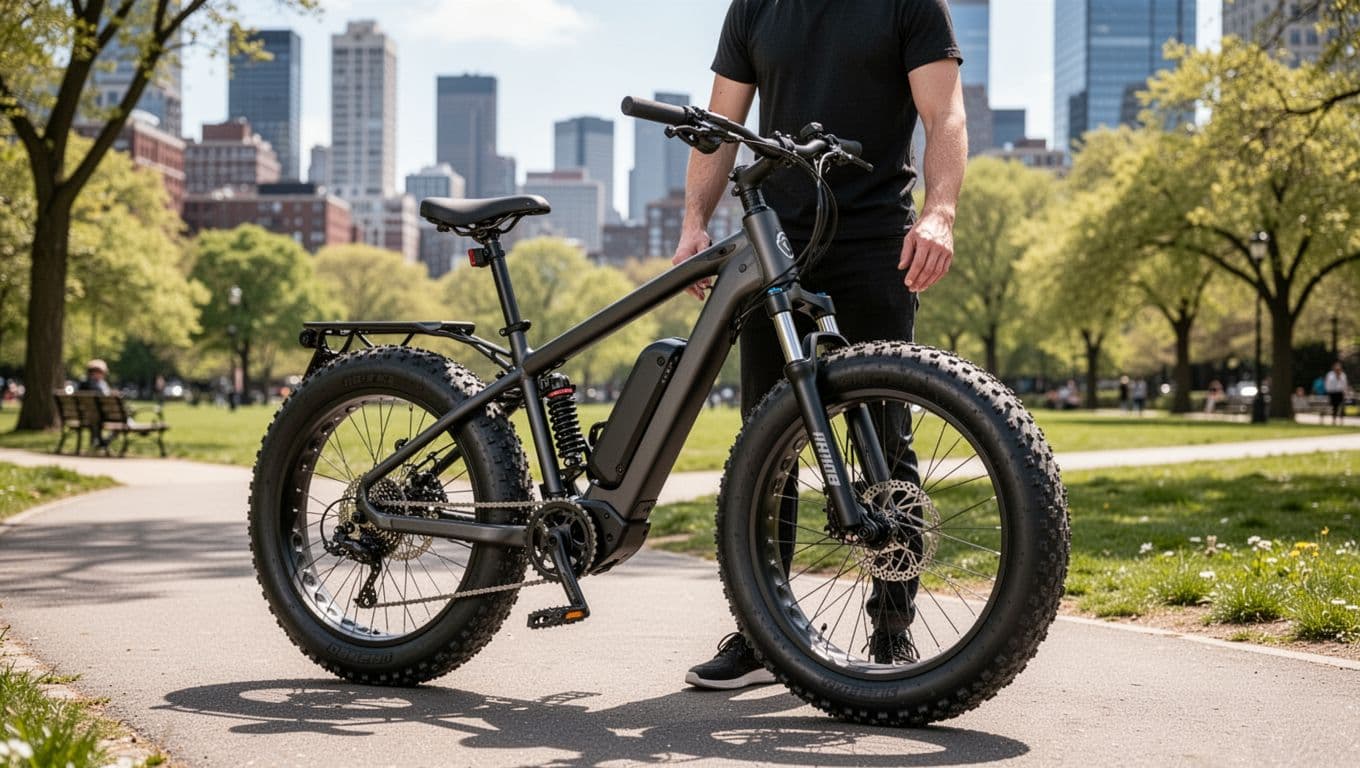 Step-through geometry makes on-and-off riding simpler for errands and casual cruising, created with AI.
The Kommoda 2026 New is the “make it easy” option. The step-through frame helps if you don’t like swinging a leg over a tall bike, or if you ride in everyday clothes. For newer riders, that confidence boost matters. You stop thinking about mounting and start thinking about where you want to ride.
Comfort is the reason many people pick it. Full suspension plus fat tires is a forgiving combo on city cracks and park paths. Cyrusher’s move toward a torque sensor on this model also shows in ride feedback, because the assist feels more natural when you pedal. Instead of a sudden surge, it tends to add support in proportion to your effort.
Range claims go up to about 68 miles, but treat that like a “best day” number. Riders usually get the longest rides when they keep speed moderate, maintain tire pressure, and stay in lower assist on flats. If your goal is a daily 10 to 25 miles with comfort, the battery size often feels generous.
The tradeoffs are predictable. This isn’t a light commuter. It can still be awkward to lift, and some riders will wish for even more battery if they plan all-day rides with lots of throttle use. If you want deeper, test-style detail on how a similar Kommoda generation rides, see Ebike Escape’s Kommoda review, then compare current-year specs on the 2026 product listing.
Flex review, an all-round pick when you want one bike for pavement and dirt
Flex reviews tend to sound like relief. Riders buy it for exploration, then realize it also works for commuting on rough streets. That’s a good sign, because the best e-bike is the one you actually use on random Tuesday afternoons.
The Flex gets praise for its smooth ride and hill ability. It’s commonly described as comfortable over bumps, and it feels confident when the grade kicks up. Battery feedback is also encouraging, with riders reporting strong remaining charge even after steep climbs, depending on assist choice and speed.
What makes it a smart “one bike” pick is the blend of stability and fun. On pavement, it feels planted. On dirt and gravel, fat tires help it keep traction and reduce sketchy moments in loose corners. If you’re trail-curious but not trying to ride technical singletrack, that’s the sweet spot.
Still, fit matters more on these heavier bikes. Handlebar height, stem adjustment, and saddle choice can change the ride from “so comfy” to “my shoulders hurt.” If possible, measure your inseam and check standover carefully. Also plan storage before you buy. A heavy bike that lives behind three obstacles won’t get ridden much.
Rover, Ovia, and Trax 2.0 reviews, choosing between rugged step-over and easy step-through
If you like a more traditional, rugged stance, the Rover is often the one people talk about. Riders describe strong speed on flats, a powerful feel on hills, and a torque-sensor setup that makes the assist feel almost invisible. For a look at how the Rover behaves in the real world, there’s also a popular video review titled Is the Cyrusher Rover the best e-bike for you? that captures the “fast and planted” vibe many owners mention.
Trax 2.0, by contrast, leans into step-through convenience with big-battery energy. It’s often framed as a comfort machine for bumpy paths, with full suspension and fat tires doing most of the work. Buyers who want a plush ride and easier mounting tend to gravitate here, even if the bike feels bulky when the motor is off.
Ovia is harder to summarize from broad review coverage as of early 2026, since it shows up less consistently in the most-cited test rides. If you’re deciding between Ovia and the better-known names, compare the basics: battery voltage and amp-hours, suspension type, total weight, and the frame shape that fits your body.
One more note on budgets: Cyrusher also sells higher-end options, and some riders jump to those when they want more specialized use cases. If cargo is your priority, for example, it can help to read a dedicated take like Electroheads’ Cyrusher Glider review to understand how Cyrusher builds a “haul stuff” bike versus an off-road comfort bike. For a model-picker perspective that’s blunt and practical, this Cyrusher buyer guide is UK-focused but still useful for thinking through use cases.
A simple buying checklist so you pick the right Cyrusher the first time
This part is quick on purpose. A Cyrusher can be a great ride, but only if it fits your life off the bike.
- Fit and standover: Step-through for easy mounting, step-over for a more locked-in feel.
- Storage reality: Measure doorways, elevators, and the spot where it will live.
- Transport plan: Confirm your rack’s weight rating, or plan a trailer or truck bed.
- Surface mix: Pavement-only riders may not need full suspension or fat tires.
- Safety and legality: Know your local e-bike class rules before unlocking top speed.
Fit, weight, and where you will store it matters as much as speed
A heavy e-bike feels light when the motor helps, but it feels very heavy everywhere else. That includes lifting it over a curb, turning it in a hallway, or nudging it up a ramp. If you live upstairs, this is the make-or-break point.
Frame style is the next big deal. Step-through frames help riders with limited hip mobility, shorter inseams, or anyone who rides in work clothes. Step-over frames can feel more “bike-like” to some riders, especially when standing and pedaling on uneven ground.
Also check payload limits and your real riding setup. Cyrusher models often appeal to heavier riders because the bikes are built stout. That can be a plus if you carry a backpack, groceries, or extra gear. Just remember that more load usually means less range and slower hill speed.
If you’re choosing between two bikes, pick the one you can store and move easily. That’s what keeps you riding.
Range, motor feel, and warranty, what to confirm before you buy
Real range is less about the biggest number on the page and more about your weekly routine. Think in terms of worst-case days. If you need 20 miles round trip with hills, plan for that plus a buffer. Windy days and cold days can also pull range down.
Motor feel matters just as much as raw power. Reviews often mention hill performance, how smooth the start feels from a stop, and whether assist levels change speed only or add real push. Torque sensors usually feel more natural, especially when you’re pedaling at moderate speeds.
Finally, confirm warranty terms for the exact model and where you’re buying from. Cyrusher has commonly advertised a 2-year limited warranty structure on many listings in recent years, but coverage can vary by component and region, so read the current terms and save your purchase records. After the first few rides, do a basic check of bolts, brakes, tire pressure, and spoke tension. Those small checks prevent most early headaches.
If you end up deciding a Cyrusher is too heavy for your space, compare it with lighter and simpler alternatives in this guide to the cheapest electric bikes in the USA, then come back to fat tires when your storage setup changes.
Conclusion
Cyrusher bikes tend to deliver what many riders want most: comfort, grip, and strong hill support for the money. They shine on rough streets, mixed paths, and casual off-road routes where fat tires and suspension pay you back every mile. Still, weight and high-speed handling feel can make or break the experience, especially for apartment living or frequent car transport.
If you want a stable, cushy ride and you have a good place to store a heavy e-bike, Cyrusher belongs on your shortlist. If you need a lift-and-carry commuter, a lighter model will fit better. Pick the bike that matches your riding surfaces, storage, and comfort needs, and you’ll be much happier a month from now.