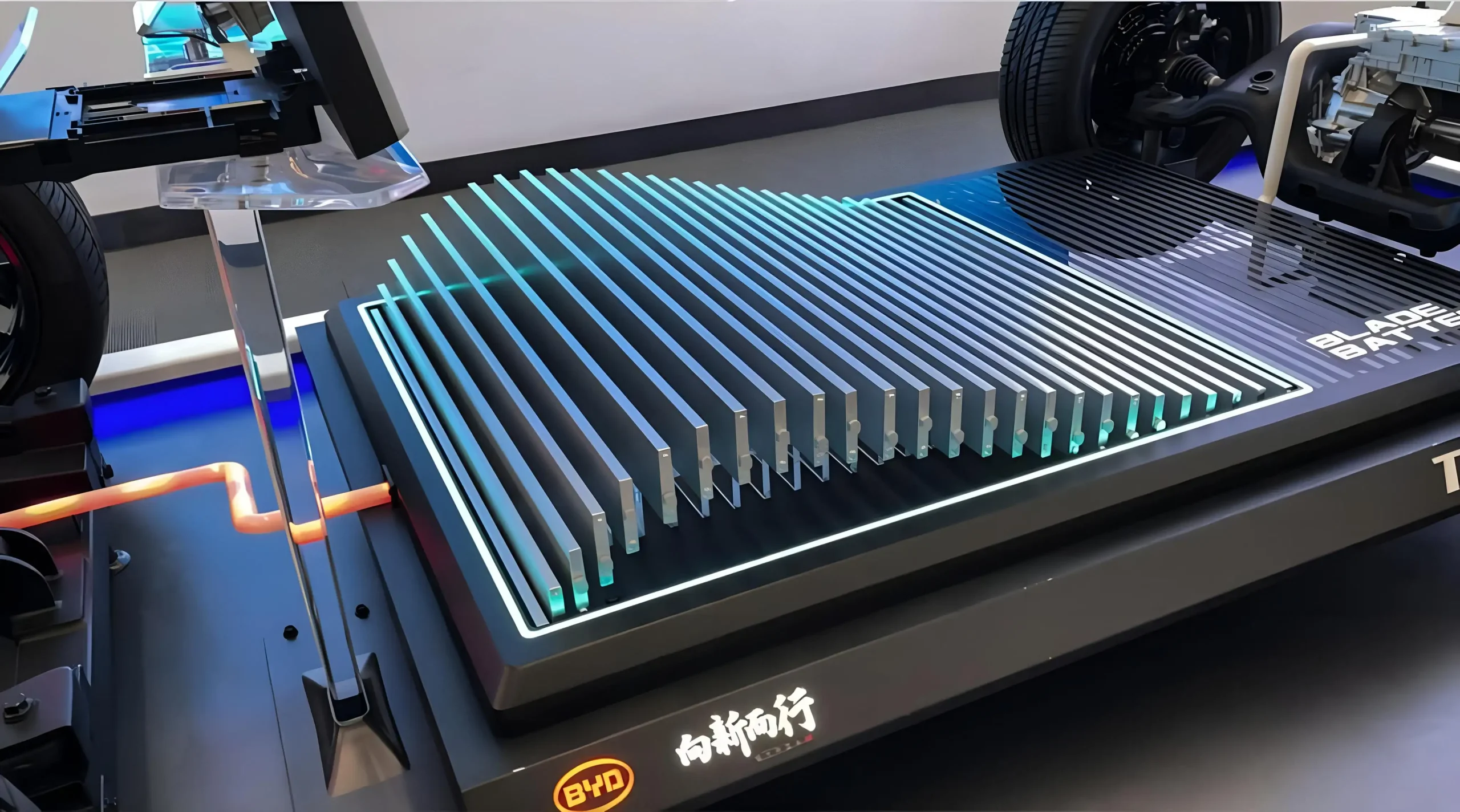
Car makers love to tease “solid-state” batteries, but if you’re buying an EV in 2026, you’re almost certainly getting lithium-ion. That gap between hype and what’s on the lot makes it hard to know what’s actually best.
The truth is, “best EV battery technology” depends on what you care about most: price, range, fast charging, safety, cold-weather driving, or long life. So instead of buzzwords, this guide sticks to practical trade-offs you can feel in daily driving and ownership costs.
Next, you’ll see a clear comparison of today’s main chemistries, LFP and NMC (plus NCA), along with what’s coming next, sodium-ion, solid-state, and lithium-sulfur. By the end, you’ll know which battery type fits your priorities, and which promises still need time.
What “best EV battery technology” really means: the 6 things that matter
When people say “best EV battery,” they often mean “the one that gives me the least hassle.” That usually comes down to a handful of practical scores: range, weight, safety, battery life, cost, and charging behavior. The tricky part is that no chemistry wins all of them at once.
Also, don’t judge a battery in isolation. Range comes from energy in the pack, but also from vehicle efficiency (aerodynamics, tires, motor, heat pump) and pack size. Likewise, charging speed depends on both the battery chemistry and the car’s charging system and cooling. A great cell can still charge slowly in a car with conservative software or weak thermal management.
Range, weight, and energy density (why some packs go farther)
Energy density is simple: it means more energy stored in the same space (or weight). Think of it like packing for a trip. A higher energy density “suitcase” fits more outfits without getting bigger, so you can travel farther before you need a refill.
This is why chemistry matters. In broad terms:
- NMC and NCA packs usually offer higher energy density than LFP, so they can hit longer ranges without making the pack huge or heavy.
- Solid-state designs (still early for mass-market) target even higher energy density, mainly by changing the electrolyte and promising tighter packaging and safer operation at higher densities.
- Lithium-sulfur also aims high on paper, but it still has big hurdles around lifespan and real-world durability.
- Sodium-ion tends to be lower in energy density today, so it often needs a larger pack for the same range. Still, it’s improving and can shine where low cost matters most.
That said, it’s easy to obsess over one headline number and miss the real reason two EVs with “similar kWh” drive differently. A slippery body shape, efficient motors, and good thermal control can stretch miles just as much as chemistry. Put another way, a battery is the fuel tank, but the car decides how fast it drinks.
To keep it practical, here’s a clean way to think about range without getting stuck on spec-sheet chasing:
- Pack size (kWh): how much energy the car carries.
- Efficiency (mi/kWh or Wh/mi): how carefully it uses that energy.
- Usable window: how much the car lets you access without hurting longevity.
- Conditions: cold weather, speed, hills, and HVAC can swing results a lot.
A quick chemistry snapshot helps set expectations:
| Chemistry (common in 2026) | Typical energy-density positioning | What that often means for drivers |
|---|---|---|
| LFP | Lower than NMC/NCA | Heavier pack for the same range, often great value |
| NMC / NCA | Higher than LFP | More range in the same space, often higher cost |
| Sodium-ion | Lower (improving) | Best fit for budget and city use, range can be modest |
| Solid-state (early) | Targeting higher | Promising, but availability and cost vary widely |
| Lithium-sulfur (R&D) | Targeting higher | Long-term potential, not a sure bet yet |
The takeaway: energy density shapes the ceiling on range and weight, but the car’s efficiency decides how much of that potential you actually feel on the road.
If you only compare one metric, compare real-world efficiency alongside pack size. It explains range better than chemistry labels.
Safety, cycle life, and cost (the tradeoffs most people miss)
Battery safety is mostly about thermal stability, meaning how calmly a cell behaves when it gets hot. Heat can come from fast charging, hard driving, repeated rapid stops, or just sitting in the sun. The best packs manage that heat well, and some chemistries give engineers more breathing room.
In general, LFP is known for strong thermal stability. That’s one reason many automakers like it for mainstream EVs, especially when they want simpler safety margins and predictable aging. NMC and NCA can be very safe too, but they often require tighter control through cooling, sensors, and conservative charging limits because they typically store more energy in the same space.
Now add cycle life, which is the easiest battery-life definition that actually matters: how many full charge cycles you can do before your range drops a lot. You don’t need a lab number. You need confidence that the pack still feels solid after years of commuting, road trips, and seasonal weather.
A few points that people miss:
- Gentler chemistry often lasts longer. Many LFP packs hold up well to frequent charging and high daily use.
- High energy density can age faster if the car regularly pushes the pack hard (heat, high states of charge, repeated fast charging).
- Thermal management is a co-star. A well-cooled NMC pack can outlast a poorly managed LFP pack in the real world.
Cost is the third leg of the stool, and it ties back to materials and supply risk. Nickel and cobalt (common in many NMC mixes, cobalt less so over time) tend to raise costs and expose pricing to supply swings. LFP uses iron and phosphate, which are generally more available and often cheaper. That’s a big reason LFP shows up in value-focused trims.
Charging speed sits in the middle of all this. Chemistry plays a role, but it’s not the whole story. The car’s battery management software, cooling hardware, and charger curve decide whether a road trip feels easy or annoying. Two EVs can both claim “fast charging” while behaving very differently from 10% to 80%.
So what’s the real tradeoff most buyers live with?
- If you want safer, longer-lasting, and often cheaper, you may accept a bit less range per pound.
- If you want maximum range in a smaller pack, you may pay more and rely on tighter thermal control.
“Best” usually means the battery that fits your driving week, not the one with the flashiest chemistry name.
Today’s winners: LFP vs NMC/NCA for most electric cars
If you’re shopping for an EV in 2026, this is the decision that quietly shapes your daily experience. LFP has become the default choice in many mainstream trims because it keeps cost down and holds up well over time. NMC and NCA still dominate when an automaker wants top-end range or strong power in a smaller, lighter pack.
Think of it like choosing shoes. LFP is the sturdy everyday pair you can wear for years. NMC/NCA is the lighter performance pair that costs more and needs more care. Both can be excellent, but they shine in different jobs.
A quick way to frame it is this:
| What you care about most | LFP usually wins | NMC/NCA usually wins |
|---|---|---|
| Upfront price and value | Yes | Sometimes |
| Long-term durability (cycle life) | Often | Often lower than LFP |
| Safety margin and thermal stability | Often | Needs tighter controls |
| Range per pound (energy density) | No | Yes |
| Performance and sustained high power | Sometimes | Often |
| Road-trip charging feel | Can be great with good pack design | Often strong, especially in long-range trims |
The takeaway: LFP is “most car for the money,” while NMC/NCA is “most range and power for the size.”
LFP batteries: strong safety, long life, and lower price
LFP (lithium iron phosphate) keeps winning in 2026 because it’s built for real life, not spec-sheet bragging. The chemistry is more thermally stable, which gives engineers more safety headroom. That doesn’t mean other batteries are unsafe, it means LFP tends to be calmer under stress, heat, and age.
Just as important, LFP usually delivers excellent cycle life. If you drive a lot, charge often, or keep cars for many years, that matters more than most people expect. LFP packs also tend to handle daily charging routines well, including frequent top-ups. For owners, that often translates to less worry about “babying” the battery.
Cost is the other big reason LFP is everywhere. LFP uses iron and phosphate, which are generally less expensive than nickel-heavy cathodes. As a result, many automakers can price an LFP trim aggressively without making the car feel stripped down.
Charging is where people get confused, because LFP has a reputation for being “slow.” In practice, pack design matters as much as chemistry. A well-engineered LFP EV can feel quick on a road trip, especially when the car preconditions the pack and holds a steady charging curve. In broad, real-world terms:
- Many LFP EVs land around 20 to 35 minutes for a typical 10% to 80% fast charge when conditions are good.
- Some take longer, especially in cold weather or with conservative software.
- The best experiences come from strong cooling, smart preconditioning, and a charger that can keep up.
Still, LFP has a clear downside: lower energy density. That’s the “less range for the same weight” tradeoff. To hit the same range as an NMC/NCA pack, an LFP pack often needs to be bigger and heavier. You might not notice it around town, but you can feel it in curb weight, efficiency at highway speeds, and sometimes cargo or packaging choices.
If your weekly driving is predictable and you want the best value, LFP is hard to beat. The range is usually “enough,” and the long life is the quiet win.
One more twist for 2026 shoppers: LMFP is showing up as a logical upgrade path. LMFP is basically LFP with manganese added to boost energy density. The goal is simple, keep many LFP strengths (cost, stability, long life), while nudging range and performance upward. It’s not magic, but it can narrow the “range gap” without jumping to nickel-based chemistries.
NMC and NCA batteries: more range and power, but usually higher cost
When you see an EV advertised with a long range number, or you’re shopping a performance trim, you’re often looking at NMC (nickel manganese cobalt) or NCA (nickel cobalt aluminum). These chemistries usually store more energy in the same space, so the automaker can deliver more miles without making the pack huge.
That energy density advantage also helps with power. High-output driving, repeated acceleration, and sustained highway speeds can favor nickel-based packs, especially when paired with strong cooling. In everyday terms, NMC/NCA often feels like the battery has more “lung capacity.” The car pulls hard, then keeps pulling.
The tradeoff is cost. Nickel-rich cathodes rely on more expensive materials, and supply prices can swing. Even when cobalt content is reduced in modern formulations, these packs still tend to cost more than LFP. That usually shows up in a higher sticker price, or it pushes the long-range version into a higher trim.
Thermal management also becomes more demanding. Since NMC/NCA cells pack more energy into a smaller volume, the system often needs tighter control to stay in its comfort zone. That means more sophisticated cooling plates, sensors, software limits, and careful tuning of the charging curve. None of this is a dealbreaker, it’s just part of what you’re paying for.
Battery life is another realistic tradeoff. Many NMC/NCA packs last a long time, but cycle life is often shorter than LFP when all else is equal. Heat, repeated fast charging, and living at very high states of charge can wear on any lithium-ion pack, and higher energy density chemistries tend to be less forgiving. Automakers manage this with buffers and software, but the underlying tendency remains.
On fast charging, NMC/NCA packs often shine in long-range trims because the system is designed for road trips. In broad terms, many land around 15 to 30 minutes for a 10% to 80% fast charge in good conditions. Real results still vary a lot based on temperature, charger power, and how the car shapes its charging curve.
One more factor you may see mentioned in 2026: silicon in the anode. Some packs blend silicon into the graphite anode to increase capacity, which can help range without changing the cathode chemistry. The downside is complexity. Silicon expands and contracts more during charging, so it can add cost and makes long-term durability harder to manage. Done well, it’s a smart tool. Done poorly, it’s a headache.
So, how should you think about NMC/NCA as a buyer?
- Choose it when you want maximum range without a huge battery, or you care about strong performance.
- Expect to pay more, and rely on the car’s cooling and software to keep the pack happy over years of use.
In other words, NMC/NCA is the better fit when you’re buying capability you’ll actually use, like frequent road trips, high-speed driving, towing in some cases, or simply wanting the longest-range version of a model.
The next wave: sodium-ion and solid-state, what’s real in 2026
In 2026, the most important “next” battery stories aren’t replacing LFP or NMC overnight. They’re about where new chemistries fit first, and why. Sodium-ion is starting to show up in lower-cost vehicles and certain markets because it targets affordability and cold-weather comfort. Solid-state is still the big headline, but it’s mostly in limited runs because scaling is hard.
When people say a battery is “scaling,” they mean something simple: making millions of cells that all perform the same, pass safety checks, and stay affordable. Lab wins are nice, but factory consistency is what changes what you can buy.
Sodium-ion batteries: a cheaper option that can shine in cold weather
Sodium-ion swaps lithium for sodium in key parts of the cell. That matters because sodium is abundant and spread across more supply sources. As a result, the long-term cost picture can look steadier than nickel-heavy chemistries, and it can avoid some of the price swings tied to tighter mineral supply chains.
The upside is easiest to feel in two places: your budget and your winter commute. Many sodium-ion designs handle cold better than you’d expect from older lithium-ion packs. You still lose range in freezing weather (every EV does), but the drop can be less punishing, and the car may feel more consistent when it’s cold-soaked. Safety is also a strong talking point, because these cells can be built with stable materials and conservative pack designs.
Sodium-ion’s tradeoff is just as real: lower energy density today. In plain terms, you need a bigger or heavier pack to match the range of LFP, and especially NMC. That’s why sodium-ion makes the most sense in:
- City cars and commuters that rarely need 250 plus miles at highway speed
- Budget EV trims where price matters more than max range
- Fleet use (delivery, service vehicles) with predictable routes and charging
Still, “cheap battery” can turn into “cheap range” if you don’t check the details. As this tech ramps, buyers should watch three things closely:
- Real-world range, not just the rating (especially at 70 mph and in winter).
- Fast-charge curve, because peak kW means less than how long it holds power.
- Warranty terms, including capacity retention language and exclusions.
If sodium-ion fits your driving, it can be a smart buy. If you road trip often, you’ll want to read the charging curve like a menu, not a headline.
Solid-state batteries: big promise, but not the default choice yet
A solid-state battery replaces the usual liquid electrolyte (the material that moves ions inside the cell) with a solid electrolyte. Think of it like swapping a wet sponge for a firm gel or ceramic layer. The simple benefit is fewer flammable liquids inside the pack, which can improve safety margins when the battery works hard or gets damaged.
On paper, solid-state can bring three big wins that drivers care about:
- Higher range potential because some designs can pack more energy into the same space.
- Better safety potential because the cell relies less on flammable liquid.
- Faster charging potential, especially if the chemistry supports high power without overheating.
However, 2026 is still an “early availability” year for most buyers. The hard part is manufacturing. Solid electrolytes can be tricky to produce evenly at scale, and tiny defects can hurt performance over time. Many designs also need tight pressure control inside the cell stack. That adds cost and complexity, which slows mass production.
So what should you do with all the solid-state hype?
If you need a car now, don’t wait. A great LFP or NMC EV in 2026 will serve you well for years, and charging networks keep improving. On the other hand, if you tend to replace cars every 3 to 5 years, keep an eye on solid-state for your next purchase, not this one.
A practical way to frame it is expectation setting:
| What solid-state can mean | What’s realistic for most buyers in 2026 |
|---|---|
| Big range gains | Limited to select models or small volumes |
| Stronger safety margin | Promising, but depends on pack design and validation |
| Faster charging | Possible, but not guaranteed, real curves matter |
| Lower cost over time | Unlikely in early production years |
The bottom line is simple: solid-state is real technology, but scaling is the filter. Until factories can build it cheaply and consistently, lithium-ion stays the default on dealer lots.
How to choose the right battery tech for your driving, not the hype
Battery talk gets noisy because it mixes real trade-offs with marketing. The simplest way to choose is to start with your week, not a spec sheet. How far do you drive, how often do you fast charge, and what kind of weather do you live in?
Chemistry matters, but it’s only part of the story. Two EVs with the same battery type can feel totally different because of thermal management, charging software, and whether the car preconditions the pack before a fast charge.
Quick picks: which battery type fits your priorities
Use these as “most likely fits,” not promises. Then confirm with the model’s real charging and warranty details.
- Best value and long life (LFP): A strong match if you want low stress ownership and plan to keep the car a long time. It often suits commuters, families, and anyone who charges at home most nights.
- Best long-range and performance (NMC/NCA): A good fit for frequent road trips, lots of highway miles, or drivers who want quicker passing power. It’s also common in long-range trims where weight matters.
- Best budget and cold-weather potential (sodium-ion): Worth a look if price comes first and your driving is predictable. It can make sense for city use and short routes, especially where winter consistency matters more than max range.
- Best future leap (solid-state): The “watch this space” option. If early models fit your budget and needs, great, but most buyers should treat it as a next-purchase upgrade.
- Most experimental high-range future (lithium-sulfur): Big range potential on paper, still a wait-and-see on lifespan and durability.
Here are quick decision rules by driver type:
- Hot climate: Pick the EV with the best cooling and battery protections, even if the chemistry sounds less exciting. Heat ages packs faster than most people expect.
- Cold climate: Prioritize a heat pump, strong preconditioning, and a battery that charges well when cold. Winter charging behavior can matter more than the EPA number.
- Mostly highway: Favor the trim that holds fast charging well from 10 percent to 80 percent, often an NMC/NCA long-range setup in a well-tuned platform.
- Ride-share or high-mile driver: LFP often shines because it tolerates frequent charging routines well. Also focus on warranty terms and cooling, because you’ll generate more heat cycles.
- Keeping the car 8 to 12 years: Put warranty, degradation history, and repair cost ahead of peak range bragging rights. LFP is often a calm long-term bet.
Treat the battery like a paycheck, not a lottery ticket. You want predictable behavior, not a headline number.
Red flags and smart questions before you buy
A battery label doesn’t tell you how the car behaves in real life. Before you sign, focus on the few things that can turn a “great on paper” EV into a daily annoyance.
Start with cold-weather expectations. Ask what range drop looks like at freezing temps, especially at highway speeds with cabin heat running. Every EV loses range in winter, but some models handle it with better heat pumps, insulation, and preconditioning.
Next, get clear on the charging curve. Many EVs hit a high peak rate, then slow down a lot above 80 percent. That’s normal, but the shape of the curve decides road trip comfort. A car that holds steady power to 60 or 70 percent can feel faster than one that spikes early and fades hard.
Repeated fast charging is another reality check. If you plan to DC fast charge often (apartment living, ride-share, lots of road trips), ask how the car manages heat. Excess heat is the silent battery killer. A well-cooled pack with smart software can outlast a “better” chemistry that runs hot.
Warranty language matters more than the headline years. Look for:
- Warranty length (years and miles) and what triggers coverage.
- Capacity retention terms (what counts as excessive loss).
- Exclusions related to fast charging, damage, or diagnostics.
Also ask about repairability. A pack can last a long time, but accidents happen. Get a straight answer on pack replacement cost, whether modules can be serviced, and how long parts typically take.
Finally, remember the big truth: software and thermal design can outweigh chemistry. A well-managed LFP can feel great on trips, and a conservative NMC can feel slow. You’re buying the whole system, not just the elements on a label.
Here’s a quick dealership checklist you can screenshot and use:
- What’s the battery chemistry (LFP, NMC, NCA, sodium-ion)?
- What’s the battery warranty (years, miles, capacity threshold)?
- What’s the real DC fast-charge time from 10 percent to 80 percent?
- Does it precondition the battery before fast charging (manual, automatic, both)?
Conclusion
In 2026, the best EV battery tech still comes down to fit, not hype. For many buyers, LFP is the best all-around choice because it’s safe, long-lasting, and cost-effective. On the other hand, NMC/NCA makes the most sense when you want maximum range or performance in a smaller pack. Meanwhile, sodium-ion is the value wildcard that could grow fast, and solid-state remains the exciting future option, but not the default today.
Next, match the battery to your commute, climate, and charging access, then compare warranty terms and real 10 percent to 80 percent fast-charge times. If you’ve owned an EV already, which mattered more day to day, range, charging speed, or long-term battery health?