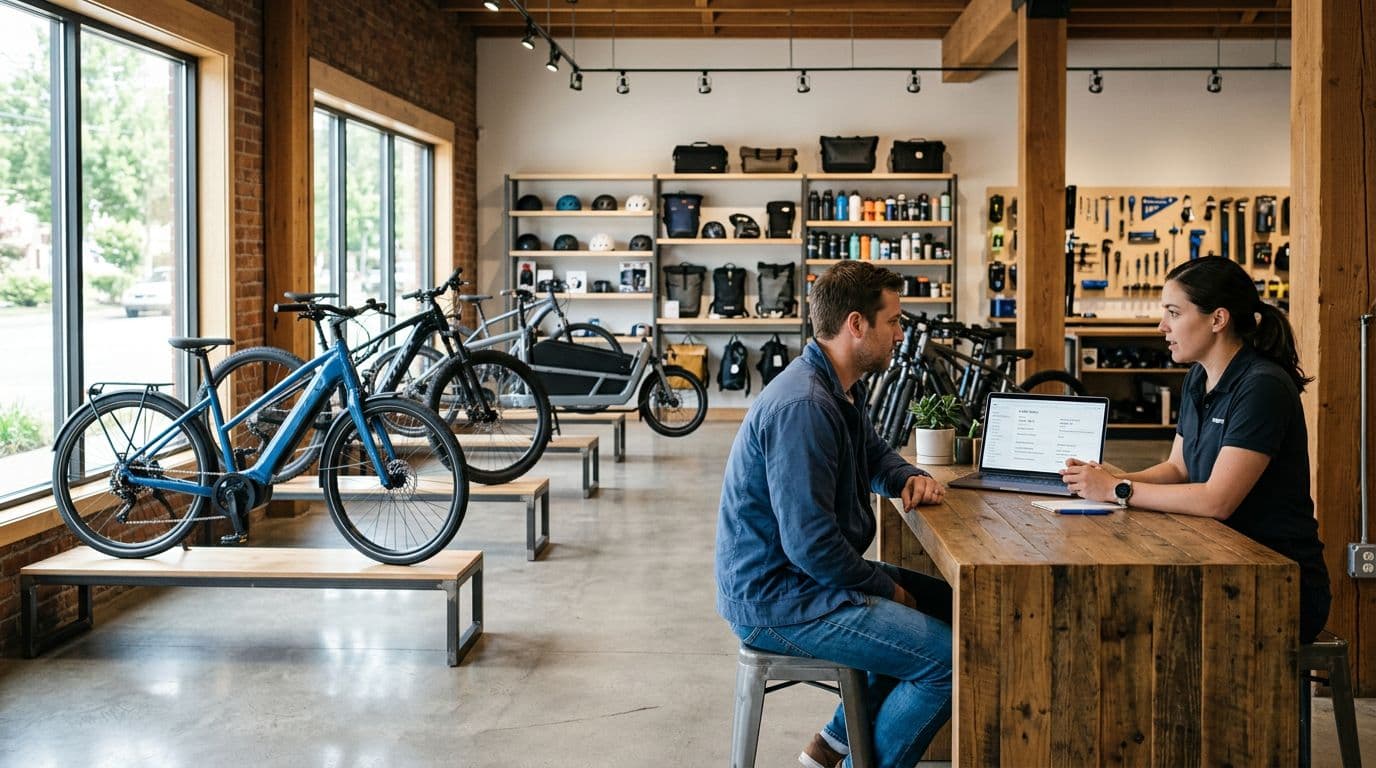
If you run a local bike shop, service center, or small dealer network, you’ve probably felt the shift. Customers still want a good bike, but they also want a battery, a charger, an app, and a clear plan for service.
Aventon B2B is Aventon’s business dealer program for retailers, not a consumer rewards plan. It’s the structure behind becoming an authorized shop that can order inventory, sell in-store, support test rides, and handle service expectations.
This guide explains how the partnership works in practice, what tools and support matter day to day, and how to decide if it fits your floor and your service bench. It also covers the 2025 to 2026 update many shops ask about: the Re-Frame trade-in program rolling out through Signature Dealers, plus newer models that add connected features your staff will need to explain.
What Aventon B2B is and what you get as a dealer
At a technical level, Aventon B2B is a channel program. Aventon sells through authorized retail partners and supports them with ordering, dealer communications, and service workflows. From the customer’s side, that shows up as test rides, sizing help, assembly confidence, and a place to go when the bike needs attention.
Shops usually see a few labels in Aventon’s ecosystem:
- Authorized dealer: a shop approved to sell Aventon e-bikes and order through dealer channels.
- Signature Dealer: a higher tier of partner shops (also where Re-Frame trade-ins are being rolled out, based on current public announcements).
- B2B portal: the dealer ordering and account environment used for inventory and accessories.
- Dealer support: the human side, meaning a sales specialist or team that helps with account setup, ordering, and common dealer questions.
Vendor names aside, the practical outcome is simple: the shop becomes the “hands” and “face” of the brand locally. That matters because e-bikes create more pre-sale questions and more post-sale service than a standard analog bike. When a rider asks about range, controller behavior, brake pad wear, or firmware and app setup, the shop needs answers that are consistent and repeatable.
A good e-bike dealer program doesn’t just move boxes. It reduces uncertainty at the counter and rework at the service stand.
How the dealer setup works, from approval to ordering
Most shops experience the dealer setup in a predictable sequence: apply, get reviewed, then get access to ordering tools.
Aventon provides a public entry point for dealer inquiries. From there, a B2B specialist typically follows up within a few business days (Aventon has stated a 1 to 3 business day contact window for new dealer requests). You’ll confirm business details, talk through your market, and align on what you plan to stock first.
If you want the most direct starting point, use Aventon’s dealer signup page to initiate the process.
Two details trip people up:
First, wholesale pricing is not public. You should expect pricing, terms, and order minimums to be shared after approval. Second, the “right” opening order is rarely about what looks popular online. Instead, it’s about your zip code, your service capacity, and your willingness to support test rides.
After approval, ordering typically runs through the B2B portal. In practice, that means your buyer has a consistent source for bike SKUs, parts and accessory add-ons, and order status. It also gives the shop a single place to track what’s on the way, which helps with delivery promises and scheduling assemblies.
Support that helps you sell more than just the bike
The support that matters to a shop is rarely flashy. It’s operational.
Dealers tend to care about training, sales assets, product updates, and a warranty and parts process that doesn’t burn service time. When those pieces work, the shop can focus on the real profit centers: accessories, fitting, scheduled maintenance, and repeat customers.
Aventon frames its retail program as a partnership, and its partner information page gives the high-level view of how the brand positions dealer support.
Here’s how that support often turns into real outcomes:
Fewer pre-sale stalls because staff can answer the same battery and range questions consistently. Cleaner deliveries because the shop standardizes setup and handoff, including app pairing when applicable. More add-on sales because the bike purchase naturally triggers needs like a lock, a rack, a helmet that fits with a ponytail, or a tune-up interval.
In other words, a dealer program works best when it behaves like a spec sheet and a checklist, not like a slogan.
Products and selling points shops should understand before they stock Aventon
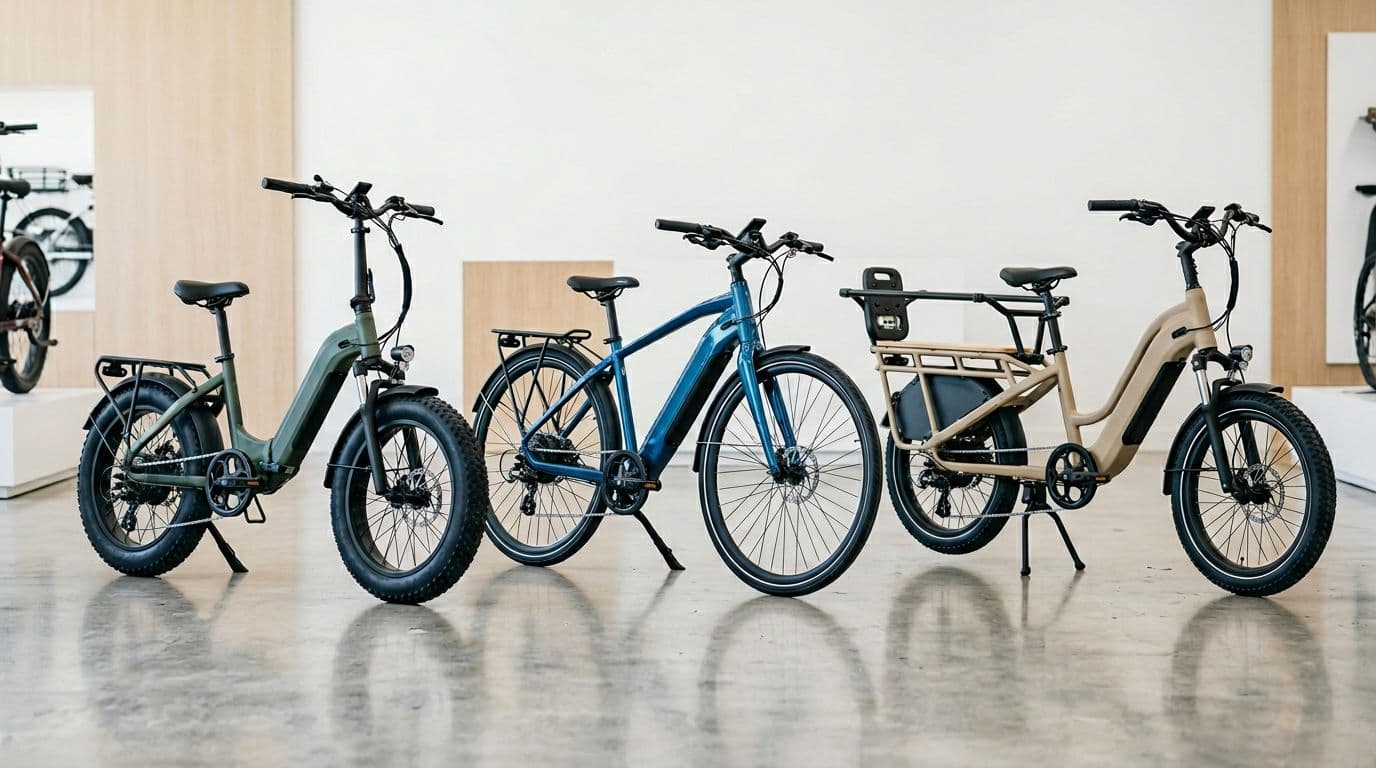 Three common e-bike categories displayed side by side.
Stocking e-bikes is like stocking shoes. If you only carry one shape, you’ll miss half the foot traffic. Aventon’s current lineup tends to map into three retail-friendly categories, each with a different buyer intent.
Commuter and city bikes move because customers can picture weekday use quickly. They ask about comfort, rack and fender options, and predictable handling at 15 to 20 mph. This is where “I want to ride to work and not arrive sweaty” becomes a sale.
Adventure and fat-tire bikes move because they feel like capability. Even riders who stay on pavement like the stable stance, wider tires, and upright control. In-store, that category sells well when staff can explain tire pressure ranges, how weight affects range, and what “off-road” really means for warranty and wear.
Cargo and utility bikes sell when the shopper has a job to do, for example school pickup, errands, or deliveries. These customers care about racks, child seat compatibility, and braking feel under load. They also ask about storage, because a cargo bike that can’t fit in a garage becomes a return risk.
For shoppers, model names change every year. For a shop, the category logic stays steady. Public information in March 2026 still points to popular lines in these buckets, including Level 3 (commuter), Aventure 3 (adventure), and Abound (cargo). Your actual mix should match your city and your service capacity.
Connected features add a new layer. On newer e-bikes, customers often expect app-based controls and theft-related tools. That shifts the sales pitch from “motor and battery” to “motor, battery, and setup,” which means training matters.
Which Aventon models match common customer needs
In-store conversion improves when your staff can translate a customer story into a category match in under two minutes.
Commuters usually want reliability and comfort first. They ask about step-through frames, saddle comfort, and whether the bike feels stable at speed. For these shoppers, keep a few sizes on hand, plus the accessories that solve the same commute problem (fenders, a bright front light, and a lock that’s hard to cut).
Adventure riders talk about range, surfaces, and how the bike behaves on loose gravel. They’ll squeeze tires, ask about suspension travel, and request a test ride that includes a curb cut or rough patch. Because that category invites “bigger is better” thinking, staff should anchor the conversation in basics like tire pressure, rider weight, and expected terrain.
Families and delivery riders buy cargo bikes for function. They’ll ask about rack ratings, kid seat fit, and how the bike starts under load. In this segment, selling the bike without the right add-ons is like selling a pickup without tie-downs. Stock the practical items, then sell them as safety and convenience, not upgrades.
A simple stocking method works well: start with what your market requests most, then add one “adjacent” bike for cross-shopping. If your city leans commuter, bring one adventure model as an alternative. If your area loves trail riding, keep one commuter for partners who want a calmer ride.
Talking about connected tech without confusing customers
Connected features can help close a sale, but only if the explanation stays grounded.
When a customer hears “smart,” they often imagine a phone that controls everything. In reality, e-bike connected features typically fall into a few buckets: app-based setup and tuning, ride data, and location or theft-related features on some models. Your staff should present them as tools, not promises.
Keep the explanation short and accurate:
- The app usually handles pairing, settings, and ride history.
- GPS features (when included) can help with location awareness, but they don’t replace a strong lock and good storage habits.
- Theft protection features vary, so staff should describe what the bike can do and what it can’t.
A tight staff checklist prevents awkward pickup-day surprises:
- Pair the bike with the customer’s phone (or confirm they don’t want pairing).
- Confirm the customer can unlock their app account at the counter.
- Show PAS changes during a short test ride loop.
- Review charging, storage temperature, and basic battery care.
- Document the handoff steps in your POS notes.
Treat app setup like a derailleur adjustment. It’s part of delivery quality, not an extra favor.
Aventon Re-Frame trade-ins, what changes for your shop
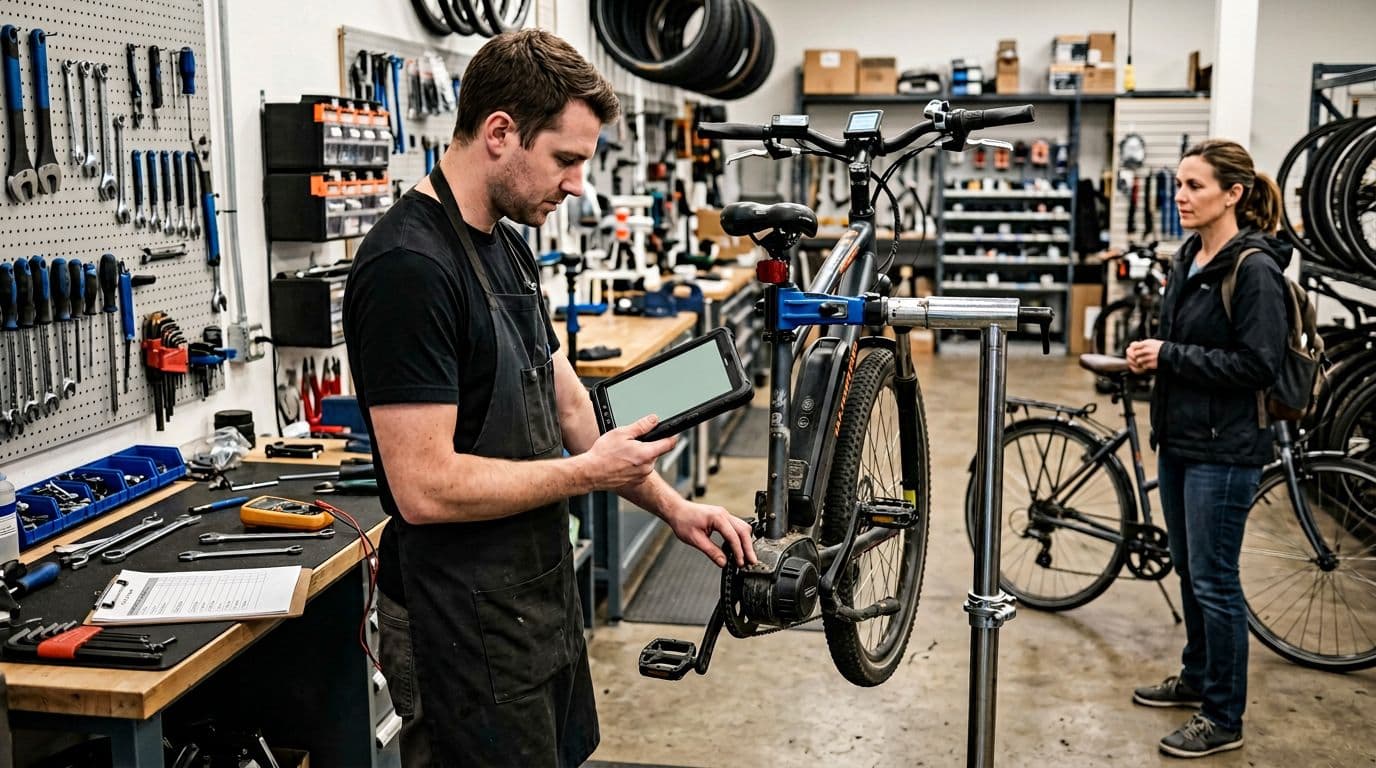 An e-bike trade-in check at a service counter.
Trade-ins can be a mess. A used e-bike can arrive with unknown miles, tired cells, missing keys, and a charger that “worked last year.” That uncertainty creates labor you can’t bill, plus liability you don’t want.
Re-Frame changes the trade-in conversation by putting a structured partner behind it. As of March 2026, public announcements describe Aventon Re-Frame as a trade-in program powered by Upway, rolled out across a set of Aventon Signature Dealers. The launch details were covered by industry press, including Bicycle Retailer’s report on the Re-Frame rollout.
From a shop perspective, the key point is not the headline number. It’s the workflow: you can convert a “maybe later” shopper into a buyer by turning their old e-bike into a concrete credit number, without the shop becoming a used-bike refurbisher.
That matters because e-bike buyers often hesitate for one reason: they already own a bike they can’t easily sell. When the shop can offer a predictable path, the purchase becomes simpler.
Still, it helps to set expectations. Re-Frame doesn’t eliminate trade-in effort. You still need a quick intake check, time at the counter, and staff who can explain the process clearly. The upside is that the used-bike resale and refurb side lives with the program partner, not your back room.
How the Re-Frame process works, step by step
At a high level, Re-Frame looks like a clean chain of custody.
The customer brings in an eligible e-bike. The shop uses an instant value tool to generate a trade-in value, then the customer applies that credit toward a new Aventon purchase. Upway purchases the used bike and handles refurbishing and resale, based on the program description in public releases.
For a source straight from the launch announcements, see the PRNewswire release on the Re-Frame trade-in program, which also references the rollout across Signature Dealers.
The practical benefit is important: the shop doesn’t have to price, recondition, and market a used e-bike. You avoid tying up floor space with a bike that might come back with battery complaints.
If you’ve ever watched a used e-bike sit like a half-finished puzzle, you know why that matters.
How to make trade-ins profitable without adding chaos
Trade-ins drive traffic, but traffic alone doesn’t pay rent. The profit comes from controlling labor time and using the trade-in moment to attach the right services.
A few operational habits keep Re-Frame style trade-ins from wrecking your day:
Set intake rules. Decide what you will and won’t evaluate during peak hours. Train one or two staff members as the “trade-in owners,” so the process stays consistent. Block time for trade-in checks, because a valuation conversation at 5:30 pm can spill into close.
Also, script the explanation. Customers don’t need the full program mechanics. They need three answers: the estimated value, what it applies to, and what happens to the old bike.
Once the customer commits to the new bike, keep add-ons helpful and tied to the trade-in story. A rider upgrading because their old bike felt unsafe will usually accept a better lock. A family buying a cargo bike after trading in a commuter often needs a child seat, a second charger, or a service plan that includes early brake checks.
In short, trade-ins work when they behave like a controlled intake system, not a free-for-all.
Conclusion: deciding if Aventon B2B fits your shop in 2026
Aventon B2B makes sense when your shop can support the full e-bike loop: test rides, clear delivery setup, and reliable service follow-through. In 2026, the decision also includes whether your staff can explain connected features without overpromising. For Signature Dealers, Re-Frame adds a structured trade-in path that can pull hesitant buyers into the store.
Before you commit, run a quick internal check: do you have real local demand, enough floor space, a plan for service scheduling, and a team that’s comfortable with app setup at pickup? If the answers are mostly yes, Aventon B2B is worth a closer look. Next, review your market, choose a starting category mix, then contact Aventon’s dealer team to confirm the terms that match your goals.