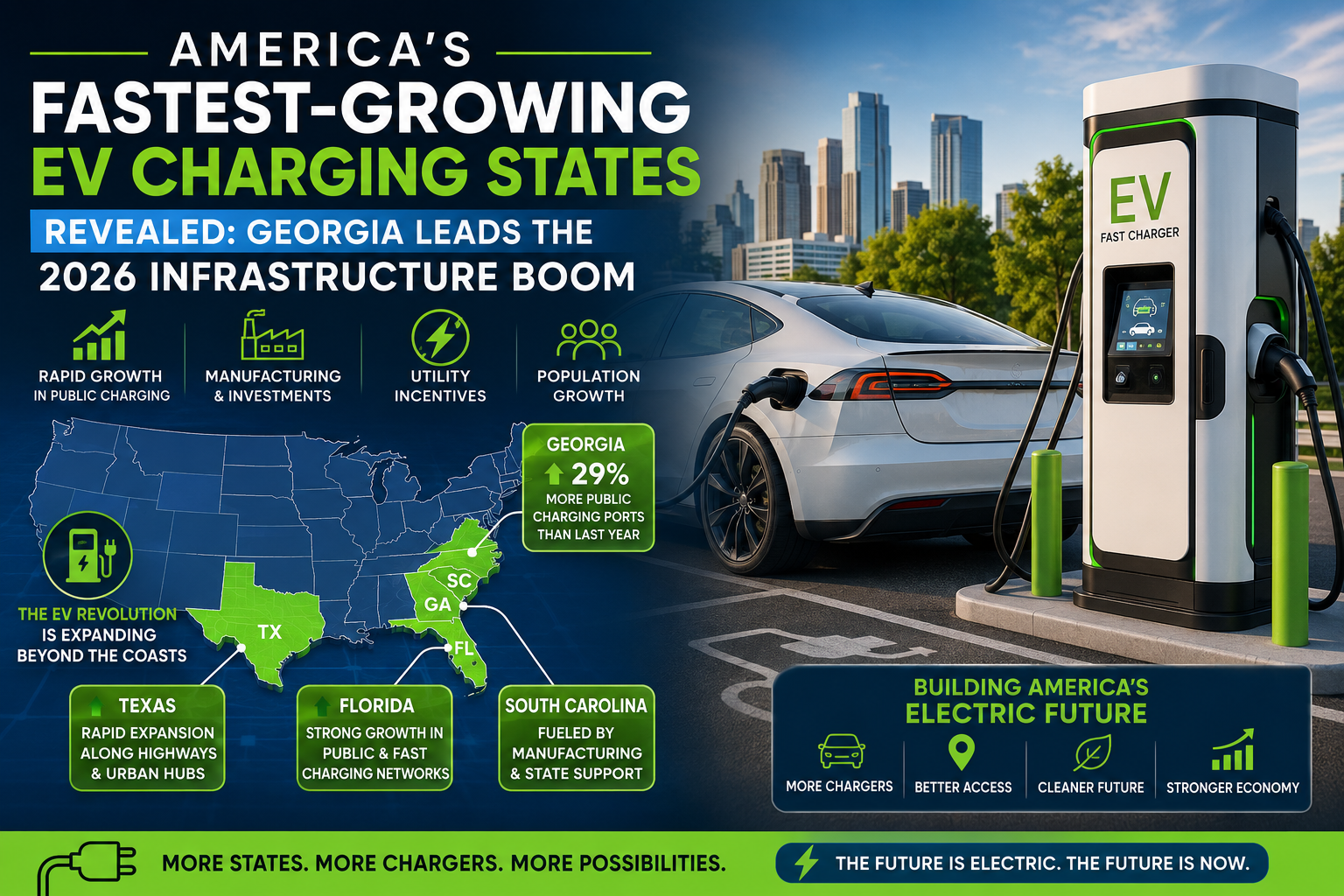
The electric vehicle (EV) revolution in the United States is entering a new phase. For years, states like California and New York dominated EV charging infrastructure, but the latest data reveals a significant shift. Georgia has emerged as America’s fastest-growing EV charging market, with Texas, Florida, and South Carolina also recording impressive gains.
This trend signals that EV adoption is no longer limited to traditional coastal markets. Instead, the next wave of charging infrastructure is rapidly expanding across the Southeast and Sun Belt, creating new opportunities for drivers, businesses, utilities, and investors.
Georgia Emerges as the EV Charging Growth Leader
Recent industry data shows that Georgia increased its public EV charging ports by approximately 29% compared to the same period last year, making it one of the fastest-growing charging markets in the United States.
The expansion is being fueled by several factors:
- Growing electric vehicle ownership
- New manufacturing investments
- State and utility incentive programs
- Expanding urban and suburban populations
- Increased private investment in charging networks
Georgia’s strategic location and strong industrial base have also made it an attractive destination for EV manufacturers and battery suppliers, accelerating the need for reliable charging infrastructure.
Texas, Florida, and South Carolina Are Close Behind
Georgia isn’t growing alone. Other southern states are also investing heavily in public charging networks.
Texas
Texas continues to strengthen its EV ecosystem with fast-charging stations along major highways and urban corridors. The state’s booming population and expanding clean energy sector are driving increased demand for charging infrastructure.
Florida
Florida’s combination of tourism, population growth, and rising EV adoption has created strong demand for accessible charging stations. Utilities and private operators are rapidly expanding both Level 2 and DC fast chargers across the state.
South Carolina
South Carolina is benefiting from growing automotive manufacturing investments and state-supported infrastructure programs. Public charging availability continues to improve as EV ownership increases.
Why EV Charging Growth Is Moving Beyond the Coasts
Several long-term trends are reshaping America’s charging infrastructure.
Manufacturing Expansion
The Southeast has become a major hub for EV and battery production. New factories create demand for charging stations that serve employees, logistics fleets, and surrounding communities.
Utility Incentives
Many electric utilities now offer financial incentives for installing public and commercial charging stations, encouraging businesses and municipalities to expand charging access.
Population Growth
States like Georgia, Texas, and Florida continue to attract millions of new residents, increasing transportation demand and accelerating EV adoption.
Federal Infrastructure Investments
Federal funding programs continue supporting charging corridor development, helping states build reliable nationwide charging networks.
What This Means for EV Drivers
The rapid expansion of charging infrastructure offers several benefits:
- Reduced range anxiety
- Faster road-trip charging
- Improved charger availability
- Better coverage in suburban and rural communities
- Increased competition leading to better charging services
Drivers can expect more convenient charging locations at shopping centers, workplaces, hotels, restaurants, and highway rest stops.
Opportunities for Businesses
Businesses also stand to benefit from the charging boom.
Commercial property owners, retailers, hotels, and fleet operators can attract more customers while generating additional revenue through EV charging services.
Installing charging stations may also improve sustainability goals and prepare businesses for the growing number of electric vehicles on American roads.
The Future of America’s EV Infrastructure
Industry experts expect public charging deployment to accelerate over the next several years as automakers introduce more affordable electric vehicles and battery technology continues to improve.
Instead of being concentrated on the West Coast, America’s charging network is becoming truly nationwide. Georgia’s rapid expansion demonstrates that emerging markets are playing a central role in building the country’s next-generation transportation infrastructure.
As investment continues across Texas, Florida, South Carolina, and other fast-growing states, EV drivers will gain access to a more reliable, convenient, and connected charging experience.
Conclusion
The latest infrastructure data confirms that America’s EV charging boom is expanding well beyond traditional coastal markets. Georgia now leads the nation in charging growth, while Texas, Florida, and South Carolina continue to strengthen their charging networks through manufacturing investments, utility incentives, and rising EV demand.
For consumers, businesses, and investors, these developments highlight a major shift in the U.S. electric mobility landscape. The future of EV charging is becoming broader, faster, and more accessible than ever before.