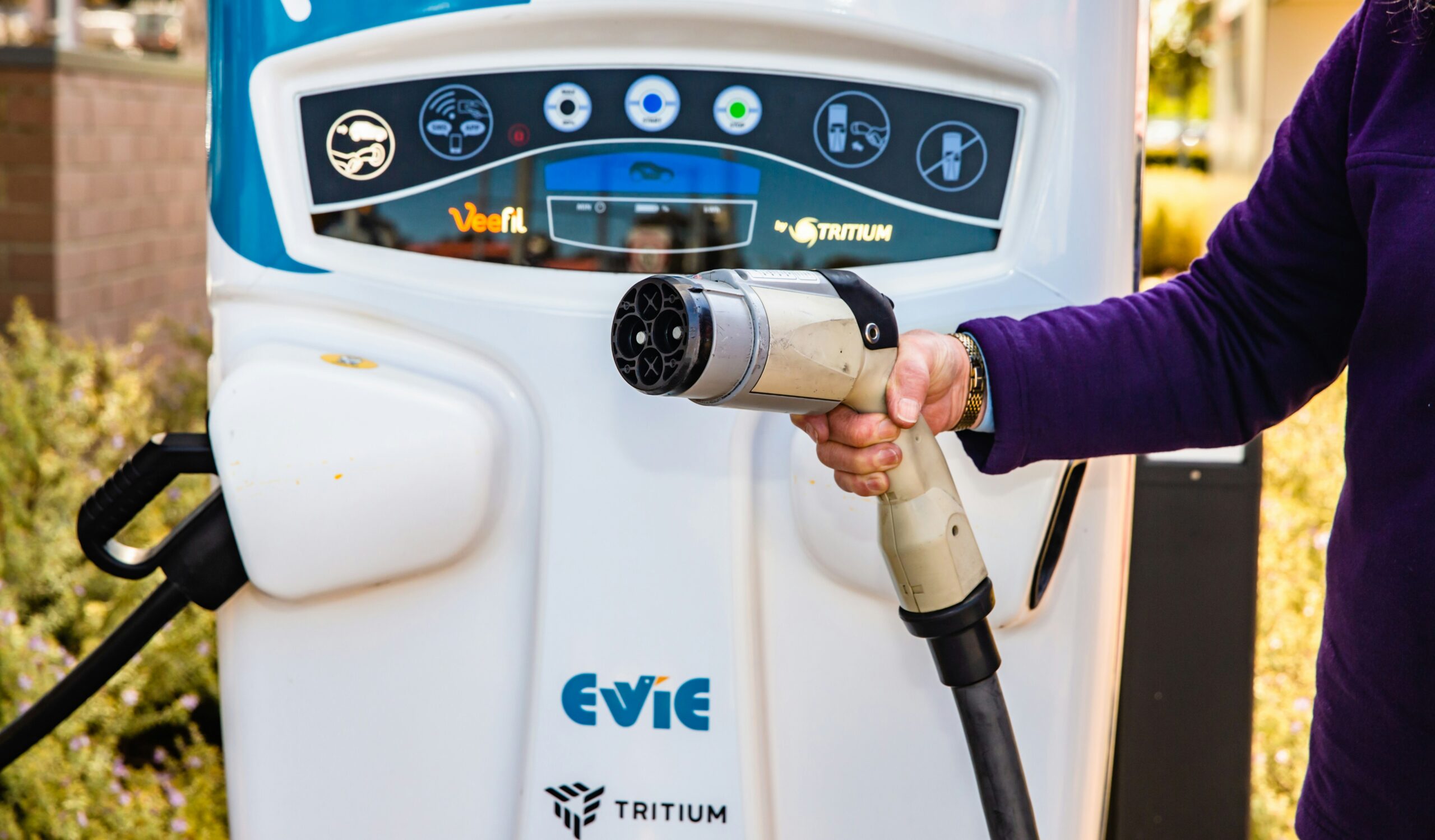
At one charging station in China, “slow” meant 80% in 6 to 8 minutes. Right beside it, a NIO swap bay promised a full battery change in 3 minutes, and delivered something close.
For anyone used to longer charging stops in the US, that gap feels huge. The visit showed more than fast hardware, too. It showed how speed changes the whole mood of a station, from pricing to traffic flow to whether anyone even bothers to buy a coffee.
The pace at China’s biggest EV charging stations
The visit centered on a 600 kW DC fast-charging site, described as one of the fastest public setups in China. For comparison, the presenter said Tesla’s 500 kW chargers had only appeared in a very small number of California locations. At this Chinese station, compatible cars from brands like Xpeng, Xiaomi, and other local makers were said to reach 80% in about 6 to 8 minutes, with a full charge taking roughly 20 minutes.
That kind of speed changes driver behavior. Cars pulled in, charged, and left before anyone needed a bathroom break or a snack. The station reportedly had room for around 20 to 30 vehicles, yet it still felt open because turnover was so fast.
A few of the numbers shown on site stood out:
| Setup | Time shown or described | Cost mentioned |
|---|---|---|
| 600 kW fast charger | 80% in 6 to 8 minutes on compatible cars | 20 to 50 yuan, depending on vehicle |
| NIO battery swap | Marketed at 3 minutes, observed closer to 3.5 to 4 minutes | 100 yuan |
| Older BYD taxi | About 20 to 30 minutes | Not stated |
| Electric bus | 50% in 20 minutes, full in about 1 hour | Not stated |
One on-screen charging session showed 82% for 5 yuan, which is far below the broader 20 to 50 yuan range mentioned for most fast charging. Even if that was an outlier, the station still looked cheap by US standards.
For a wider look at how charging and swapping fit into public infrastructure, this public EV charging network guide gives useful context.
Inside NIO’s battery swap, and why 3 minutes is close enough
The most eye-catching part of the visit was the NIO swap station, which the presenter linked to CATL-backed battery technology. The process looked almost surgical. The car rolled in, the pack dropped out from underneath, a fresh battery came up, the system scanned it, locked it in, and sent the car back out.
At this station, “fast” didn’t mean plugging in. It meant leaving with a different battery a few minutes later.
The video claimed 3 minutes, but the first observed swap took about 4 minutes. A second one finished in about 3.5 minutes. That still feels startlingly quick, especially when the cost was around 100 yuan, or roughly $15, for a full replacement with a healthy battery pack.
Another detail made the stop feel even more futuristic. The NIO drove itself into the swap bay. The owner scanned a QR code, tapped through the process, and let the visitors sit inside during the swap. Inside the car, the cabin looked premium, with soft materials and NIO’s in-car assistant, NOMI, on the dash. The vehicle was described at around 500,000 RMB, which is roughly $70,000.
NIO outlines its charging and swap ecosystem on NIO Power, and that broader network helps explain why the company treats battery swapping as a core part of ownership, not a side feature.
Where the experience still trails Tesla
The station wasn’t perfect, and that made the comparison more useful. The waiting area looked functional, not polished. There were seats, a self-checkout snack area, bottled drinks, jerky, and instant noodles, but no fresh food in sight.
In that sense, some US Tesla charging stops still feel better. A well-placed Tesla site near restaurants or coffee shops can be more pleasant if you’re parked for a while. Here, though, the trade-off is obvious. When many cars are done in under 10 minutes, the lounge matters less.
The video also showed that not every vehicle gets the headline treatment. An older BYD taxi was expected to take 20 to 30 minutes, and a bus needed about an hour for a full charge. So the fastest numbers belong to the newest, best-matched vehicles. Still, recent reporting on NIO’s battery swap network in China points to the scale behind the idea, with most of the company’s stations concentrated there.
Final thoughts
The strongest image from this visit wasn’t a spec sheet. It was a car guiding itself into a bay, disappearing for a few minutes, and rolling back out ready to drive.
For US readers, the gap is hard to ignore. China’s mix of 600 kW fast charging and near-instant battery swap makes charging feel less like waiting and more like refueling.