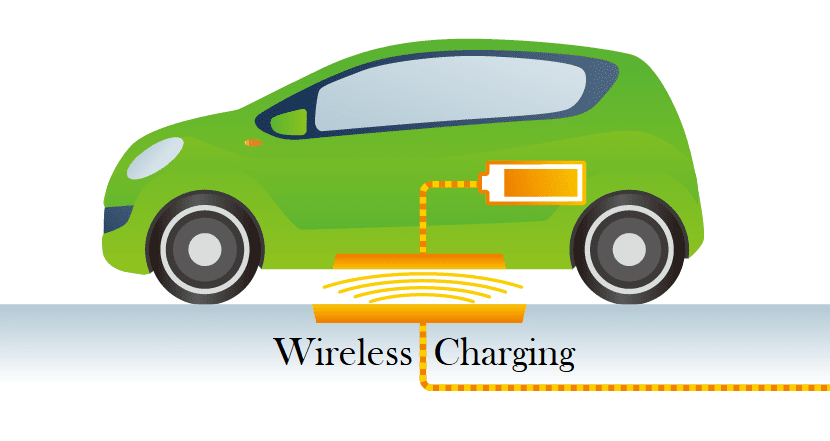
Plugging in is simple until it isn’t. Rain, грязy cables, blocked chargers, worn connectors, and rushed drivers all add friction. Wireless EV charging companies are trying to remove that friction with a straightforward idea: put a power pad in the ground, add a receiver pad on the vehicle, then charge through the air gap.
People search for wireless charging because it saves time and reduces hassle. It also helps drivers who can’t easily handle heavy cables. Fleets care for a different reason; automation reduces labor and keeps vehicles moving.
This guide explains how wireless charging works, which types of companies lead in 2026, how to compare vendors, and what to watch over the next year.
How wireless EV charging works (and what has to be installed)
Wireless EV charging for cars is usually inductive charging. In simple terms, a ground pad creates a magnetic field. A receiver pad on the vehicle picks up that energy and turns it back into electricity for the battery. Think of it like a transformer split into two halves, with a small air gap between them.
Most systems include four core building blocks:
- Ground assembly (pad): Mounted on or in the pavement, garage floor, or a parking slab.
- Vehicle receiver: Attached under the vehicle (factory-fit, dealer-fit, or aftermarket, depending on the program).
- Power electronics: Converts AC from the building into the high-frequency power used by the pad, then manages output.
- Controls and software: Handles alignment checks, safety interlocks, billing or fleet rules, and session reporting.
Alignment matters because the pads need to “see” each other. Some products use guidance aids, such as parking marks, phone prompts, or vehicle-side assistance. Others add magnetic alignment features or sensing to widen the sweet spot. In practice, a few centimeters can change delivered power and efficiency.
Power levels vary by use case. Home and passenger-car pilots often sit in the low-to-mid kilowatt range. Fleet and bus systems can go much higher, because they’re designed for short, frequent stops. The install also ranges from simple surface mounting to full civil work, including trenching, conduit, and bollards.
Static vs dynamic wireless charging, parked charging compared to charging while driving
Static wireless charging happens while parked. That includes garages, apartment bays, taxi stands, bus stops, and depot lanes. It’s the most common approach today because it limits construction scope and keeps maintenance manageable.
Dynamic wireless charging places coils in the road so vehicles charge while moving or while creeping in traffic. This sounds ideal, but it’s harder to deploy. Roads require permits, lane closures, drainage planning, resurfacing coordination, and long-term access for repairs.
Static systems usually win on near-term practicality:
- Lower site risk because you control the parking spot.
- Easier metering and network connectivity.
- Faster to pilot, then scale bay by bay.
Dynamic systems target a different payoff. They can shrink battery size needs on fixed routes. They can also smooth charging demand because energy comes in smaller chunks over time. Still, most real projects remain city-led pilots, not mass rollouts.
Standards and safety basics buyers should recognize
Wireless charging only feels “plug-free” if it’s also predictable and safe. Buyers should look for systems aligned with relevant standards work, especially SAE J2954 (light-duty wireless power transfer). For global programs, you’ll also hear references to IEC and ISO work in this area. Standards matter because fleets and property owners don’t want single-vendor lock-in.
Safety features should be easy to explain and easy to verify:
- Foreign object detection (FOD): The system should stop or reduce power if metal objects heat up.
- Living object protection: It should detect and respond if a pet or person enters the field zone.
- EMI controls: Vendors should document electromagnetic compatibility and site constraints.
- Fail-safe shutdown: If alignment fails, temperatures rise, or comms drop, charging should ramp down safely.
A practical rule: if a vendor can’t show test methods and logs for safety events, don’t treat it as production-ready.
The wireless EV charging companies leading the market in 2026
The market in 2026 splits into three buckets: passenger and home programs, fleet and transit specialists, and road-embedded innovators. Some firms build full systems, while others supply core IP, reference designs, or alignment tech that partners integrate.
Because vehicle compatibility still drives most decisions, many companies focus on narrow segments first. That’s normal for infrastructure. The winning vendors tend to do three things well: deliver stable power under messy parking behavior, keep downtime low, and support real service operations.
Passenger-car and home-focused players to know
Home wireless charging sells the dream of “park and walk away.” The problem is that the vehicle needs a receiver, and the site needs a clean install path.
WiTricity is best known as a technology and licensing player. It has shaped wireless charging architectures and has influenced how interoperability efforts form. If you’re evaluating an automaker-aligned wireless option, WiTricity-style licensing models often sit behind the scenes.
HEVO focuses on infrastructure-style systems that fit parking environments, including pilots in dense cities. For buyers, the key differentiator is often how the system handles alignment and how it integrates with access control, payments, and utilization reporting.
Plugless Power (Evatran) is associated with aftermarket-style wireless charging kits and consumer-facing installs. The main appeal is a clearer path for existing vehicles, although availability depends on vehicle models and current product offerings.
Before a homeowner commits, ask a few blunt questions. Will the receiver fit your vehicle ground clearance? Can your electrical panel support the circuit? Does the pad have an outdoor rating if your “garage” is really a carport? Also confirm how the system behaves when you park slightly off-center, because real life rarely hits perfect alignment.
Fleet, taxi, and bus specialists (where wireless charging pays off faster)
Wireless charging often makes more sense for fleets than for single-family homes. Fleets have repeatable parking, trained drivers, and predictable dwell time. They also feel connector wear sooner, because plug cycles stack up fast.
InductEV (high-power inductive charging) is commonly linked with bus and heavy-vehicle use cases. These systems target short stops and high uptime. Buyers usually evaluate not just peak kilowatts, but also how quickly the charger starts, how it handles heat, and how it survives rough environments.
WAVE Charging is another name tied to transit and commercial wireless charging. The pitch for transit agencies is simple: opportunity charging at route endpoints can reduce battery size needs or extend daily range without long depot sessions.
ENRX (known in industrial power transfer) also plays in wireless charging and related inductive power systems. For fleet buyers, industrial-grade service practices can matter as much as hardware specs.
Depot charging and opportunity charging solve different problems. Depot setups favor longer sessions and easier construction. Opportunity charging favors quick bursts at predictable stops, but it raises demands on pad durability and site power. Either way, serious vendors offer scheduling hooks, session telemetry, and service plans that match fleet uptime targets.
Road-embedded and dynamic charging innovators (early-stage but important)
Dynamic charging is the “charge while driving” idea that keeps making headlines. It’s also the hardest type to scale. Roadworks are expensive, and once coils sit under asphalt, maintenance becomes a long game.
Electreon is one of the best-known companies focused on road-embedded wireless charging. Its work has been tied to public pilots in multiple regions, typically on short road segments or controlled routes such as bus corridors. The main differentiator is system integration across civil construction, power electronics, and vehicle-side receiver kits.
A few other groups, including suppliers and infrastructure contractors, also test in-road concepts. However, many efforts remain pilot-scale because standardization and cost models are still forming.
If you’re reading news about dynamic projects, look past ribbon cuttings. Instead, look for numbers: delivered energy under real traffic, uptime through winter, measured efficiency over a range of speeds, and the full construction cost per mile. A 100-meter demo can prove physics, but it doesn’t prove operations.
How to compare wireless EV charging companies before you buy or partner
Comparing vendors gets easier when you separate the shiny demo from the real constraints: vehicles, sites, utility power, and uptime. Start with a site survey, then work backward to a charging target. For fleets, that target should match route energy, dwell time, and backup plans.
Here’s a quick way to frame the decision points by buyer type.
| Buyer type | Top goal | Non-negotiable checks | Common deal-breaker |
|---|---|---|---|
| Homeowner | Convenience | Receiver fit, electrical capacity, alignment tolerance | No supported receiver for your vehicle |
| Property manager | Utilization and low damage | Rugged pad, clear billing, service response | Civil work cost or permitting limits |
| Fleet operator | Uptime and automation | Session success rate, monitoring, maintenance plan | Charger downtime and slow repairs |
| City or transit | Reliability at scale | Safety certification path, winter performance, open reporting | Construction scope and long-term access |
The takeaway: the “best” system changes with who owns the pavement and who pays for downtime.
Compatibility questions that prevent expensive surprises
Compatibility isn’t just “will it charge.” It’s also “will it keep charging when the fleet changes.” Lock down these points early:
Vehicle coverage: Which exact models work today, and what’s the path for next year’s vehicles? For fleets, confirm model-year and trim constraints.
Receiver availability: Is the receiver factory-fit, dealer-fit, or aftermarket? Also ask about lead times and replacement parts.
Interoperability: Will the receiver work across pads from other vendors, or only within one ecosystem? Even if you accept single-vendor today, you’ll want options later.
Performance expectations: Ask for delivered power at realistic misalignment, not perfect alignment. Request efficiency numbers across common parking behavior.
Parking geometry: Curbs, wheel stops, slope, and snow buildup change everything. A site walk-through often reveals issues drawings miss.
Cost, efficiency, and upkeep, what you pay beyond the pad price
Wireless charging cost is rarely just “pad plus install.” Total cost of ownership usually breaks into a few buckets: equipment, civil work, electrical upgrades, commissioning, software fees, and ongoing maintenance.
Civil work often dominates early projects. Cutting concrete, adding drainage protection, running conduit, and restoring surfaces add time and risk. In public settings, you may also pay for traffic control and inspections.
Efficiency also matters because inductive transfer adds losses compared to a direct cable. The best vendors work hard to narrow that gap through coil design, alignment aids, and smart control. Still, ask for measured efficiency at the site, not just lab numbers. If alignment drifts, wasted energy shows up as heat, time, and utility cost.
Maintenance looks different too. Pads can survive many sessions with low wear, which is a plus. On the other hand, if a pad fails under pavement, repairs can get disruptive. Therefore, insist on clear service SLAs, spare parts strategy, and remote diagnostics.
Real-world proof points, what to ask for in demos and proposals
A demo should answer operational questions, not just “does it light up.” Ask vendors to provide evidence in a form your team can audit:
- Delivered kW and kWh at different alignments
- Session success rate over weeks, not hours
- Performance in rain, heat, and cold
- Foreign object detection events and how the system reacted
- Remote monitoring views, alerts, and data export
- Service response times and parts availability
- References from sites that match your use case
Pilots work best when they stay small but measurable. Start with one or two bays, then run it until the data stabilizes. After that, expand in the same lot before you copy the design elsewhere.
What’s next for wireless EV charging, trends to watch through 2026 and beyond
Wireless charging is improving because the incentives are clear. Drivers want less hassle, fleets want automation, and cities want chargers that survive curbside abuse. Still, it won’t replace plug-in charging everywhere, at least not soon.
Two forces will shape 2026 projects. First, interoperability pressure will keep rising, because buyers hate single-vendor traps. Second, operations data will matter more than peak power, since uptime drives real value.
Where adoption will grow first and why
Fleets and fixed routes should keep leading adoption. Their vehicles park in known places, at known times, with trained behavior. That makes alignment easier and utilization higher. As a result, the business case closes faster.
Next, expect growth in parking garages and managed lots. Property owners like fewer exposed cables and fewer broken connectors. Curbside charging can also benefit, especially where sidewalk clutter and vandalism create constant maintenance issues.
Autonomous parking adds another push. A robot car can’t “grab a plug” without extra hardware. A pad in the ground matches autonomy better, because the vehicle can position itself precisely.
The biggest hurdles companies still need to solve
Wireless EV charging companies still face practical blockers:
Standardization gaps: Buyers want confidence that receivers and pads won’t become dead ends.
Install complexity: Civil work remains the slowest part, especially in retrofits.
Cost per bay: Hardware costs are falling, but construction and permitting stay stubborn.
Power scaling: Higher power brings tighter thermal limits and stronger demands on alignment.
Public-site maintenance: Snowplows, puddles, road salt, and abuse test every enclosure.
User trust is the quiet hurdle. Drivers need consistent starts, clear “charging” feedback, and simple billing. If the pad works 95 percent of the time, people remember the 5 percent.
Reliability sells wireless charging, not novelty. If it doesn’t work every day, users go back to cables.
Conclusion
Wireless EV charging works through inductive pads, a vehicle receiver, and control electronics that manage safety and billing. In 2026, the strongest vendors fall into three groups: passenger and home programs, fleet and transit specialists, and dynamic road innovators. Wireless makes the most sense where parking is repeatable and uptime matters, especially fleets and fixed routes. Before you commit, focus on compatibility, total installed cost, measured efficiency, and real uptime data. Build a shortlist, confirm receiver options, request proof from similar sites, then run a small pilot before scaling.