A dead battery in a junk drawer looks harmless. In reality, the wrong battery in the wrong bin can start a fire, leak corrosive chemicals, or send valuable metals to a landfill.
When people search lowe’s recycle batteries, they usually mean one thing: “Can I bring my used batteries to Lowe’s, and will they take them?” In February 2026, many Lowe’s locations participate in in-store recycling for certain battery types, but the rules can change by store and by local regulations.
This guide keeps it simple. You’ll learn what Lowe’s typically accepts, what it usually doesn’t, and how to prep batteries so you don’t get turned away (or create a safety hazard).
What batteries Lowe’s usually takes (and what it won’t)
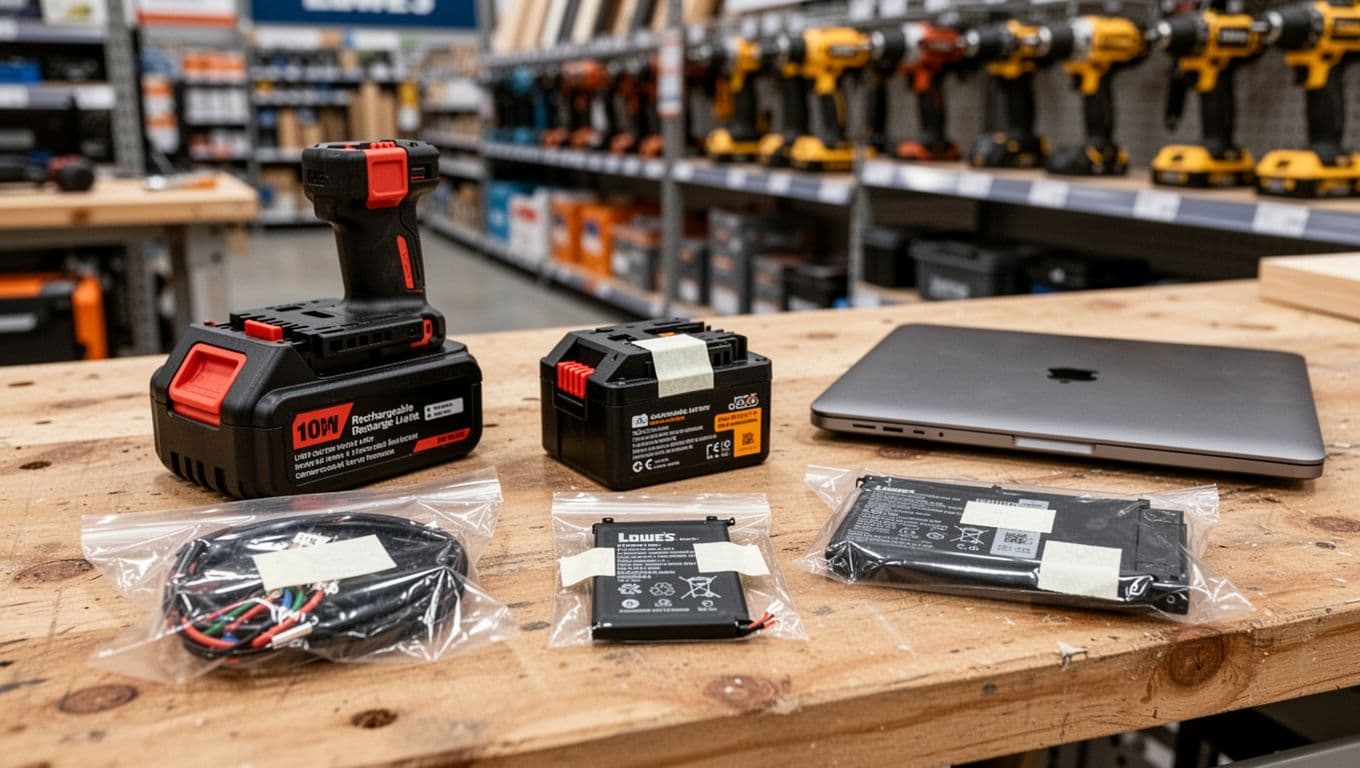
Rechargeable batteries prepped for drop-off with terminals protected, created with AI.
Most Lowe’s battery drop-offs are designed for rechargeable batteries, not every battery you own. That focus is intentional because rechargeables often contain materials that need controlled handling, and some chemistries have higher fire risk if damaged or shorted.
Store participation can also vary. One location may accept a wider set of rechargeables, while another may limit what goes in the box. If you want the most current “yes or no,” check Lowe’s battery guidance and then confirm with your local store. Lowe’s also describes general disposal options in its battery disposal guide, including why certain types require special handling.
Treat retail drop boxes like an airport security line. If your “item” isn’t on the allowed list, don’t force it through.
Accepted most often: rechargeable lithium-ion and other rechargeables
In participating stores, Lowe’s commonly accepts dry-cell rechargeable batteries, with lithium-ion (Li-ion) being the most common. These show up everywhere:
Power tool packs, cordless drills, and yard tools often use Li-ion packs. Phones, tablets, laptops, cordless vacuums, and many cameras use Li-ion cells as well. Older rechargeables may be nickel-based (you’ll see labels like NiMH or NiCd). Those are also common in rechargeable programs because they can contain metals that recyclers recover.
You can usually spot a rechargeable battery by plain-language labels such as “rechargeable,” “Li-ion,” “NiMH,” or “NiCd.” Tool batteries are almost always rechargeable packs, even when they look like a plastic brick.
For context on how retail collection is organized, see Call2Recycle’s overview of Lowe’s as a collection partner on Call2Recycle’s Lowe’s program page. That partnership helps route collected batteries to qualified processors, instead of leaving stores to manage the logistics alone.
Common surprises: alkaline AAs and AAAs, button batteries, and car batteries
The biggest surprise is alkaline household batteries, like AA, AAA, C, D, and 9V used in remotes and toys. Many retail drop boxes are not intended for these single-use cells. In some areas, local rules allow alkaline batteries in household trash, but recycling is still a better option when your city or county offers it.
Button and coin cells are another gotcha. These small batteries can short easily, and they don’t always belong in the same drop box as tool packs. Some communities collect them through different channels, including electronics recycling events.
Finally, lead-acid car batteries are in a separate category. They’re heavy, contain liquid acid, and follow different transport rules. Many auto parts retailers handle them, often tied to buying a replacement.
If you’re unsure, don’t guess. A 30-second call can prevent a wasted trip.
How to drop off batteries at Lowe’s without causing a safety problem
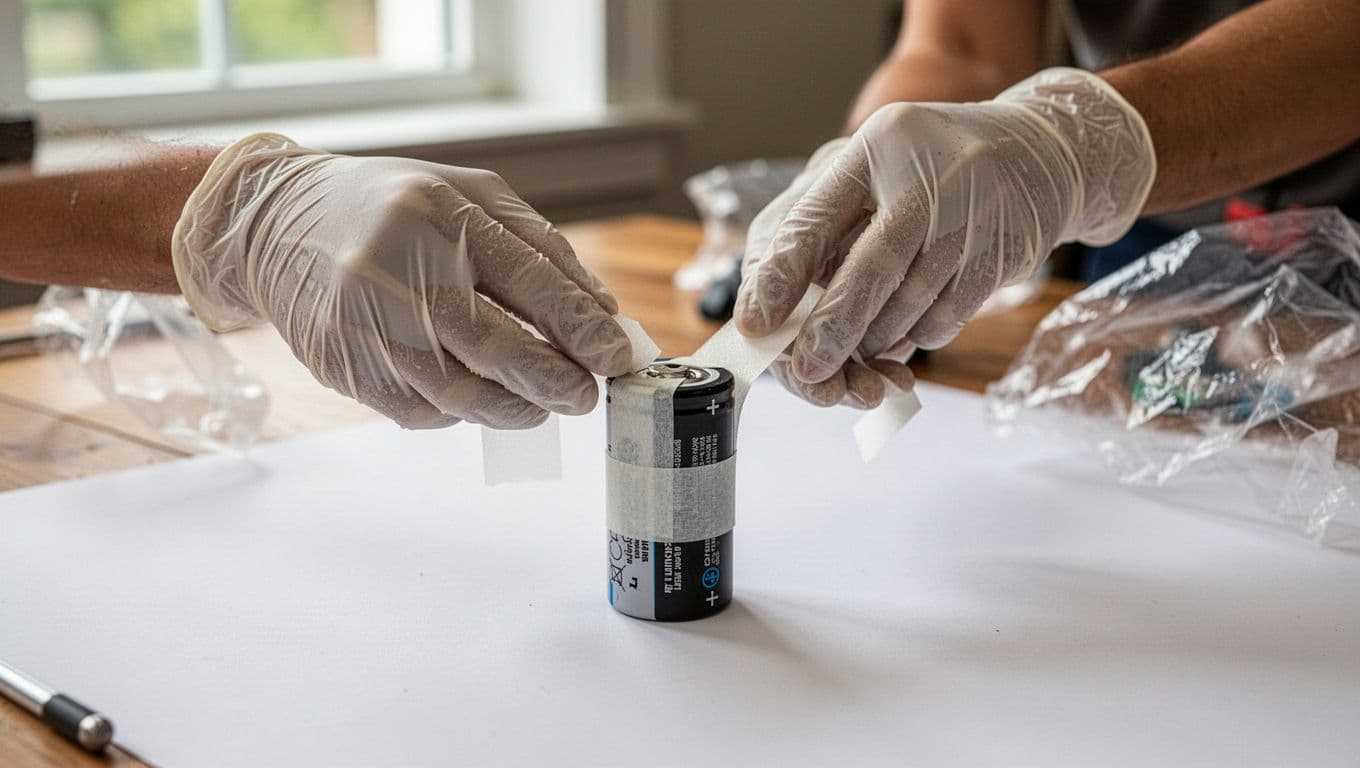 Terminals are covered to reduce short-circuit risk.
Battery recycling fails when safety fails. The main technical risk is a short circuit, when metal contacts connect the positive and negative ends. That can heat the battery fast, and in Li-ion batteries it can trigger thermal runaway.
A little prep at home lowers that risk and makes store staff more likely to accept what you bring.
Prep at home: tape the terminals, bag them, and keep damaged batteries separate
Start with a quick sort. Separate rechargeables from single-use alkalines. Then prep the rechargeables:
- Tape exposed terminals: Use non-conductive tape (electrical tape works). Cover the metal contacts so they can’t touch keys, coins, or other batteries.
- Bag batteries: Put each battery (or small sets of the same type) in a clear zip bag. This keeps terminals apart and limits movement.
- Keep damaged packs out: If a battery is swollen, leaking, punctured, or hot, don’t bring it inside a store. Put it somewhere non-flammable (like a metal container outdoors) and contact your local household hazardous waste program for instructions.
That last step matters. Damaged Li-ion batteries are the ones most likely to cause incidents during handling and transport.
Lowe’s has also shared practical recycling tips in its own updates, including how to reduce risk at drop-off. Their corporate post on easy ways to recycle rechargeable batteries adds useful context on why the program exists and how customers can participate safely.
In the store: find the drop box, ask staff if you’re unsure, then leave the rest to them
 Photo by Efrem Efre
In many stores, the battery drop box is near the entrance or customer service, but placement varies. Once you find it, don’t dump loose batteries. Drop off the bagged, taped items instead.
If you have an odd battery type, ask an employee before you deposit it. That’s also smart if you’re carrying larger tool packs, e-bike batteries, or anything that looks “non-standard.” Retail programs sometimes have size or watt-hour limits, and staff can tell you what their specific location accepts.
After drop-off, the store’s role is mostly collection. The batteries are then routed to qualified recyclers for processing. At that point, your best contribution is making sure you didn’t create a short-circuit risk in the bin.
If your local Lowe’s won’t take them, easy backup options that still work
Even with a well-known program, you might hit a dead end. A store may pause collection if the box is full, if local rules change, or if the location isn’t participating. That doesn’t mean you’re stuck with a pile of old cells.
The best backup plan depends on battery type. For Li-ion packs, prioritize programs that already handle rechargeables. For button batteries and alkalines, local government options often cover more categories.
If you’re interested in how recycling ties into the bigger battery supply chain, EV policies increasingly point to recycling capacity as a must-have. Some policy roadmaps even name recyclers and processing capacity as part of long-term planning, as discussed in Canada’s battery recycling in EV policy roadmap.
Local drop-offs and community events: recycling centers and household hazardous waste days
City and county programs are often the most flexible. Many run permanent drop-off sites, plus scheduled household hazardous waste collection days. Those events can accept items that retail bins won’t, including some single-use batteries and specialty cells.
Search your city or county waste department page for “household hazardous waste” and “batteries.” Before you go, confirm:
Accepted battery types (alkaline, button, rechargeable). Whether terminals must be taped. Quantity limits, if any.
Store and manufacturer programs: more places for rechargeables and device batteries
Electronics retailers, repair shops, and some manufacturers run take-back programs for device batteries and packs. These can be a good fit for laptop and phone batteries that you’ve removed during a repair.
Don’t put batteries in curbside recycling unless your local program clearly allows it. Curbside systems aren’t designed for battery fires, and one battery can damage an entire load.
On the EV side, recycling also affects cost and parts availability over time. For a related look at how reuse and recycling can shape battery economics, see affordable EV battery replacement via recycling.
Conclusion: a quick checklist before you go
Battery recycling works best when you treat it like handling fuel, controlled, separated, and protected. If you want lowe’s recycle batteries to be a quick errand instead of a frustrating loop, use this short checklist:
- Identify the battery type (rechargeable Li-ion or nickel-based vs alkaline vs lead-acid).
- Confirm your store participates if you’re unsure.
- Tape the terminals on rechargeable packs and loose cells.
- Bag batteries so they can’t touch each other.
- Don’t bring damaged or swollen batteries inside; use local hazardous waste guidance instead.
- Use a local recycling center or HHW day if the store won’t accept your battery type.
Pick one next step today: gather the batteries you have, prep the rechargeables, then plan a drop-off you can finish in one trip.