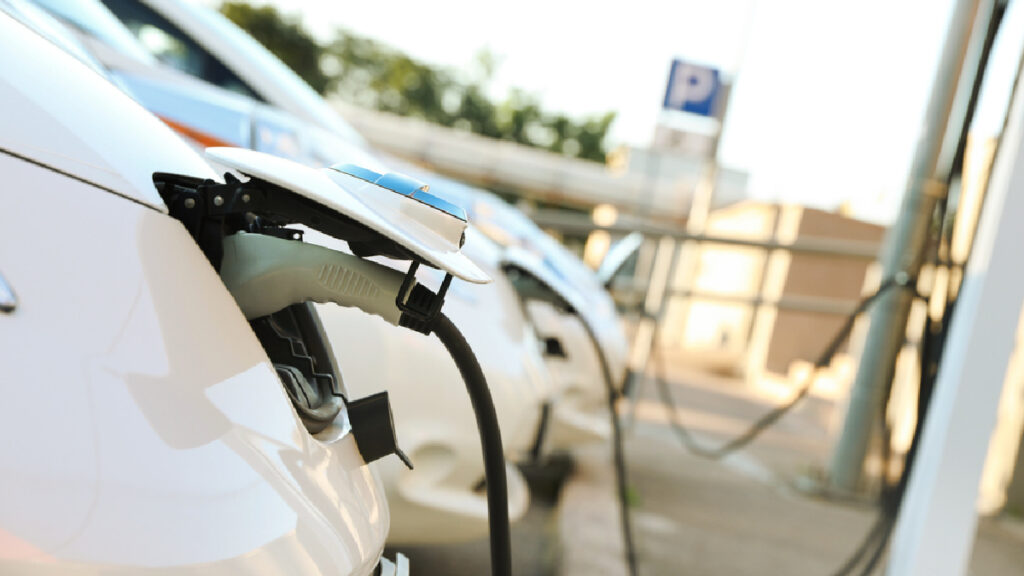
If you’re comparing a gasoline car to an EV, the cleanest way to start is also the most boring: cost per mile. Not purchase price. Not incentives. Not resale value. Just the day-to-day energy you buy, either at the pump or through a charger.
With February 2026 pricing as a reference point, the US average gas sits around $2.94 per gallon, while paid public charging averages about $0.38 per kWh. Home electricity varies a lot by utility, so this post uses $0.14 per kWh as a reasonable plug-in value to run the math. Your local numbers can swing the result.
The pattern is simple. EVs usually cost less per mile when you charge at home. However, if you depend on public DC fast charging for most miles, the savings can shrink fast, and in some places, almost disappear.
Start with the only math you need, cost per mile for gas vs electric
To compare gasoline car fuel cost vs EV in the US, ignore the sticker price for a moment. Run the same two-step method for either vehicle:
- Find your energy price (dollars per gallon for gas, or dollars per kWh for electricity).
- Divide by your efficiency (MPG for gas, or miles per kWh for EVs).
Then scale it to your driving. This example uses 15,000 miles per year because it makes the annual difference easy to see. If you drive 8,000 or 25,000 miles, the method still holds.
Assumptions used here (swap in your own values later):
- Gas price: $2.94 per gallon (February 2026 average context)
- Gas car efficiency: 27 MPG (typical midsize sedan assumption)
- EV efficiency: 4 miles per kWh (a practical “mixed driving” assumption)
- Home electricity: $0.14 per kWh (example rate)
- Public charging: $0.38 per kWh (February 2026 average context)
One tool that can double-check your math across vehicles is the US Department of Energy’s Vehicle Cost Calculator. It’s built to compare energy and ownership costs with adjustable assumptions.
Gasoline car fuel cost per mile using real-world MPG
For a gas car, the formula is:
Cost per mile = (price per gallon) / (MPG)
Using the example numbers:
- $2.94 per gallon / 27 MPG = $0.109 per mile (about 11 cents per mile)
Now multiply by annual miles:
- $0.109 per mile × 15,000 miles = $1,635 per year (rounding explains small differences)
That “11 cents” is a clean baseline, but MPG rarely stays fixed. City driving, winter blends, short trips, and high speeds usually reduce MPG. A drop from 27 MPG to 22 MPG changes the math a lot:
- $2.94 / 22 = $0.134 per mile
- Annual at 15,000 miles = about $2,010
So the gas car cost per mile is less than the EPA number and more about your routes and season.
EV charging cost per mile, home charging vs public charging
For an EV, the formula mirrors the gas math:
Cost per mile = (price per kWh) / (miles per kWh)
Home charging scenario
- $0.14 per kWh / 4 mi per kWh = $0.035 per mile (about 3.5 cents)
- Annual at 15,000 miles = $525 per year
Public charging scenario
- $0.38 per kWh / 4 mi per kWh = $0.095 per mile (about 9.5 cents)
- Annual at 15,000 miles = $1,425 per year
Charging losses matter, too. Most drivers see about 10% to 15% extra kWh drawn from the wall versus what the battery stores, due to heat and conversion losses. That nudges EV cost a bit upward, but it usually doesn’t flip the headline result for home charging.
To make the comparison easy to scan, here’s the same example in a table:
| Scenario (Feb 2026 context) | Energy price used | Efficiency used | Cost per mile | Annual energy cost at 15,000 miles |
|---|---|---|---|---|
| Gasoline sedan | $2.94 per gallon | 27 MPG | $0.109 | $1,635 |
| EV charged at home | $0.14 per kWh | 4 mi/kWh | $0.035 | $525 |
| EV on paid public charging | $0.38 per kWh | 4 mi/kWh | $0.095 | $1,425 |
The takeaway is simple: home charging creates the big gap. Public charging can still beat gas, but it’s much closer.
If most of your EV miles come from DC fast charging, your “fuel” cost can start to look like a high-MPG gasoline car, not a cheap commuter.
What changes the winner, where you charge, what you drive, and when you drive
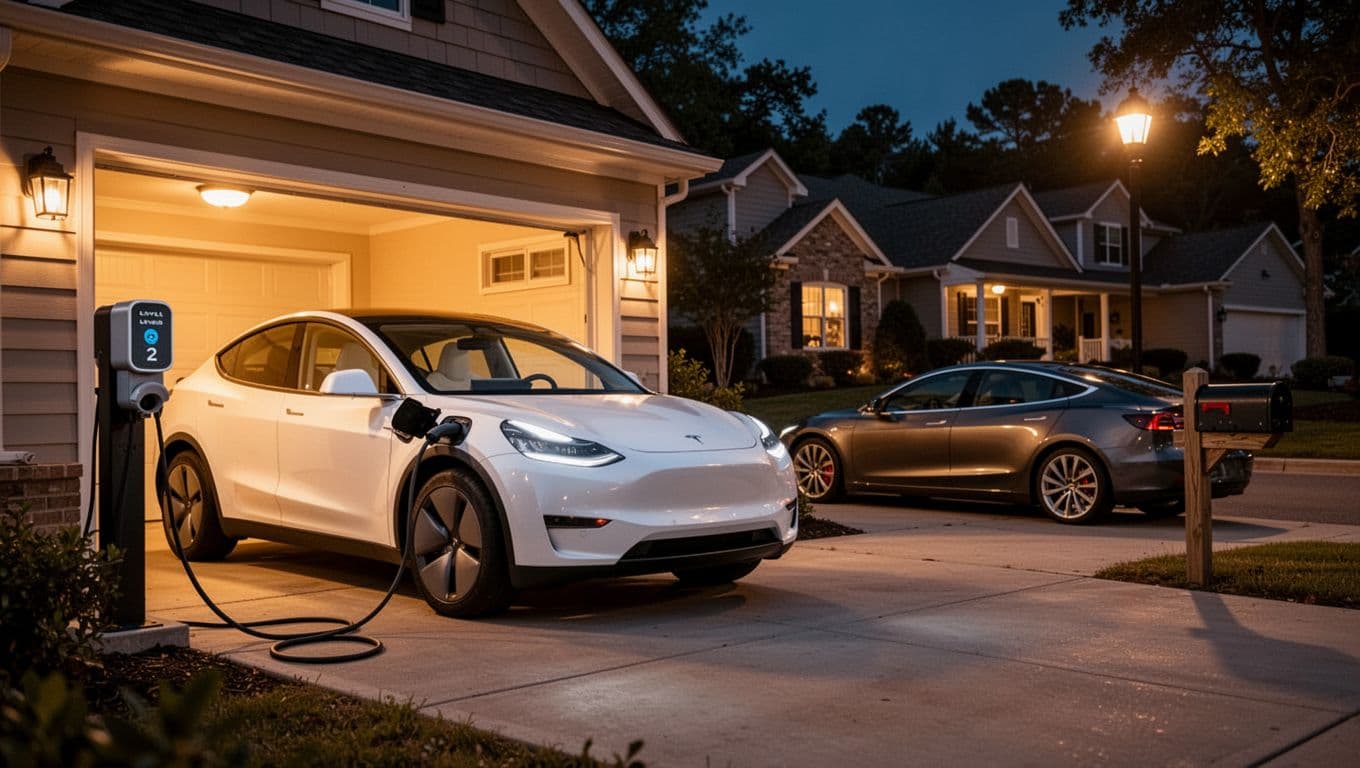
An EV charging at home, where electricity rates can be much lower than public chargers.
The math above shows a “typical” outcome. Still, the real world is messy. Three factors can swing your result more than anything else: local energy prices, vehicle efficiency, and charging access.
First, the charging location often decides the story. Home charging is usually cheaper because you pay a residential rate, and you can often use off-peak pricing. In contrast, public DC fast charging bundles hardware cost, demand charges, and site overhead into the per-kWh price. As a result, the same EV can cost 3 to 4 cents per mile at home, yet close to 10 cents per mile on the road.
Second, “what you drive” matters. A compact hybrid gas car changes the gas side. A large electric truck changes the EV side. Even two midsize EVs can differ by 15% to 25% in miles per kWh depending on tires, weight, and aerodynamics. The method still works, but you must swap in the right efficiency.
Third, timing affects both fuels. Gasoline can spike seasonally. Electricity can vary by time-of-use plan and by season in areas with heavy heating or cooling demand. That means a single national average never fits everyone.
A quick way to stress test your own situation is to run two EV cases: “mostly home” and “mostly public.” If those two results are far apart, charging access is the real decision point.
Your local prices matter more than headlines
Gas prices vary a lot by state, and even by neighborhood. Electricity rates can vary just as much, and sometimes more, especially once time-of-use plans enter the picture. Because of that, a national comparison is only a starting map, not the destination.
Here’s the short checklist worth looking up before you decide:
- Your average gas price over the last month or two (not one cheap day).
- Your real MPG, based on your car’s trip computer or a few fill-ups.
- Your utility rate in cents per kWh, plus any time-of-use windows.
- Your expected share of paid public charging, by percent of miles.
If you want a calculator that lets you change those dials and see how savings shift, try an EV cost savings calculator that accepts local fuel prices, miles driven, and even tire life assumptions.
Driving pattern, weather, and speed can shrink or grow savings
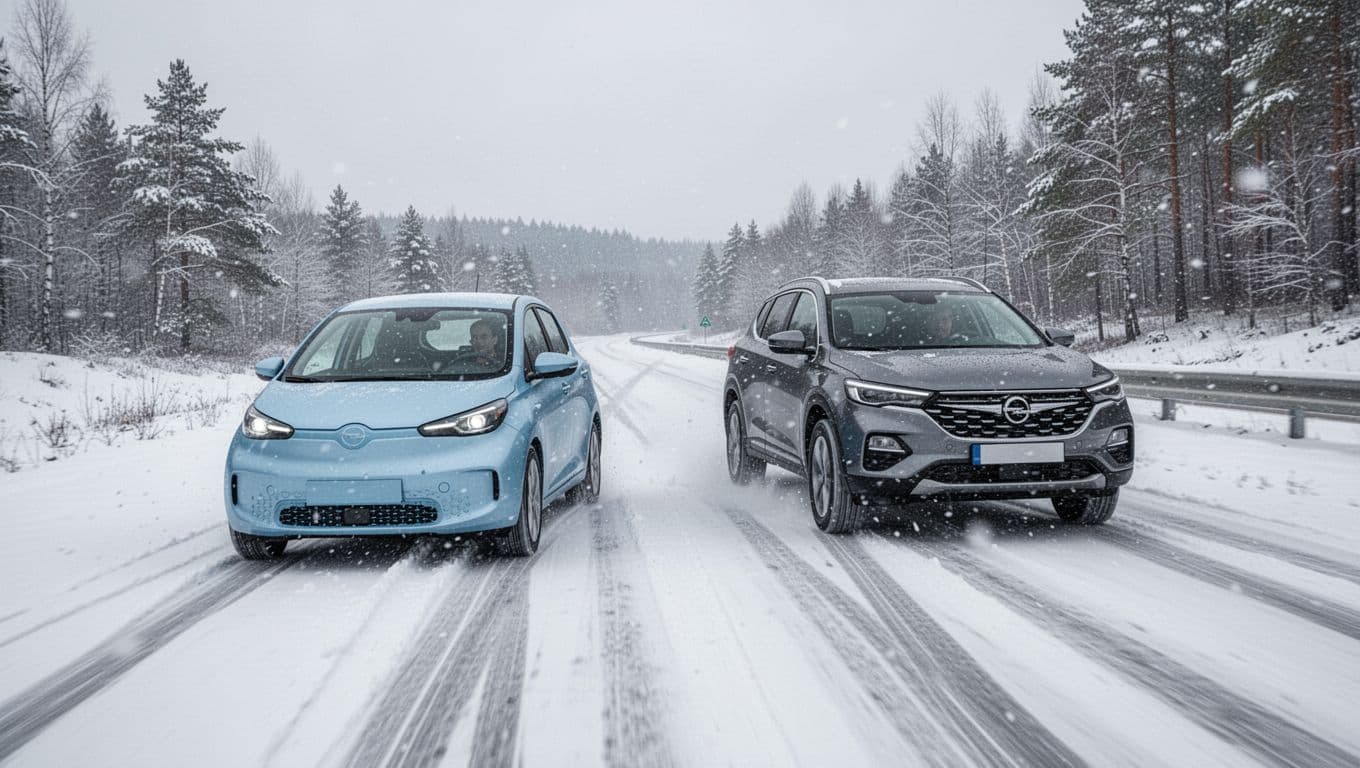
Winter conditions affect efficiency for both gas cars and EVs.
Weather and route shape your cost per mile because they change efficiency. Cold weather is the classic surprise. EVs spend energy heating the cabin and warming the battery. Meanwhile, gas engines run rich when cold, and they waste heat at idle. In other words, both types pay a winter penalty, just in different ways.
Short trips amplify that penalty. An EV may never reach peak efficiency if it starts cold and stops again in 10 minutes. A gas car also struggles on short trips because the engine spends more time in warm-up mode. If your daily driving is mostly short hops, plan on worse-than-expected numbers for either option.
High speeds raise energy use, too. Aerodynamic drag climbs quickly, so 75 mph usually costs more per mile than 65 mph. That effect hits EVs and gas cars alike. The difference is that home electricity can still be cheap enough that even “worse EV efficiency” stays below gas cost per mile.
One practical approach is to run the math with a conservative EV efficiency (say, 3 mi/kWh in winter driving) and see if you still win at your home rate. If the answer stays yes, you’ll likely feel good about the switch.
Beyond fuel, the real monthly budget includes maintenance and a few hidden costs
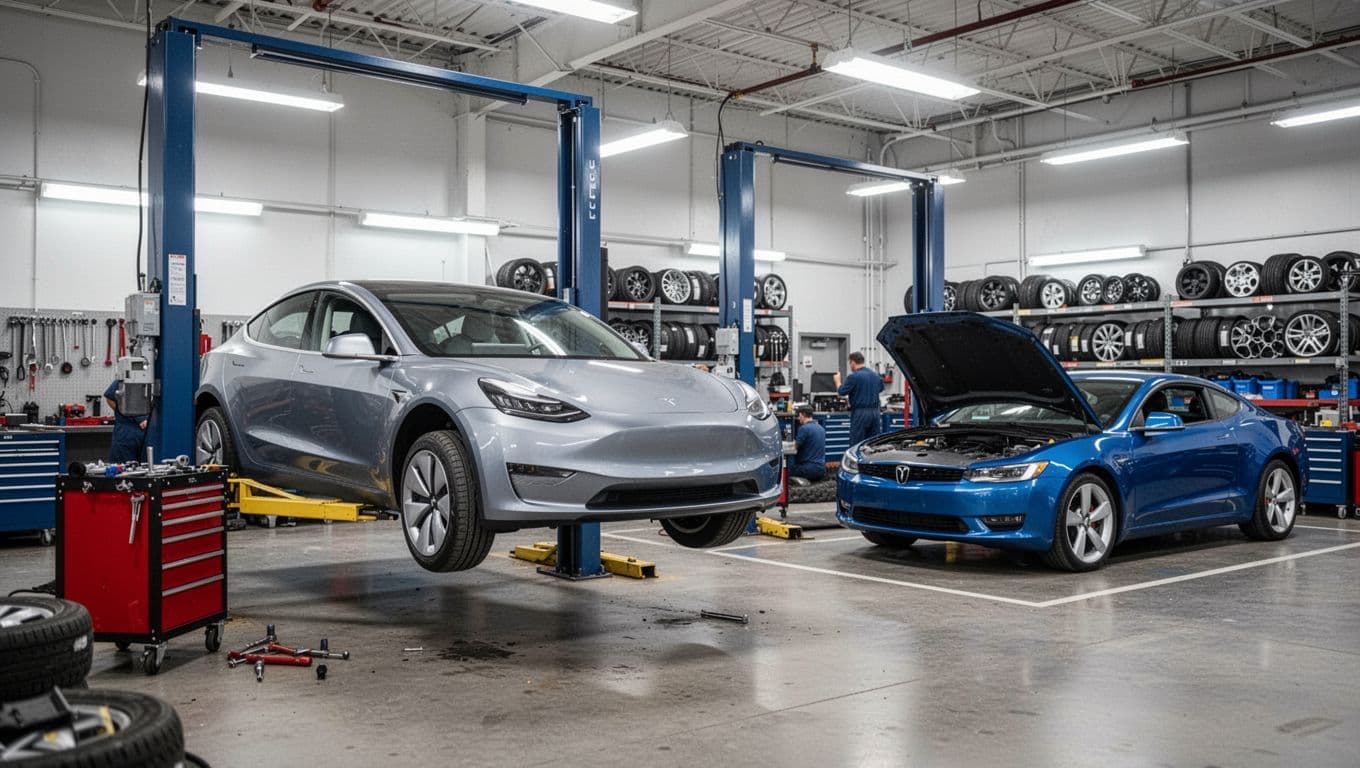
Routine service differs between EVs and gas cars, especially around engine work and brakes.
Fuel cost is the cleanest comparison, but it’s not the only cost that hits your monthly budget. Maintenance, tires, and charging setup can matter almost as much as energy, especially if your driving is low and your fuel bill is already small.
A lot of EV ownership studies point the same direction: fewer routine services, and fewer surprise repairs tied to engines and transmissions. Coverage varies by model and driving use, but the logic is simple. EV drivetrains have fewer parts that need regular service.
If you want a broad, non-technical overview of where EV running costs can differ from gas, this explainer on electric cars vs petrol running costs summarizes common categories. It’s not US-specific, so treat it as general guidance, then plug in US rates for the math.
Maintenance, fewer routine services for EVs, but tires can cost more
EVs skip oil changes, spark plugs, and many engine-related services. They also often use regenerative braking, which can reduce brake pad wear in normal driving. That doesn’t mean EVs are “maintenance-free,” but the routine schedule usually looks lighter.
On the other hand, tires deserve attention. Many EVs are heavier than similar gas cars, and they deliver strong torque from a stop. That combination can wear tires faster if you drive hard, or if the vehicle uses soft, low-rolling-resistance compounds. Tire cost depends on size and brand, yet the direction is consistent: budget for tires, and rotate them on time.
Also, don’t ignore insurance. Some EVs cost more to repair after a collision due to parts pricing and shop capability in your area. That’s not a fuel-cost item, but it’s a real monthly line. Get quotes for both vehicles before you commit.
A recent summary of EV ownership cost studies also highlights how operating costs can differ across categories. For context, see this write-up on EV cost savings findings, then validate the numbers against your own insurer and local shop rates.
Charging setup costs and apartment challenges
Home charging is where EV fuel savings usually come from, but it can require upfront work. Some drivers charge a fine from a basic 120V outlet if they drive fewer miles per day. Others need Level 2 charging (240V) to keep up, especially with longer commutes.
Costs vary because each home is different. A short run from a panel with spare capacity can be straightforward. An older home may need a panel upgrade, which changes the budget. Permits and inspection rules vary by city and county, too.
Renters face a separate problem: you can’t always install anything. If you live in an apartment without reliable charging, you might rely on paid public stations. That pushes your cost per mile toward the public charging scenario, which is why charging access often decides whether the numbers feel great or only “fine.”
One useful move is to ask two questions early:
- Can my landlord or HOA support shared charging, or can I get an assigned outlet?
- Does my utility offer rebates or off-peak pricing that lowers overnight kWh cost?
For most drivers, the cheapest EV miles are made at home while you sleep, not at a fast charger on a busy weekend.
Conclusion
With February 2026 prices, a 27 MPG gasoline sedan at about $2.94 per gallon lands near 11 cents per mile, while an EV can sit around 3 to 4 cents per mile on home electricity. If you rely on paid public charging around $0.38 per kWh, that EV cost can rise to about 9 to 10 cents per mile, which narrows the gap fast. The practical next step is to run your own cost-per-mile math using real MPG and your local cents per kWh, then decide based on how often you can charge at home. The best choice usually follows the simplest rule: cheap energy plus easy access beats averages.